 Bug FAQ
Pale Field Ant
Formica pallidefulva · Order: Hymenoptera · Family: Formicidae
Also called: Variable Field Ant
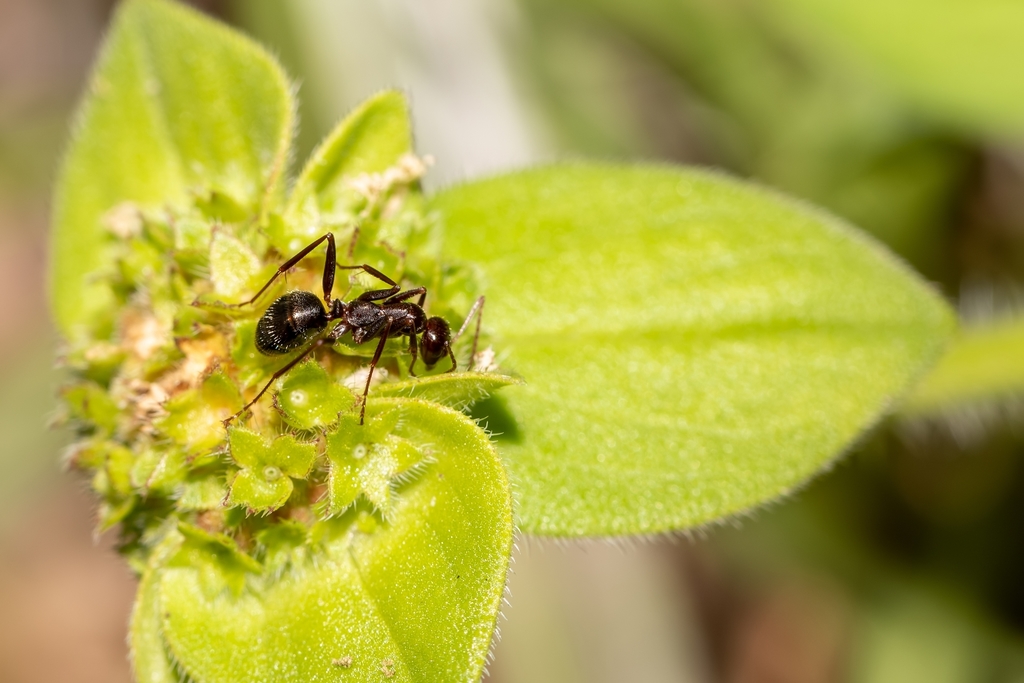
Field ants are reddish to dark brown with a shiny, glossy body that changes shade across their range, from deep brown-black in the north to bright coppery yellow in the south. Workers stay in the nest at night and go out in the morning to forage; alates emerge in late spring, fly individually in late summer, and then start new colonies.
Source: Wikipedia
How to recognize it
These ants range from red-brown to dark brown, with a glossy sheen; northern ants are almost black, while southern ones are bright coppery yellow, and many shades appear in between.
Source: Wikipedia
Size
Workers look much like those of Formica incerta but have a more polished, glossy appearance.
Source: Wikipedia
Where it lives
In forests they nest under bark on old stumps or in rotting logs, and in grasslands they may build a small mound near a clump of grass.
Source: Wikipedia
What it eats
Workers spend the night in the nest and leave in the morning to collect food.
Source: Wikipedia
Life cycle
Overwintered larvae pupate in late spring, producing winged males and females that emerge then. These winged ants take off individually in late summer to start new colonies.
Source: Wikipedia
When you see it
The ants are active during the day; workers stay in the nest at night and forage in the morning. Alates appear after overwintering in late spring. They fly singly in late summer.
Source: Wikipedia
Lookalikes
They resemble Formica incerta workers but are more glossy.
Source: Wikipedia
Where it is found in the US
Recorded in 41 of 51 states and DC. Most records: Mississippi, Florida, Colorado, Illinois, North Carolina, Virginia, New York, Tennessee.
Darker = more records. Counts are museum and citizen-science records, not population size.
Source: GBIF
Status: native in North America; native in United States. Source: iNaturalist
Months it is reported in the US
Source: GBIF
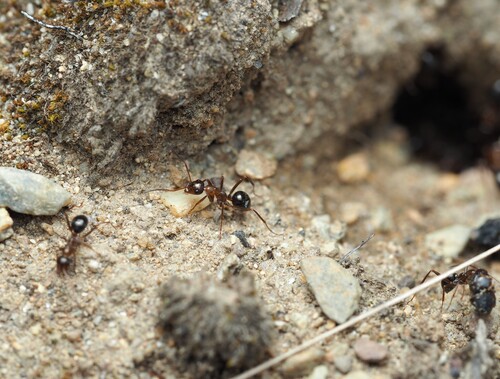
More photos
Questions people ask
When are field ants active?
They work during daylight, staying in the nest at night and leaving to forage in the morning.
Source: Wikipedia
Where do they build their nests?
In forests they nest under bark on old stumps or in rotten logs, and in grasslands they may make a small mound near grass clumps.
Source: Wikipedia
What do field ants look like?
They are reddish to dark brown with a shiny, glossy body; northern ants are nearly black, while southern ones are bright coppery yellow.
Source: Wikipedia
How do new colonies start?
Winged males and females emerge in late spring, fly individually in late summer, and each starts a new nest.
Source: Wikipedia
Same family (Formicidae)
 Eastern Black Carpenter AntCamponotus pennsylvanicusCan damage your home
 Red Imported Fire AntSolenopsis invictaCan sting
 American Winter AntPrenolepis imparis
 Argentine AntLinepithema humileNuisance, not dangerous
 Immigrant Pavement AntTetramorium immigransCan sting
 Odorous House AntTapinoma sessileCan damage your home
Sources
- Wikipedia: https://en.wikipedia.org/wiki/Formica_pallidefulva
Look it up elsewhere: GBIF · iNaturalist · BugGuide · ITIS · Wikipedia
Text written 2026-10-23 from the sources above and checked sentence by sentence against them. Data fetched 2026-10-23.