 Bug FAQ
Pale Cellar Spider
Smeringopus pallidus · Order: Araneae · Family: Pholcidae
Also called: Cellar Spider, cellar spiders
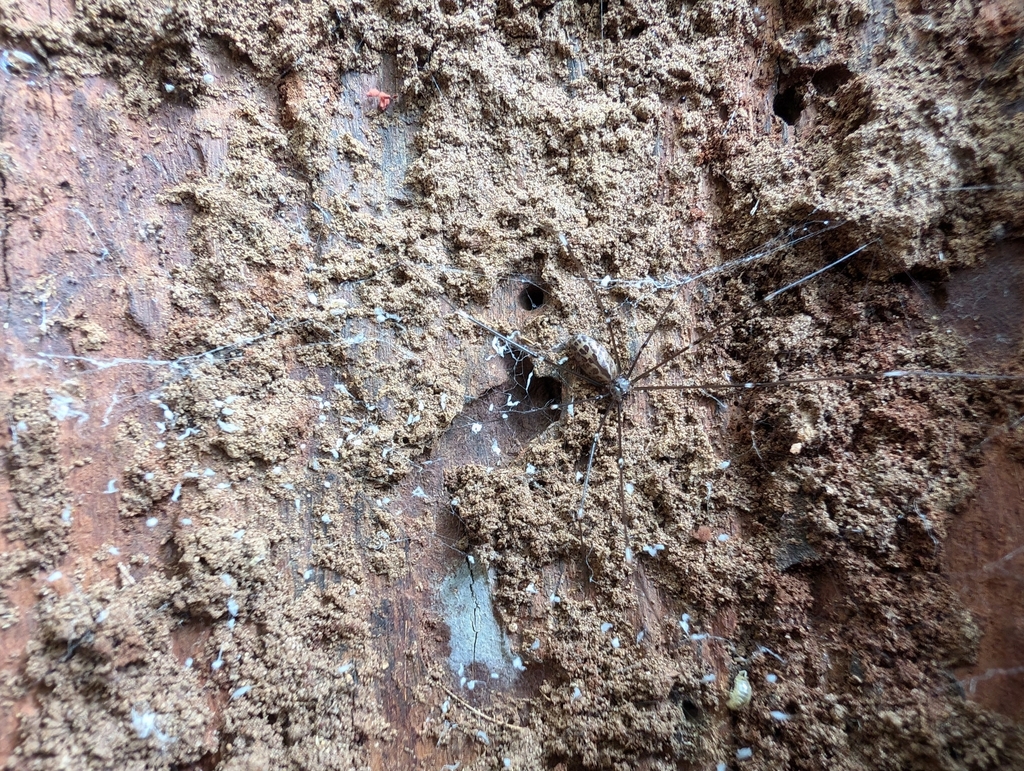
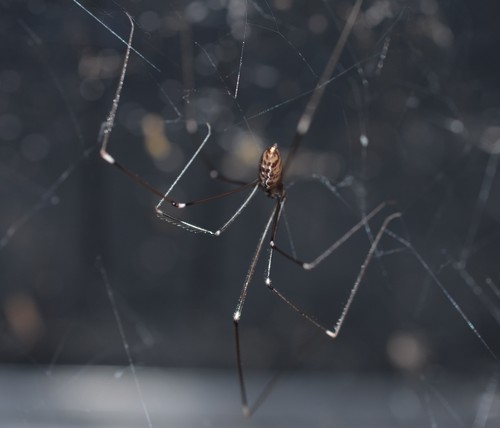
The pale cellar spider reaches up to 7 mm in body length, with females larger than males. It has a long, cylindrical abdomen marked with distinctive purple spots on the back. It lives in dark, dusty corners of homes and also builds webs under covered drains and on garden mud walls.
Source: Wikipedia
How to recognize it
The abdomen is elongated and shows purple spots along the dorsal surface.
Source: Wikipedia
Size
Adults can be as long as 7 mm, with males smaller than females.
Source: Wikipedia
How to get rid of it
If disturbed, they hang upside-down in their web and vibrate vigorously to confuse the intruder.
Source: Wikipedia
Where it lives
They are found in dusty, dark corners inside houses.
Source: Wikipedia
What it eats
They spin irregular cobwebs in sheltered spots to catch small insects and other spiders for food.
Source: Wikipedia
Life cycle
Females have a simple epigynum without pockets.
Source: Wikipedia
Where it comes from
This species has a worldwide (cosmopolitan) distribution.
Source: Wikipedia
Where it is found in the US
Recorded in 3 of 51 states and DC. Most records: Florida, Hawaii, Texas.
Darker = more records. Counts are museum and citizen-science records, not population size.
Source: GBIF
Months it is reported in the US
Source: GBIF
More photos
Questions people ask
How can I identify a pale cellar spider?
Look for a small spider up to 7 mm long with an elongated abdomen that has purple spots on its back.
Source: Wikipedia
Where might I find this spider in my home?
They often hide in dusty, dark corners and may also build webs under covered drains.
Source: Wikipedia
Same family (Pholcidae)


Sources
- Wikipedia: https://en.wikipedia.org/wiki/Smeringopus_pallidus
Look it up elsewhere: GBIF · iNaturalist · BugGuide · ITIS · Wikipedia
Text written 2026-10-28 from the sources above and checked sentence by sentence against them. Data fetched 2026-10-28.