 Bug FAQ
Pholcus crypticolens
Pholcus crypticolens · Order: Araneae · Family: Pholcidae
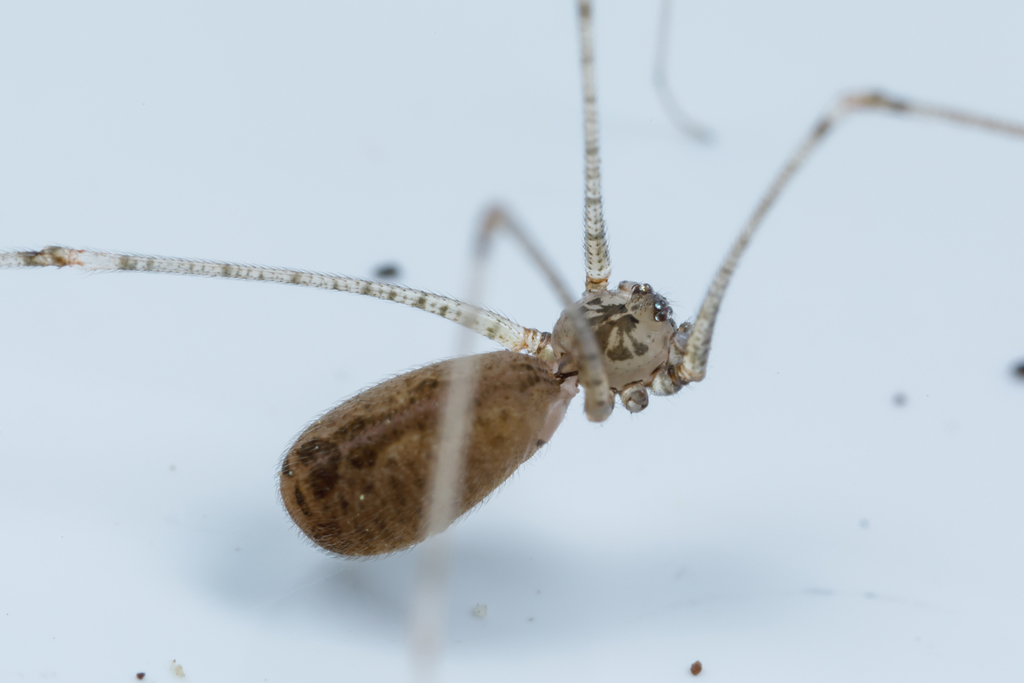
Females are about 5 to 6 mm long and males a bit smaller at 4 to 5 mm. It builds irregular webs in dim places such as road hollows, thickets, under tree roots, rocky overhangs, and eaves of buildings. The spider is native to Japan and occurs throughout Hokkaido, Honshu, Shikoku, and Kyushu.
Source: Wikipedia
How to recognize it
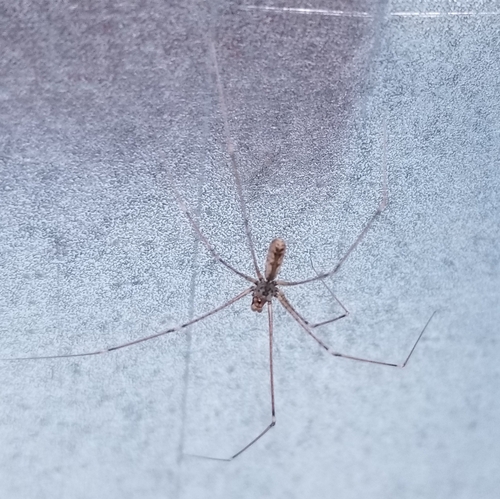
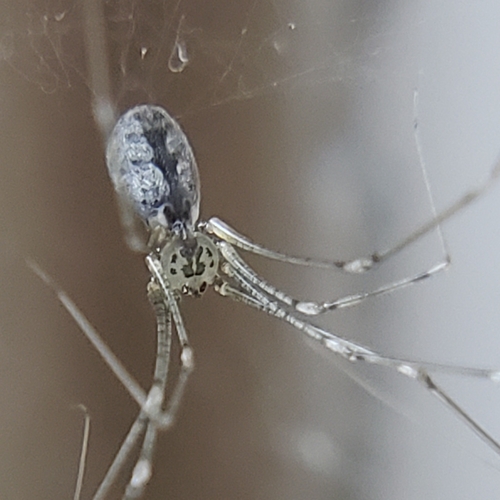
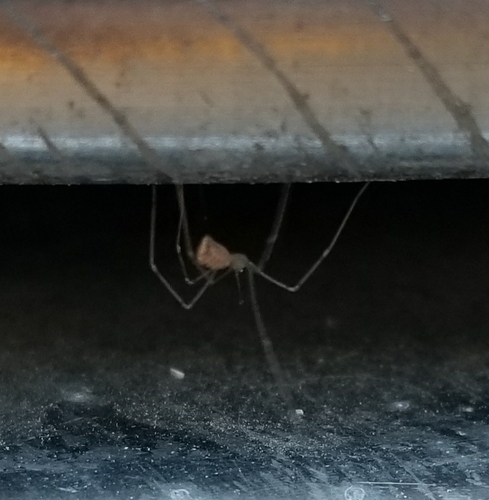
Like other Pholcus spiders, it has very long, thin legs that are many times the body length.
Source: Wikipedia
Size
Females measure 5 to 6 mm and males 4 to 5 mm in body length.
Source: Wikipedia
Where it lives
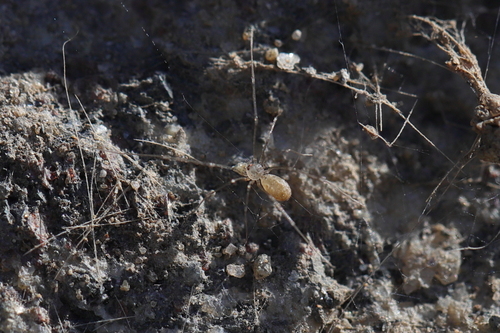
It makes irregular webs in dimly lit spots such as road hollows, thickets, under exposed tree roots, rocky overhangs, and building eaves.
Source: Wikipedia
Where it comes from
It is endemic to Japan and found on all main islands, including Hokkaido, Honshu, Shikoku, and Kyushu.
Source: Wikipedia
Lookalikes
It can be confused with the common Pholcus phalangioides, but it is smaller overall.
Source: Wikipedia
Where it is found in the US
Recorded in 21 of 51 states and DC. Most records: Missouri, Kansas, North Carolina, Georgia, Tennessee, Virginia, Maryland, Kentucky.
Darker = more records. Counts are museum and citizen-science records, not population size.
Source: GBIF
Status: introduced in North America; introduced in United States. Source: iNaturalist
Months it is reported in the US
Source: GBIF
More photos
Questions people ask
How can I tell Pholcus crypticolens apart from the common cellar spider?
It is noticeably smaller than Pholcus phalangioides, with females only 5 to 6 mm long.
Source: Wikipedia
Where does Pholcus crypticolens usually build its web?
In dim, sheltered places like road hollows, thickets, under tree roots, rocky overhangs, and eaves of buildings.
Source: Wikipedia
Same family (Pholcidae)


Sources
- Wikipedia: https://en.wikipedia.org/wiki/Pholcus_crypticolens
Look it up elsewhere: GBIF · iNaturalist · BugGuide · ITIS · Wikipedia
Text written 2026-10-27 from the sources above and checked sentence by sentence against them. Data fetched 2026-10-27.