 Bug FAQ
Orange-spotted Drone Fly
Eristalis anthophorina · Order: Diptera · Family: Syrphidae
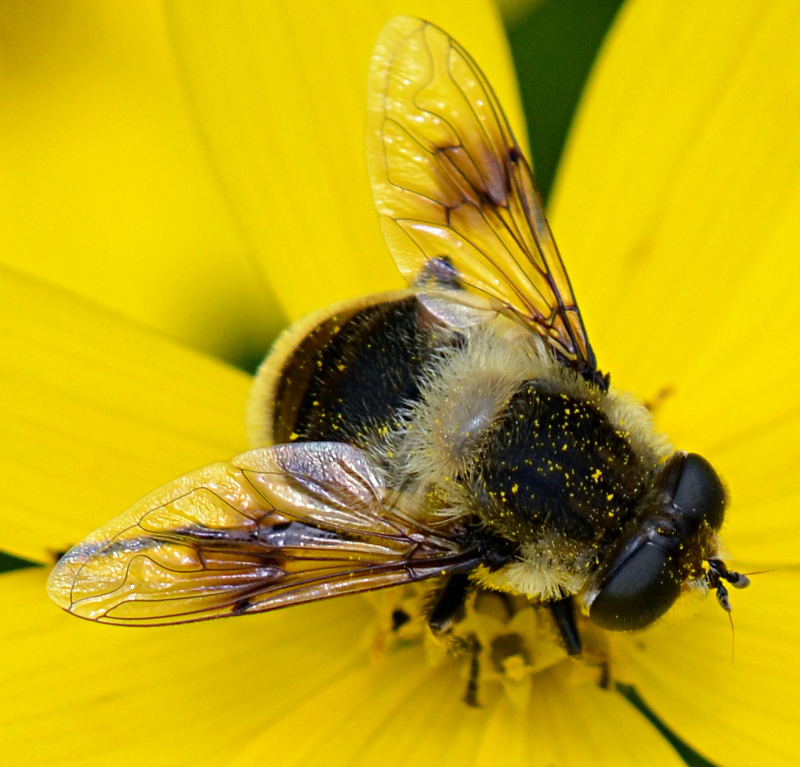
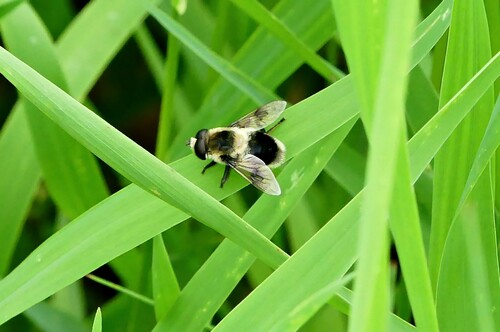
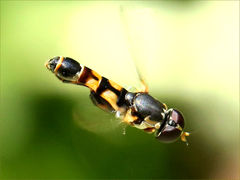
The orange-spotted drone fly is about 15 mm long and can look like a bumblebee. It has a reddish-yellow face with white hairs, a black thorax with long yellow hairs, a wholly yellow scutellum, and an abdomen with orange spots on the second segment and yellow-orange pile. It lives in wetlands such as bogs, fens and woodland pools across northern North America and Europe, where it visits flowers like blue vervain, blue-leaved willow and dame’s rocket.
Source: Wikipedia
How to recognize it
Face reddish-yellow with white hairs, black median stripe, and black cheeks; thorax black with long yellow hairs; scutellum entirely yellow and densely hairy; first abdominal segment black, second with broad orange lateral spots, rest black with long yellow-orange hairs.
Source: Wikipedia
Size
Length is about 15 mm (0.6 in). Can be easily mistaken for a bumblebee.
Source: Wikipedia
Where it lives
Seen visiting flowers of blue vervain, blue-leaved willow, and dame’s rocket.
Source: Wikipedia
What it eats
Adults visit flowers of blue vervain, blue-leaved willow, and dame’s rocket for nectar.
Source: Wikipedia
Where it comes from
Holartic distribution, widely found in northern North America and Europe.
Source: Wikipedia
Lookalikes
Often confused with bumblebees because of its size and coloration.
Source: Wikipedia
Where it is found in the US
Recorded in 28 of 51 states and DC. Most records: Alaska, Washington, Oregon, Minnesota, Wisconsin, Massachusetts, Ohio, Maine.
Darker = more records. Counts are museum and citizen-science records, not population size.
Source: GBIF
Status: native in North America; native in Canada. Source: iNaturalist
Months it is reported in the US
Source: GBIF
More photos
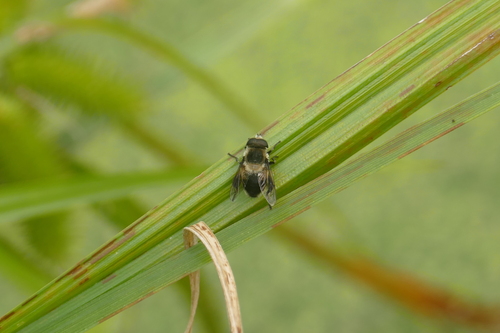
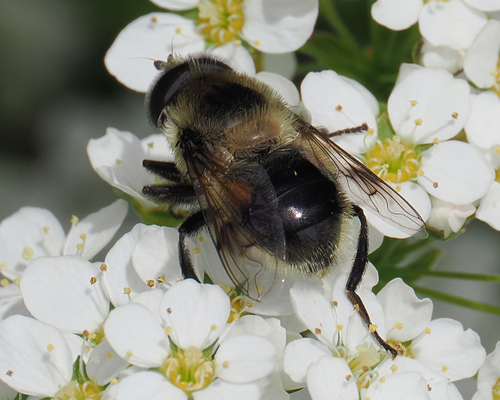
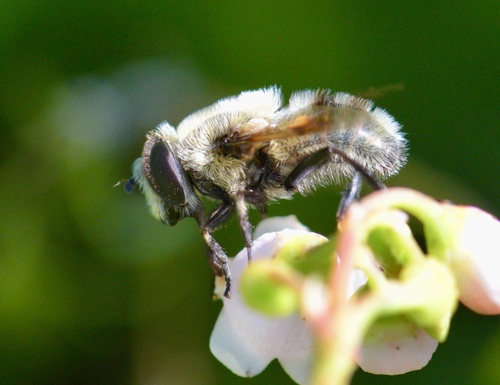
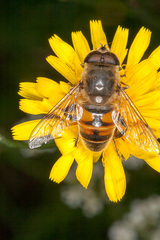
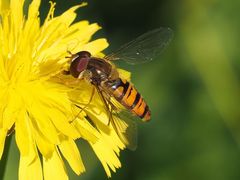
Same family (Syrphidae)


Sources
- Wikipedia: https://en.wikipedia.org/wiki/Eristalis_anthophorina
Look it up elsewhere: GBIF · iNaturalist · BugGuide · ITIS · Wikipedia
Text written 2026-10-23 from the sources above and checked sentence by sentence against them. Data fetched 2026-10-22.