 Bug FAQ
Orange-spined Drone Fly
Eristalis nemorum · Order: Diptera · Family: Syrphidae
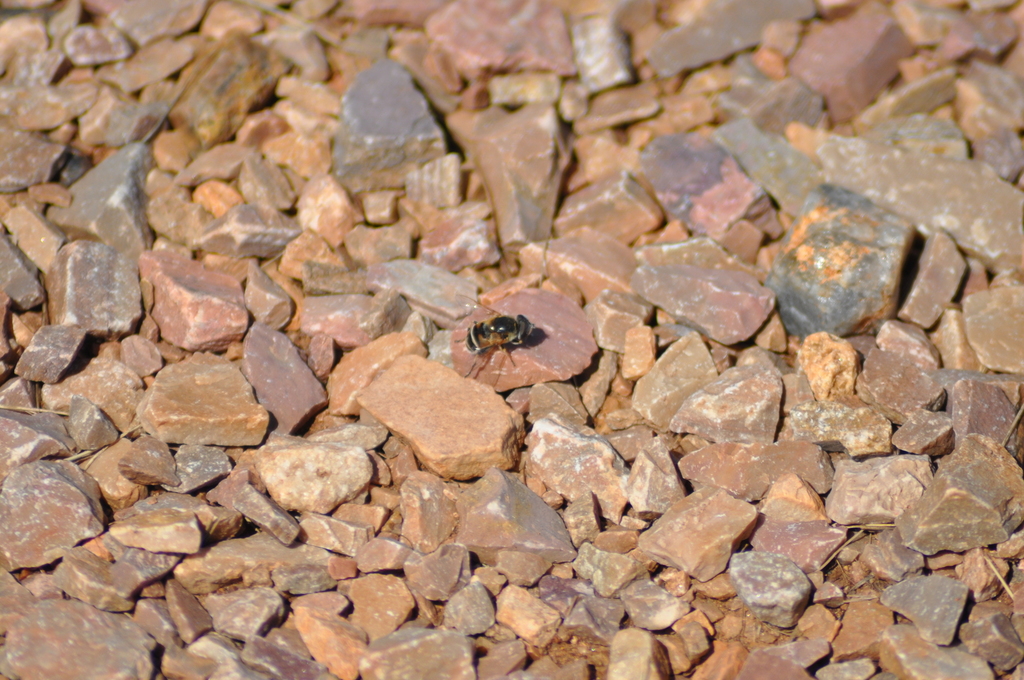
The orange-spined drone fly is a medium-sized hoverfly with wing lengths of about 8 to 10 mm. Adults are found near streams, fen meadows and damp pastures, and they visit flowers for food. Its larvae live in water and look like rat-tailed maggots.
Source: Wikipedia
How to recognize it
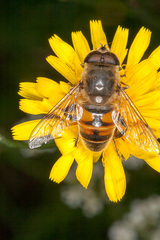
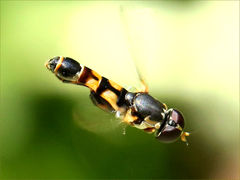
All the legs have black tarsi. Male hind femora are black. The wings are clear with a square brownish spot near the base of the front edge. The body is covered in yellow hairs. The face is densely dusted and has a shiny black stripe.
Source: Wikipedia
Size
Wing length ranges from 8.25 to 10.5 mm (0.33 to 0.41 in).
Source: Wikipedia
Where it lives
Adults live by streams, in fen meadows and on poorly-drained pastures.
Source: Wikipedia
What it eats
Adults often visit flowers for nectar. Larvae are aquatic rat-tailed maggots.
Source: Wikipedia
Life cycle
In the UK the species flies from April through October, with most sightings in July and August. Males perform a hovering courtship display above foraging females.
Source: Wikipedia
When you see it
Flight period in the United Kingdom is April to October, peaking in July and August.
Source: Wikipedia
Where it comes from
It occurs across the Palearctic from northern Europe to Japan and in the Nearctic from Quebec to Colorado.
Source: Wikipedia
Where it is found in the US
Recorded in 18 of 51 states and DC. Most records: Maine, California, Oregon, Alaska, Washington, Idaho, Montana, Colorado.
Darker = more records. Counts are museum and citizen-science records, not population size.
Source: GBIF
Months it is reported in the US
Source: GBIF
More photos
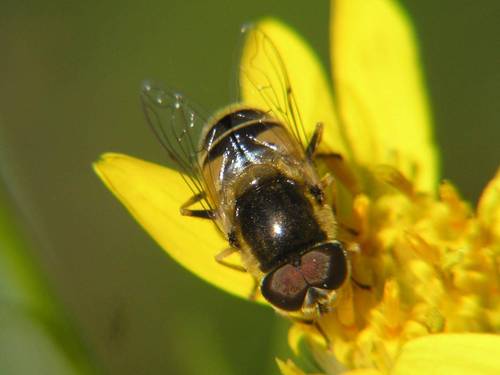
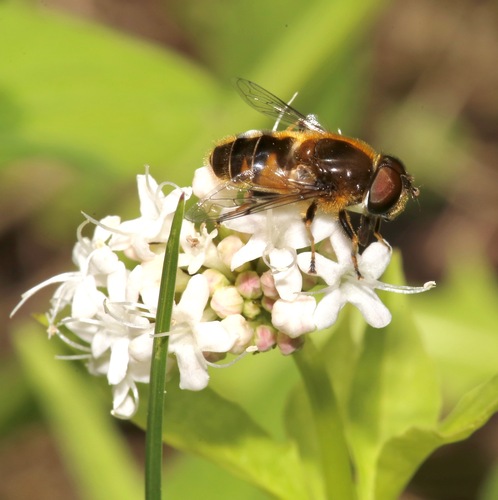
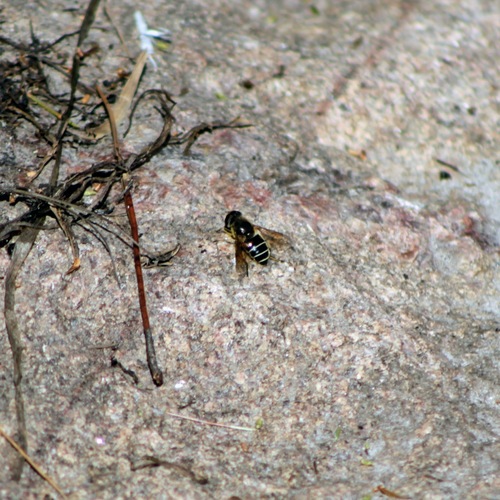
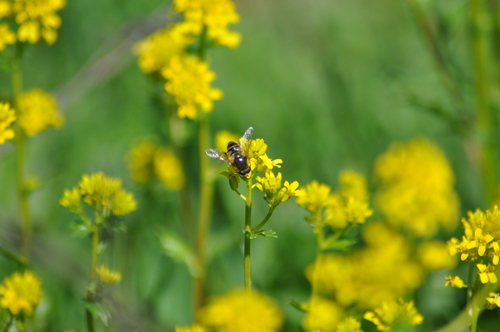
Same family (Syrphidae)


Sources
- Wikipedia: https://en.wikipedia.org/wiki/Eristalis_nemorum
Look it up elsewhere: GBIF · iNaturalist · BugGuide · Wikipedia
Text written 2026-10-22 from the sources above and checked sentence by sentence against them. Data fetched 2026-10-22.