 Bug FAQ
Orange-barred Sulphur
Phoebis philea · Order: Lepidoptera · Family: Pieridae
Also called: Orange-barred Giant Sulphur, Yellow Apricot

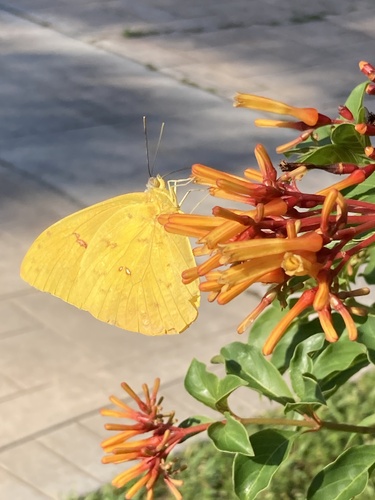
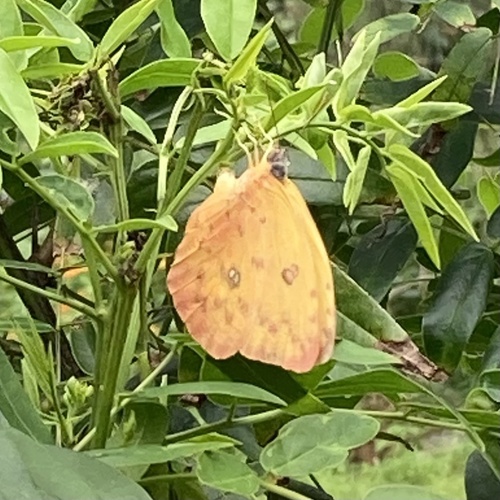
The orange-barred sulphur is a medium-sized butterfly with a wingspan of about 68 to 80 mm.
Source: Wikipedia
How to recognize it
They are often seen in dense mixed groups with other sulphur butterflies such as statira, apricot, and straight-line sulphurs.
Source: Wikipedia
Size
Wingspan ranges from 68 to 80 mm.
Source: Wikipedia
Where it lives
Found in tropical scrub, gardens, fields and at forest edges.
Source: Wikipedia
What it eats
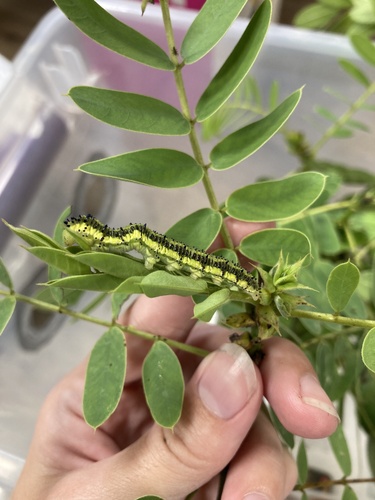
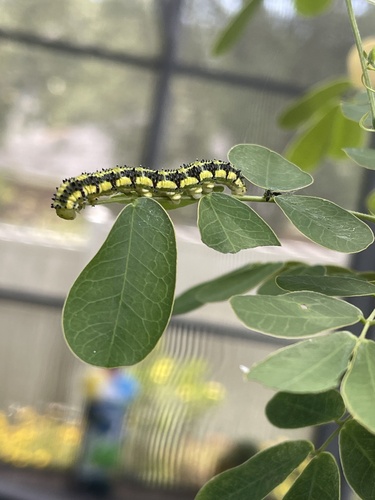
Adults sip nectar from red-colored flowers. Caterpillars feed on Cassia species.
Source: Wikipedia
Life cycle
In Florida there are two to three generations each year; farther north only one generation.
Source: Wikipedia
When you see it
Adults are on the wing from mid to late summer.
Source: Wikipedia
Where it comes from
Occurs throughout the Americas, including the Caribbean.
Source: Wikipedia
Lookalikes
Often mingles with statira sulphur, apricot sulphur, and straight-line sulphur.
Source: Wikipedia
Where it is found in the US
Recorded in 20 of 51 states and DC. Most records: Florida, Texas, Louisiana, Oklahoma, Arizona, California, New Mexico, Arkansas.
Darker = more records. Counts are museum and citizen-science records, not population size.
Source: GBIF
Status: native in North America; native in United States. Source: iNaturalist
Months it is reported in the US
Source: GBIF
More photos
Questions people ask
Are they a problem for gardens or crops?
They feed on nectar and Cassia leaves but are not reported to damage garden plants or crops.
Source: Wikipedia
Same family (Pieridae)


Sources
- Wikipedia: https://en.wikipedia.org/wiki/Phoebis_philea
Look it up elsewhere: GBIF · iNaturalist · BugGuide · ITIS · Wikipedia
Text written 2026-10-22 from the sources above and checked sentence by sentence against them. Data fetched 2026-10-22.