 Bug FAQ
Omnivorous Looper
Sabulodes aegrotata · Order: Lepidoptera · Family: Geometridae
Source: Wikipedia
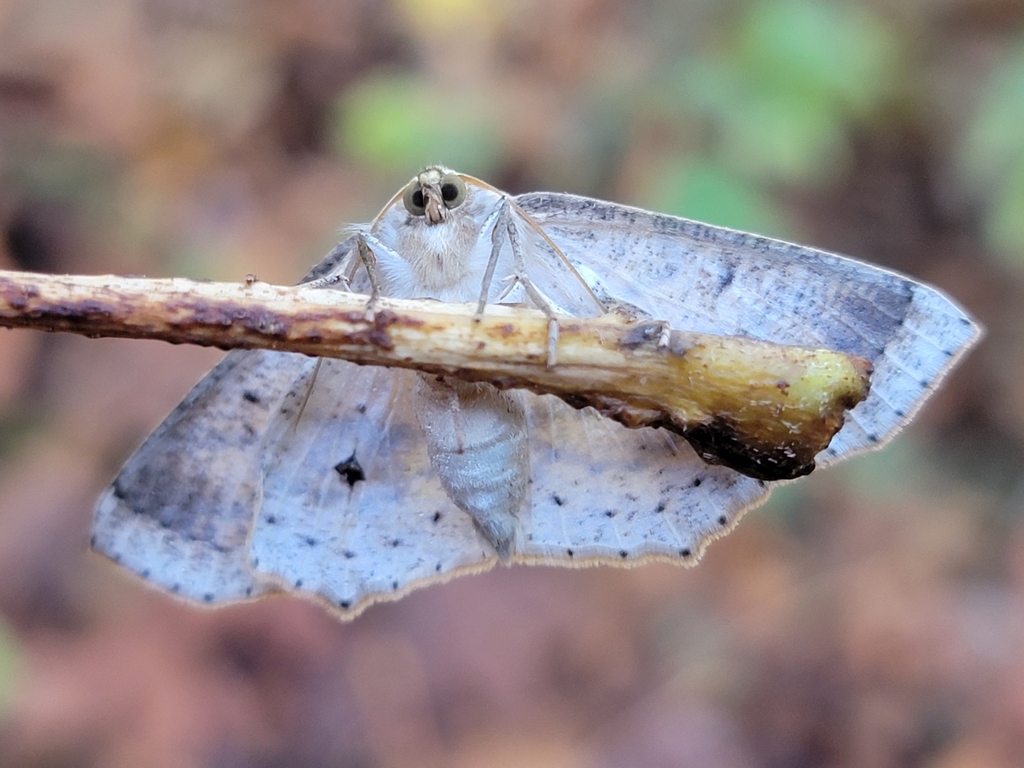
Its larvae feed on many flowering trees and agricultural crops, including walnuts, avocados and citrus, making it a minor crop pest. Adults are active at night throughout the year and can have three to five generations per year depending on location and temperature.
Source: Wikipedia
How to recognize it
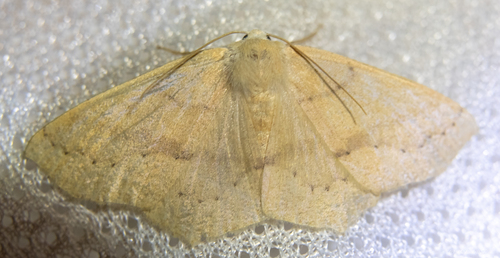
A key identification mark is the crossing of the medial and postmedial lines near the wing’s trailing edge.
Source: Wikipedia
Size
Forewing length ranges from 17 to 26 mm, giving a wingspan of about 35 to 44 mm.
Source: Wikipedia
Is it a pest in the house?
It is considered a minor agricultural pest. The species feeds on commercial crops like walnuts, avocados and citrus.
Source: Wikipedia
What it eats
Commercial crops such as walnuts, avocados and citrus are among the foods it will consume.
Source: Wikipedia
Life cycle
In coastal areas it produces three generations per year, while inland it can have four or five. Development from egg to adult takes between two and five months, depending on temperature.
Source: Wikipedia
Where it comes from
Its native range is western North America, from British Columbia down to California.
Source: Wikipedia
Lookalikes
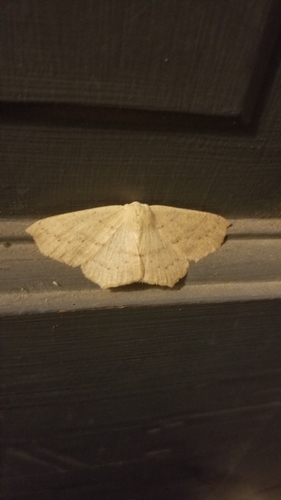
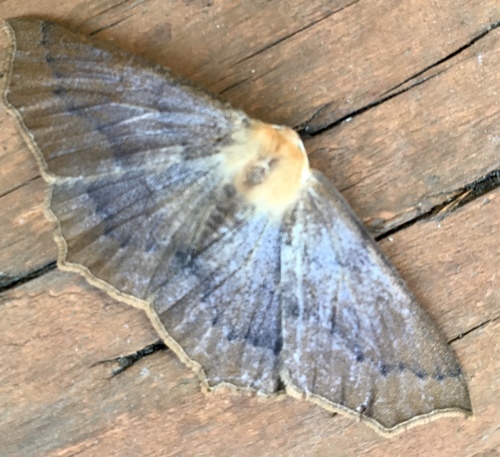
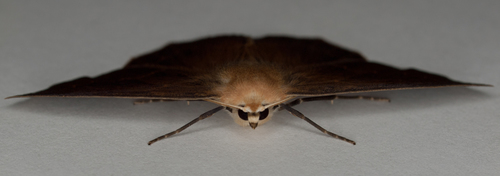
The species shows a lot of colour variation, including a darker melanic form. The greatest variation occurs around the San Francisco Bay area, while southern California populations are more uniform.
Source: Wikipedia
Where it is found in the US
Recorded in 3 of 51 states and DC. Most records: California, Oregon, Washington.
Darker = more records. Counts are museum and citizen-science records, not population size.
Source: GBIF
Status: native in North America; native in United States. Source: iNaturalist
Months it is reported in the US
Source: GBIF
More photos
Questions people ask
What crops does the Omnivorous Looper damage?
Its larvae feed on walnuts, avocados and citrus, among other plants.
Source: Wikipedia
When are adult Omnivorous Loopers active?
Adults are active at night throughout the entire year.
Source: Wikipedia
How many generations does it have each year?
Coastal populations have three generations per year, while inland they can have four or five.
Source: Wikipedia
Same family (Geometridae)
 Willow BeautyPeribatodes rhomboidaria
 Pale BeautyCampaea perlataDamages trees, gardens or crops
 Large Lace-border MothScopula limboundataDamages trees, gardens or crops
 Riband WaveIdaea aversata
 Yellow Shell MothCamptogramma bilineata
 Large Maple Spanworm MothProchoerodes lineolaDamages trees, gardens or crops
Sources
- Wikipedia: https://en.wikipedia.org/wiki/Sabulodes_aegrotata
Look it up elsewhere: GBIF · iNaturalist · BugGuide · ITIS · Wikipedia
Text written 2026-10-23 from the sources above and checked sentence by sentence against them. Data fetched 2026-10-23.