 Bug FAQ
Oleander Scale
Aspidiotus nerii · Order: Hemiptera · Family: Diaspididae
Also called: ivy scale
Source: Wikipedia
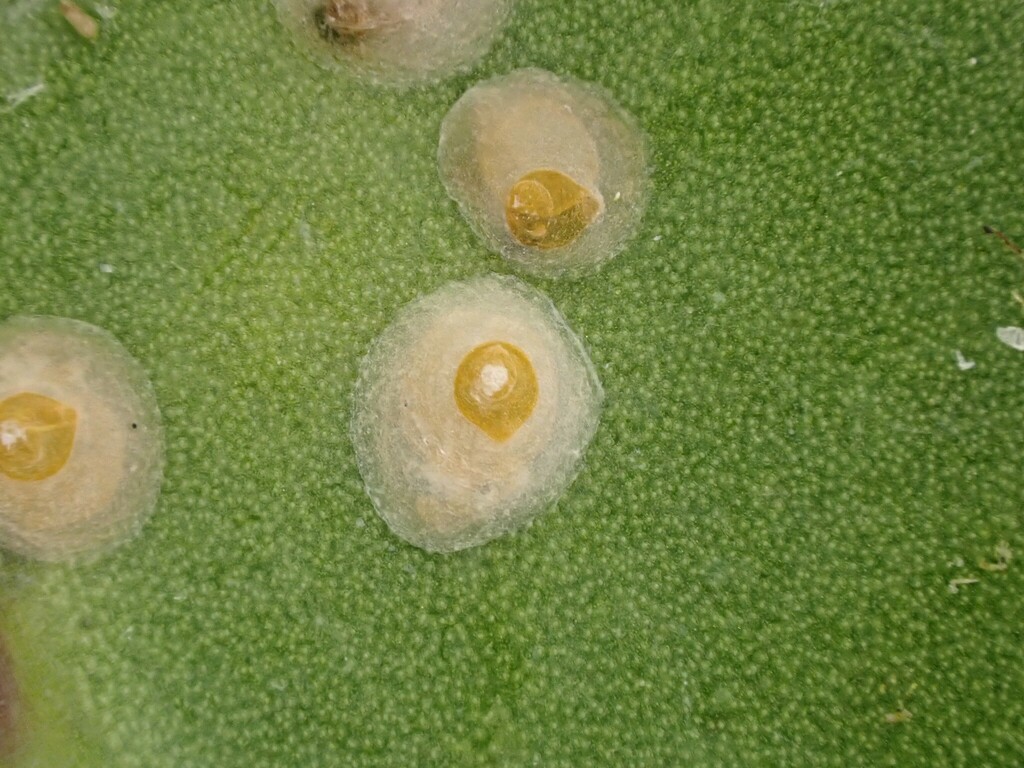
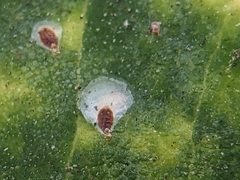
Aspidiotus nerii is an armored scale insect that lives on a variety of ornamental and fruit plants. It feeds on and harms citrus, sago palm, oleander, English ivy and other palms, making it a garden and crop pest. The insect can produce three to four generations each year.
Source: Wikipedia
How to recognize it
Aspidiotus nerii belongs to the group of armored scale insects.
Source: Wikipedia
Is it a pest in the house?
Because it attacks ornamental and fruit plants, it is considered a pest in homes and gardens.
Source: Wikipedia
Where it lives
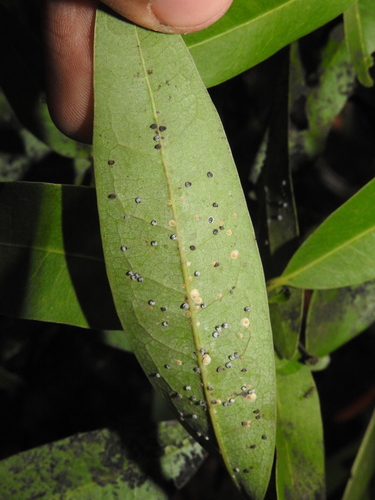
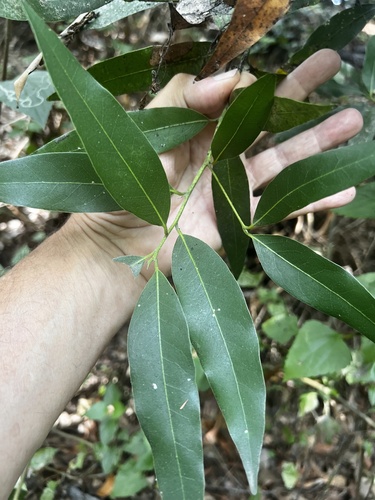
It is found on citrus, sago palm, oleander, English ivy and other palms.
Source: Wikipedia
What it eats
It feeds on the same plants it inhabits, such as citrus and ornamental palms.
Source: Wikipedia
Life cycle
Three to four generations are produced each year.
Source: Wikipedia
Where it is found in the US
Recorded in 5 of 51 states and DC. Most records: Mississippi, California, Massachusetts, Kansas, Texas.
Darker = more records. Counts are museum and citizen-science records, not population size.
Source: GBIF
Months it is reported in the US
Source: GBIF
More photos
Questions people ask
What plants does Aspidiotus nerii damage?
It harms citrus, sago palm, oleander, English ivy and other palms.
Source: Wikipedia
How many generations does it produce each year?
It can produce three to four generations annually.
Source: Wikipedia
Same family (Diaspididae)

Sources
- Wikipedia: https://en.wikipedia.org/wiki/Aspidiotus_nerii
Look it up elsewhere: GBIF · iNaturalist · BugGuide · ITIS · Wikipedia
Text written 2026-10-27 from the sources above and checked sentence by sentence against them. Data fetched 2026-10-27.