 Bug FAQ
Elongate hemlock scale
Fiorinia externa · Order: Hemiptera · Family: Diaspididae
Also called: Fiornia scale
Source: Wikipedia
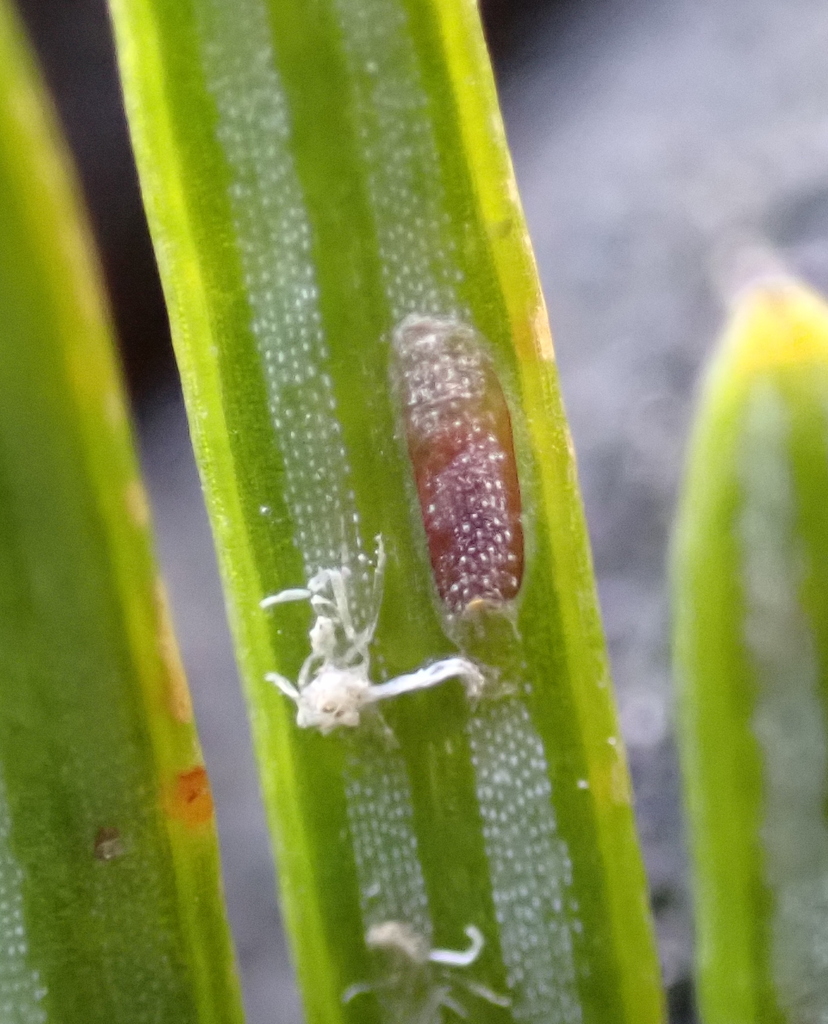
Adult females are about 1 mm long and the second-instar scale cover is elongated to roughly 1.5 mm and colored yellow-brown to reddish-brown. The insect is a serious pest of hemlock and related conifers, forming dense colonies that yellow, shed leaves and can kill the tree.
Source: Wikipedia
How to recognize it
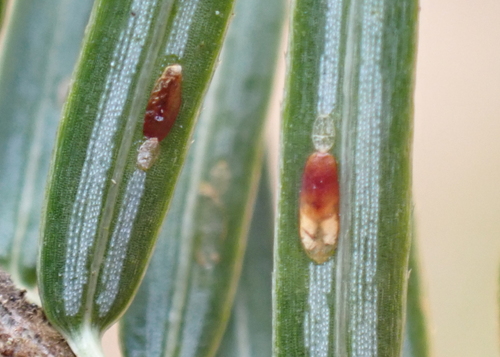
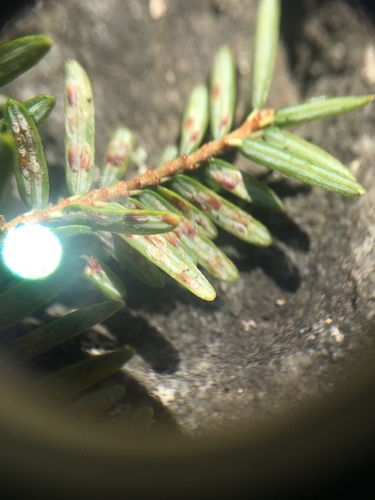
Second-instar females have an elongated, yellow-brown to reddish-brown scale cover. Immature males produce a white scale cover.
Source: Wikipedia
Size
Adult females measure about 1 mm in length. The second-instar female’s scale cover is about 1.5 mm long.
Source: Wikipedia
Is it a pest in the house?
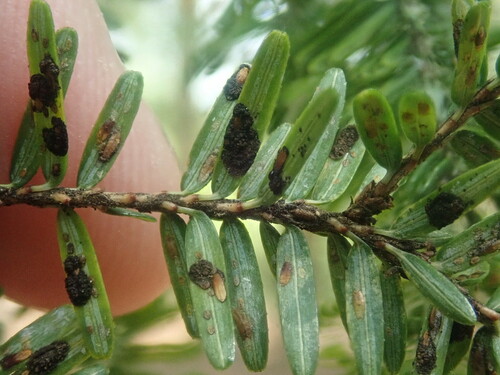
Dense colonies cause yellowing, leaf drop, dieback and occasional death of hemlock trees.
Source: Wikipedia
How to get rid of it
Mineral oil sprays, trunk-injected systemic pesticides or soil drenches can control the scale. Natural enemies are less effective in North America than in Japan, leading to larger populations here.
Source: Wikipedia
Where it lives
It is a serious pest of hemlock (Tsuga) and related Pinaceae conifers.
Source: Wikipedia
What it eats
Adult females stay inside the shed skin of the second instar, a condition called pupillarial. Eggs and crawlers are yellowish; when crawlers settle they secrete white wax that can give infested needles a whitish look.
Source: Wikipedia
Life cycle
In North America the overwintering stages are eggs inside the pupillarial female or fully mature adult females. The species may produce one or two generations per year; a second generation can start but many individuals do not survive the winter.
Source: Wikipedia
When you see it
Eggs hatch in spring and the crawlers move to new needles of the same host, sometimes being carried farther by wind or birds.
Source: Wikipedia
Where it comes from
The species is native to Japan and southern China. It was first reported on Tsuga in New York State in 1908.
Source: Wikipedia
Lookalikes
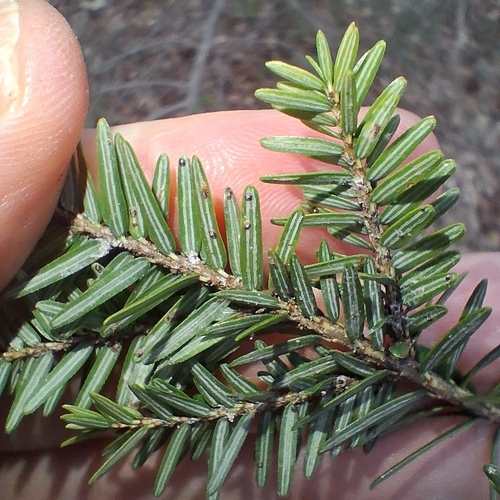
Like other Fiorinia species, the adult female remains inside the second-instar exuviae (pupillarial). The abundant white wax filaments from eggs and crawlers give infested needles a whitish appearance.
Source: Wikipedia
Where it is found in the US
Recorded in 18 of 51 states and DC. Most records: Massachusetts, Pennsylvania, New York, North Carolina, New Hampshire, Ohio, New Jersey, Connecticut.
Darker = more records. Counts are museum and citizen-science records, not population size.
Source: GBIF
Status: introduced in North America; introduced in United States. Source: iNaturalist
Months it is reported in the US
Source: GBIF
More photos
Questions people ask
How can I control elongate hemlock scale?
Apply horticultural oil sprays or use systemic pesticides via trunk injection or soil drench.
Source: Wikipedia
What damage does elongate hemlock scale cause?
Heavy infestations cause yellowing, leaf loss, dieback and can kill hemlock trees.
Source: Wikipedia
What does the scale look like?
Second-instar females have an elongated, yellow-brown to reddish-brown cover about 1.5 mm long; immature males are white.
Source: Wikipedia
Where is elongate hemlock scale native to?
It originates from Japan and southern China and was first reported in New York State in 1908.
Source: Wikipedia
Sources
- Wikipedia: https://en.wikipedia.org/wiki/Fiorinia_externa
Look it up elsewhere: GBIF · iNaturalist · BugGuide · Wikipedia
Text written 2026-10-24 from the sources above and checked sentence by sentence against them. Data fetched 2026-10-24.