 Bug FAQ
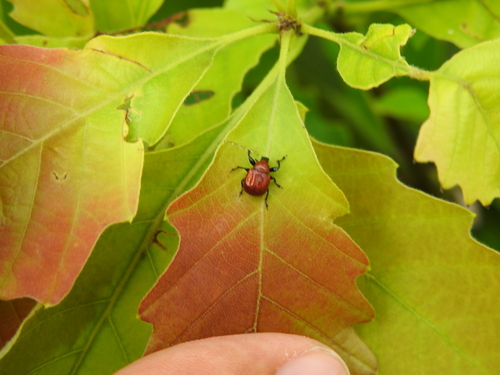
Oak Leaf Rolling Weevil
Homoeolabus analis · Order: Coleoptera · Family: Attelabidae
Also called: Leaf-Rolling Weevil
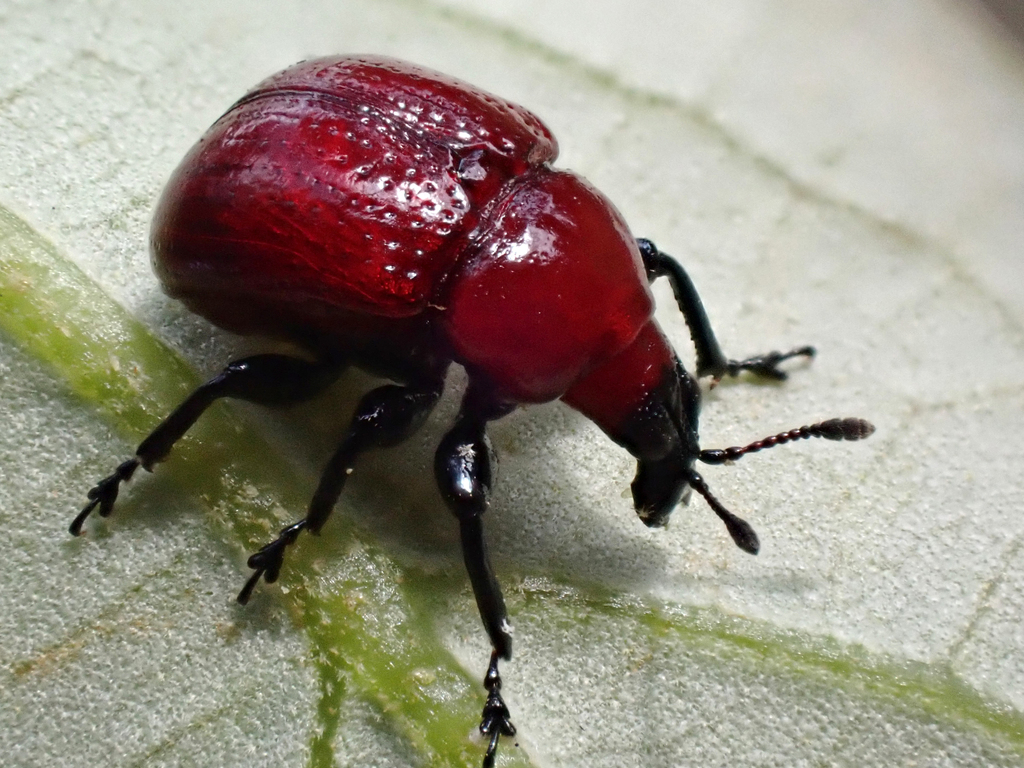
The oak leaf rolling weevil builds a leaf roll, called a nidus, to protect its eggs. It lives in North America and is often preyed upon by the thief weevil. The construction of the leaf roll is known as nidification.
Source: Wikipedia
How to recognize it
The leaf roll made by this beetle is called a nidus, the Latin word for “nest”.
Source: Wikipedia
Where it lives
It is found in North America.
Source: Wikipedia
What it eats
The leaf roll’s main purpose is to keep the eggs safe during development.
Source: Wikipedia
Life cycle
The process of building the leaf roll is called nidification.
Source: Wikipedia
Where it comes from
Its native range is North America.
Source: Wikipedia
Where it is found in the US
Recorded in 30 of 51 states and DC. Most records: Florida, Texas, New York, Massachusetts, Louisiana, North Carolina, Virginia, Missouri.
Darker = more records. Counts are museum and citizen-science records, not population size.
Source: GBIF
Status: native in North America; native in Canada. Source: iNaturalist
Months it is reported in the US
Source: GBIF
More photos
Questions people ask
What is the leaf roll made by the oak leaf rolling weevil called?
The leaf roll is called a nidus, the Latin term for “nest”.
Source: Wikipedia
Why does the oak leaf rolling weevil make leaf rolls?
The leaf roll protects its eggs during the gestation period.
Source: Wikipedia
What is the term for the construction of the leaf roll?
The construction process is called nidification.
Source: Wikipedia
Same family (Attelabidae)

Sources
- Wikipedia: https://en.wikipedia.org/wiki/Homoeolabus_analis
Look it up elsewhere: GBIF · iNaturalist · BugGuide · ITIS · Wikipedia
Text written 2026-10-24 from the sources above and checked sentence by sentence against them. Data fetched 2026-10-24.