 Bug FAQ
Hazel leaf-roller weevil
Apoderus coryli · Order: Coleoptera · Family: Attelabidae
Also called: hazel leaf roller
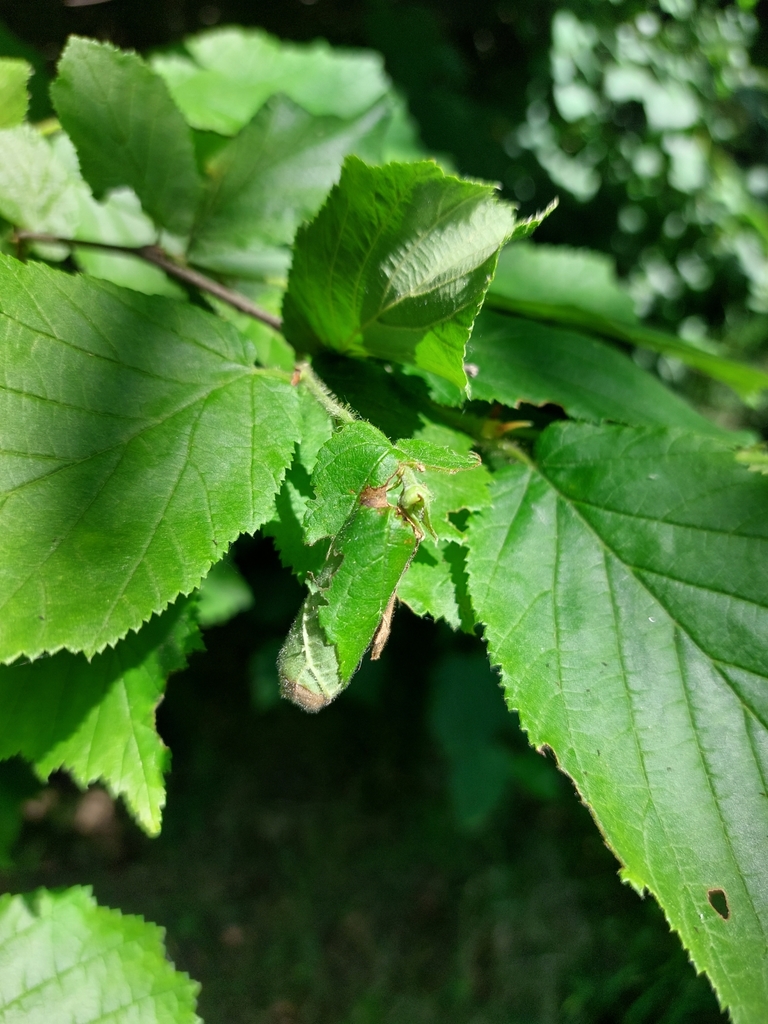
The hazel leaf-roller weevil is a small beetle about 6 to 8 mm long, with a red bell-shaped pronotum and red-tipped legs. Adults appear from May to September in deciduous forests, parks and gardens where hazel grows. Its larvae roll hazel leaves, feed inside the rolls and overwinter there, with two generations each year.
Source: Wikipedia
How to recognize it
It has a shiny black or dark brown head, protruding eyes, a distinct neck, short rounded wing covers, and legs that are red at the base and dark toward the tips.
Source: Wikipedia
Size
Adults measure 6 to 8 mm in length, while larvae can grow to about 10 mm.
Source: Wikipedia
Where it lives
It lives in deciduous forest edges, parks and gardens where hazel (Corylus avellana) is present.
Source: Wikipedia
What it eats
Larvae feed and develop inside the leaf rolls they make on hazel leaves.
Source: Wikipedia
Life cycle
The species has two generations per year; the second-generation larvae overwinter in their leaf rolls and pupate in spring.
Source: Wikipedia
When you see it
Adults can be seen from May through September.
Source: Wikipedia
Where it comes from
It is widespread across most of Europe, parts of the eastern Palearctic (China, Japan) and the Near East.
Source: Wikipedia
Questions people ask
When can I expect to see adult hazel leaf-roller weevils?
Adults are active from May to September.
Source: Wikipedia
What do the larvae of this weevil eat?
They feed inside the leaf rolls they make on hazel leaves.
Source: Wikipedia
How many generations does this species have each year?
There are two generations per year, with the second generation overwintering as larvae.
Source: Wikipedia
Sources
- Wikipedia: https://en.wikipedia.org/wiki/Apoderus_coryli
Look it up elsewhere: GBIF · iNaturalist · BugGuide · Wikipedia
Text written 2026-10-22 from the sources above and checked sentence by sentence against them. Data fetched 2026-10-22.