 Bug FAQ
Northern Yellow Sac Spider
Cheiracanthium mildei · Order: Araneae · Family: Cheiracanthiidae
Also called: Milde's Yellow Sac Spider, Yellow Sac Spider
Source: Wikipedia, UC IPM, Utah State Extension
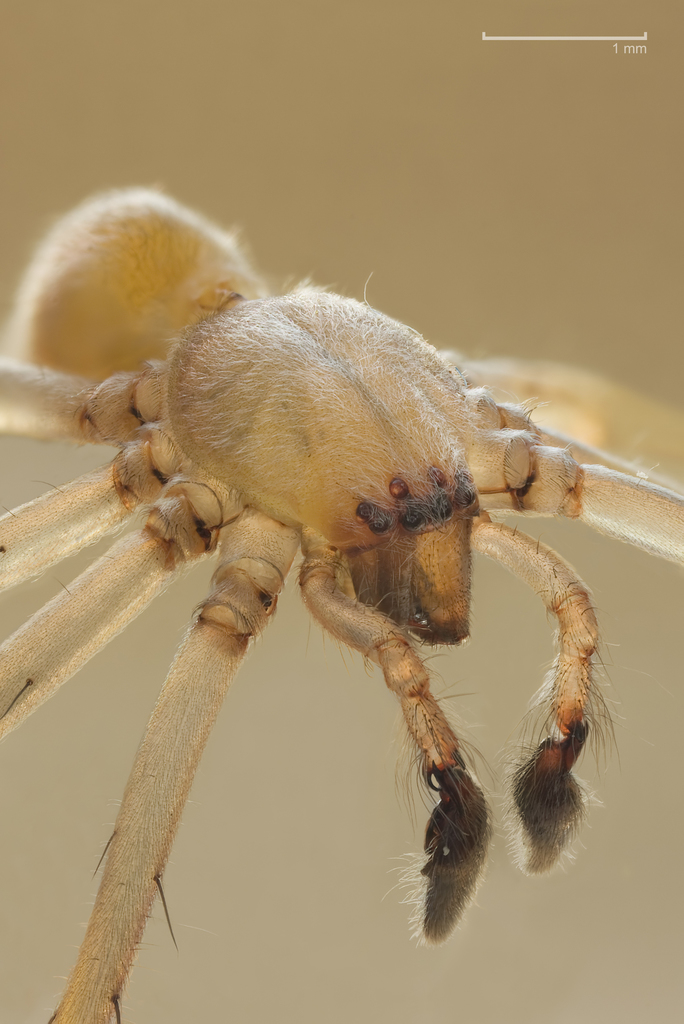
The northern yellow sac spider is a small, pale yellowish spider about 7 to 10 mm long that often lives indoors and hides in silken sacs. It may bite when trapped against skin in clothing or bedding, causing a brief sting-like pain, redness and sometimes swelling, but the reaction is mild.
Source: Wikipedia, Utah State Extension, UC IPM
How to recognize it
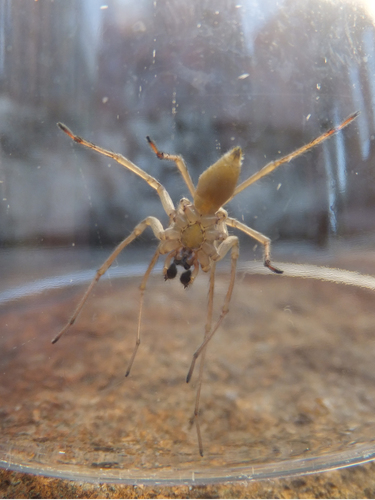
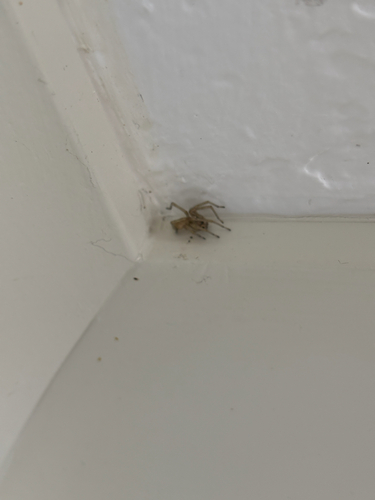
The body is pale green or tan with yellowish coloration and darker brown mouthparts. Each leg ends in double claws; the front pair can be up to twice as long as the others. Leg tips have brown-to-black tufts of hair that look like socks. Overall they are medium-sized, nocturnal, pale spiders with few markings.
Source: Wikipedia, Utah State Extension, UC IPM
Size
Adults measure roughly 7 to 10 mm (0.3 to 0.4 in) in body length.
Source: Wikipedia
Is it a pest in the house?
Inside homes they spin silken sac webs in ceiling corners, wall edges, behind shelves and pictures.
Source: UC IPM
Does it bite or sting?
Bites are possible but cause only mild symptoms similar to a bee sting, with redness and occasional swelling. Spiders may bite aggressively when pressed against the skin.
Source: Wikipedia, UC IPM, Utah State Extension
How to get rid of it
Remove webs and hiding places by sweeping, mopping and vacuuming regularly indoors. Reduce habitat by sealing cracks, removing clutter and minimizing vegetation near the building.
Source: UC IPM, Utah State Extension
Where it lives
They are common in the northeastern US and eastern Canada, preferring indoor locations over outdoors.
Source: Wikipedia
What it eats
In Africa and the Middle East they are a major predator of the moth Spodoptera littoralis, killing larvae directly and dispersing them from host plants.
Source: Wikipedia
Where it comes from
The species is native to Europe, North Africa, the Caucasus and Central Asia.
Source: Wikipedia
Lookalikes
It belongs to the sac-spider group and can be confused with other twoclawed hunting spiders in the Clubionidae family. Although they may look insect-like, they are arachnids, not insects.
Where it is found in the US
Recorded in 45 of 51 states and DC. Most records: California, Colorado, New York, Pennsylvania, Ohio, Illinois, Michigan, Washington.
Darker = more records. Counts are museum and citizen-science records, not population size.
Source: GBIF
Status: introduced in North America; introduced in Canada; introduced in United States. Source: iNaturalist
Months it is reported in the US
Source: GBIF
More photos
Questions people ask
How can I get rid of northern yellow sac spiders indoors?
Sweep, mop and vacuum regularly to remove their webs and hideouts, and seal cracks and crevices to limit entry.
Source: UC IPM, Utah State Extension
Do they bite humans?
Yes, they can bite when trapped against the skin, but the bite is usually mild with only brief pain, redness and occasional swelling.
Source: Wikipedia, UC IPM, Utah State Extension
What do they look like?
They are small (7 to 10 mm), pale yellowish spiders with darker brown mouthparts, double-clawed legs, and the front legs are much longer than the others.
Source: Wikipedia, Utah State Extension
Same family (Cheiracanthiidae)

Sources
- Wikipedia: https://en.wikipedia.org/wiki/Cheiracanthium_mildei
- UC IPM: https://ipm.ucanr.edu/PMG/PESTNOTES/pn7442.html
- Utah State Extension: https://extension.usu.edu/planthealth/ipm/structural-pest-id-guide/sac-spiders
Look it up elsewhere: GBIF · iNaturalist · BugGuide · ITIS · Wikipedia
Text written 2026-10-23 from the sources above and checked sentence by sentence against them. Data fetched 2026-10-23.