 Bug FAQ
Northern Wave Moth
Cabera exanthemata · Order: Lepidoptera · Family: Geometridae
Also called: Common Wave
Source: Wikipedia
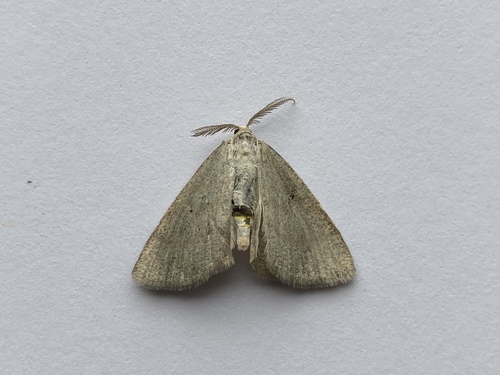
Adults have a wingspan of about three centimeters and their white wings are speckled with tiny yellow dots, giving a buff-colored look. Thin brown bands cross the forewings three times and the hindwings twice, helping to identify the moth. They are found across the Palearctic region and the Near East, fly at night, and can be seen from May through August.
Source: Wikipedia
How to recognize it
The moth’s wings are white with many small yellowish spots that give a buffish appearance. Narrow brown bands appear three times on the forewing and twice on the hindwing.
Source: Wikipedia
Size
The wingspan ranges from 30 to 35 mm.
Source: Wikipedia
What it eats
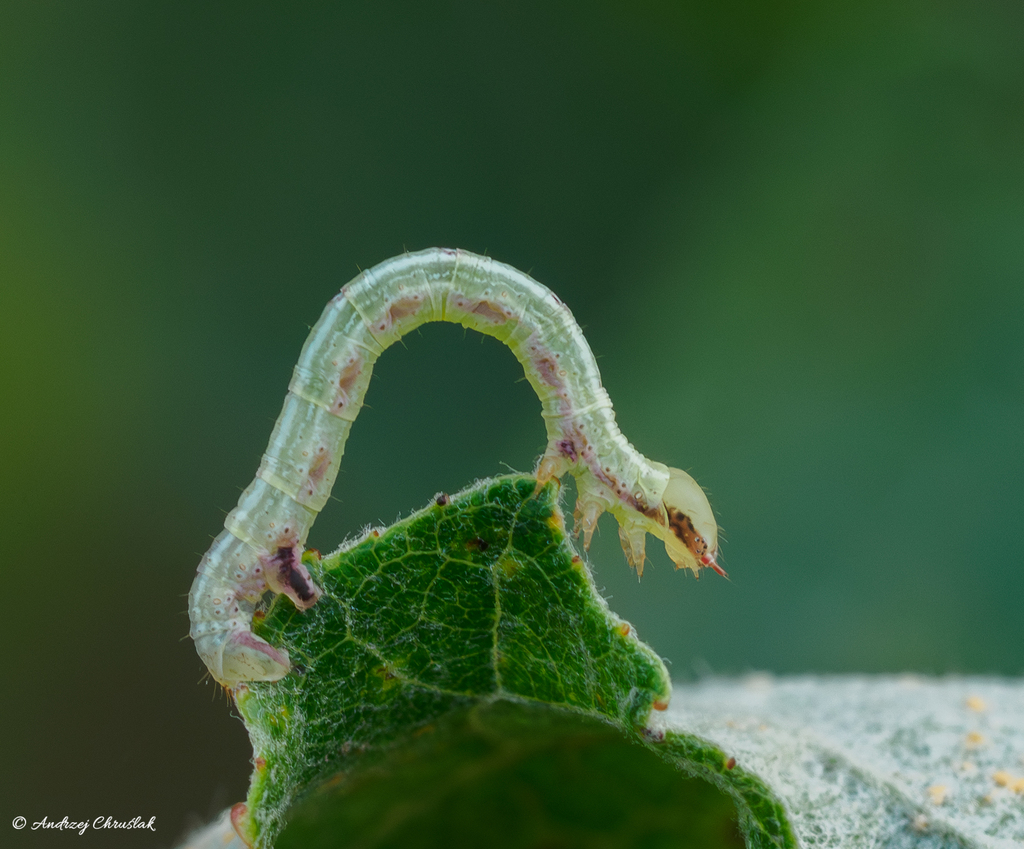
Caterpillars are green with yellow rings and black-purple spots and eat the leaves of alder, aspen, beech, birch and willow.
Source: Wikipedia
Life cycle
The species overwinters in the pupal stage. One or two generations are produced each year, with adults on the wing from May to August.
Source: Wikipedia
When you see it
Adults can be seen any time between May and August. They are nocturnal and are attracted to light sources.
Source: Wikipedia
Where it comes from
Its native range covers the Palearctic and the Near East.
Source: Wikipedia
Lookalikes
The form ab. arenosaria is darker and more heavily dusted, with faint or missing lines. The form ab. approximaria has the first two lines very close together, almost merging.
Source: Wikipedia
Where it is found in the US
Recorded in 10 of 51 states and DC. Most records: Alaska, Washington, Minnesota, Idaho, Montana, Nevada, New York, Wyoming.
Darker = more records. Counts are museum and citizen-science records, not population size.
Source: GBIF
Status: native in North America; native in Canada. Source: iNaturalist
Months it is reported in the US
Source: GBIF
More photos
Questions people ask
Do the caterpillars damage trees?
Yes, the larvae feed on the foliage of alder, aspen, beech, birch and willow, which can harm those trees.
Source: Wikipedia
When are Northern Wave Moths active?
Adults are active from May through August and are attracted to lights at night.
Source: Wikipedia
Where can I find this species?
It is widespread across the Palearctic region and the Near East.
Source: Wikipedia
Same family (Geometridae)
 Willow BeautyPeribatodes rhomboidaria
 Pale BeautyCampaea perlataDamages trees, gardens or crops
 Large Lace-border MothScopula limboundataDamages trees, gardens or crops
 Riband WaveIdaea aversata
 Yellow Shell MothCamptogramma bilineata
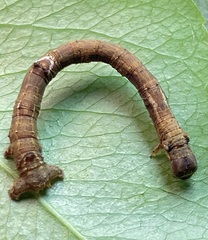 Large Maple Spanworm MothProchoerodes lineolaDamages trees, gardens or crops
Sources
- Wikipedia: https://en.wikipedia.org/wiki/Common_wave
Look it up elsewhere: GBIF · iNaturalist · BugGuide · ITIS · Wikipedia
Text written 2026-10-22 from the sources above and checked sentence by sentence against them. Data fetched 2026-10-22.