 Bug FAQ
Northern Walkingstick
Diapheromera femorata · Order: Phasmida · Family: Diapheromeridae
Also called: Common American Walkingstick, Common Walkingstick, walkingstick
Source: Wikipedia
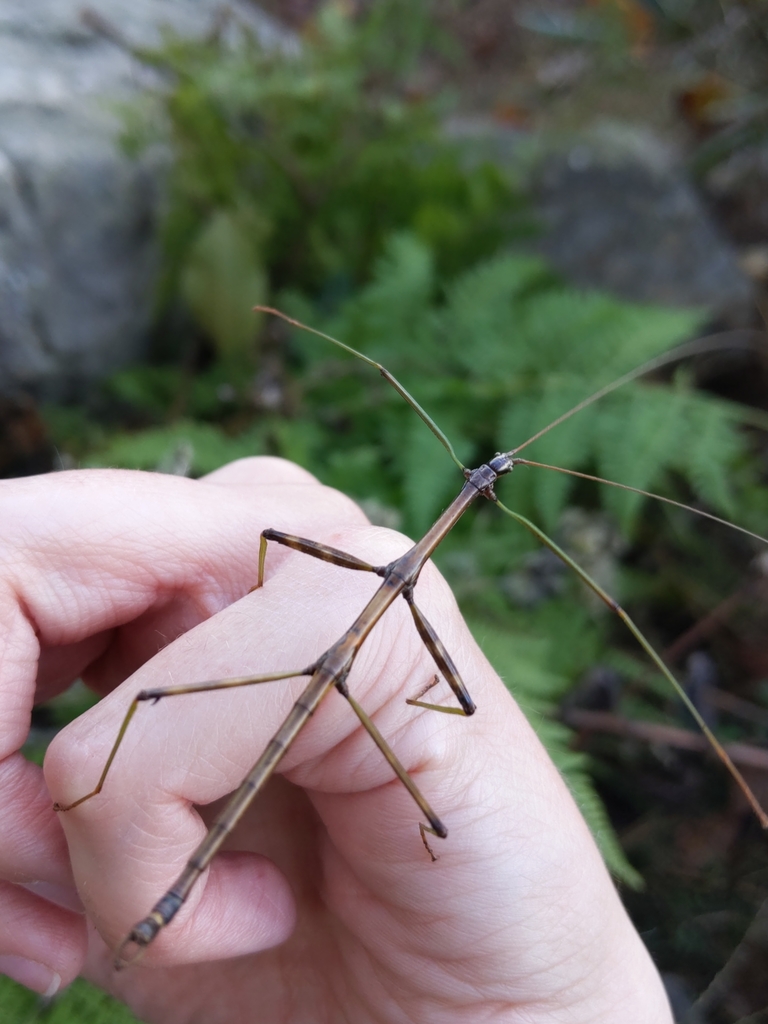
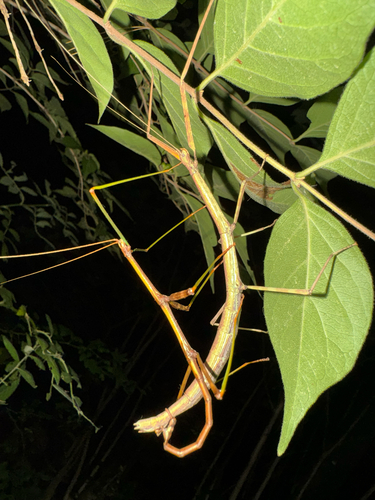
Northern Walkingsticks are slender insects that look like twigs and live in deciduous forests across North America. Males are brown and about 75 mm long, while females are greenish-brown and about 95 mm long. They feed on leaf tissue between the veins, which can harm trees and shrubs.
Source: Wikipedia
How to recognize it
They are very thin and elongated, resembling a twig for camouflage.
Source: Wikipedia
Size
Males average about 75 mm (3 in) in length and are brown. Females are larger, about 95 mm (3.7 in), and are greenish-brown.
Source: Wikipedia
Where it lives
They live in deciduous forests throughout North America. They have no wings, so they move only short distances between trees.
Source: Wikipedia
What it eats
They are herbivores that eat leaves of trees. They skeletonise leaves by eating the tissue between the veins before moving to another leaf.
Source: Wikipedia
Life cycle
They develop through several nymph stages in a hemimetabolous life cycle. Females lay single eggs about a week after mating; the eggs are about 2.5 mm and are dropped to the forest floor.
Source: Wikipedia
When you see it
They can feed any time of day, but most feeding occurs between 9 pm and 3 am.
Source: Wikipedia
Where it comes from
Their native range covers the United States from Maine to Florida, west to California, north to North Dakota, and includes parts of Canada.
Source: Wikipedia
Where it is found in the US
Recorded in 41 of 51 states and DC. Most records: Pennsylvania, New York, Michigan, Ohio, Virginia, Tennessee, Maryland, Wisconsin.
Darker = more records. Counts are museum and citizen-science records, not population size.
Source: GBIF
Status: native in North America; native in United States; native in Canada. Source: iNaturalist
Months it is reported in the US
Source: GBIF
More photos
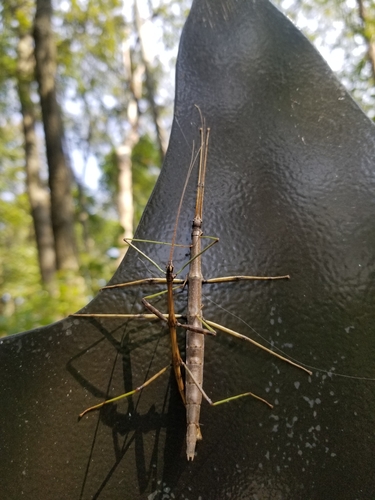
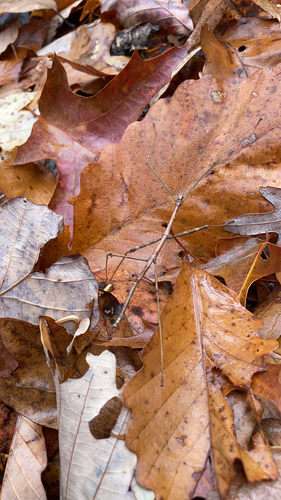
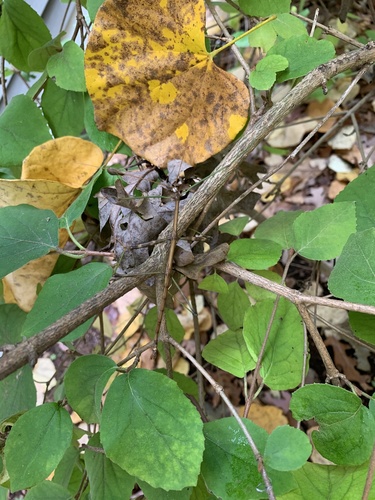
Questions people ask
Can they damage my garden or trees?
Yes, by eating leaf tissue they can harm trees and shrubs in a garden.
Source: Wikipedia
When are they most active?
They feed most actively from night until early morning, especially between 9 pm and 3 am.
Source: Wikipedia
Where are they found?
They live in deciduous forests across much of North America, from the Atlantic coast to the west and into Canada.
Source: Wikipedia
Same family (Diapheromeridae)
Sources
- Wikipedia: https://en.wikipedia.org/wiki/Common_walkingstick
Look it up elsewhere: GBIF · iNaturalist · BugGuide · ITIS · Wikipedia
Text written 2026-10-22 from the sources above and checked sentence by sentence against them. Data fetched 2026-10-22.