 Bug FAQ
Giant Walkingstick
Megaphasma denticrus · Order: Phasmida · Family: Diapheromeridae
Source: Wikipedia
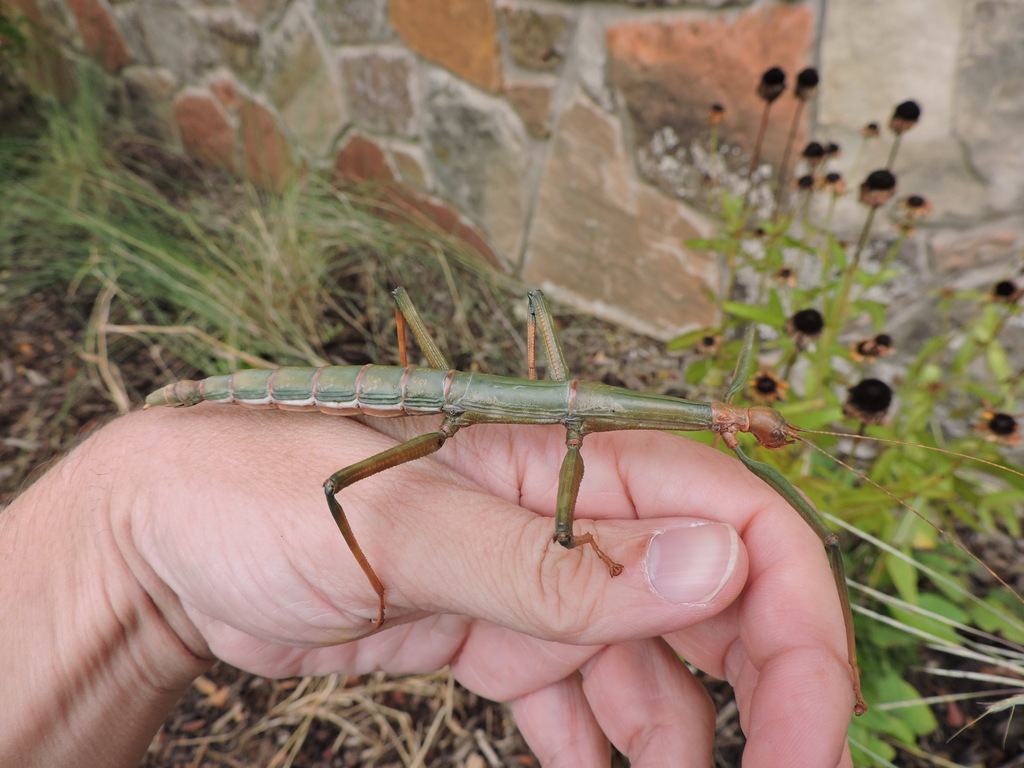
The giant walkingstick can grow up to 7 inches long, making it the largest insect in North America.
Source: Wikipedia
How to recognize it
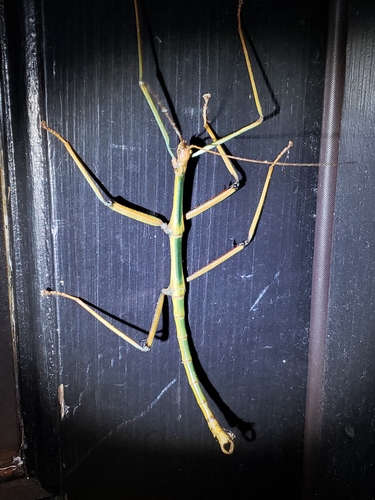
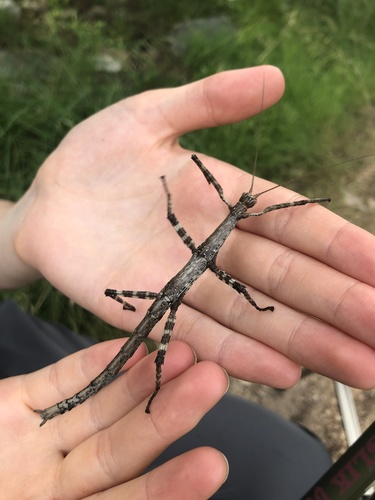
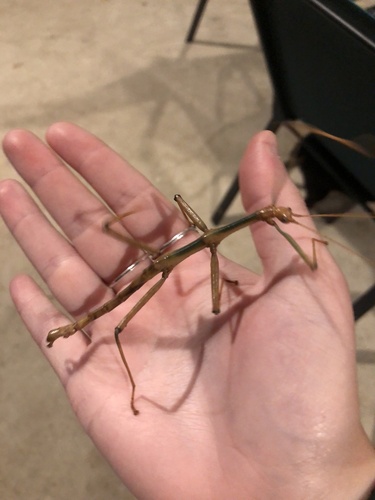
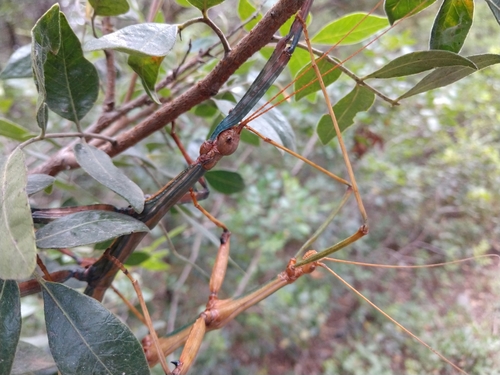
Adults range in color from green to brown, with males usually brighter than females.
Source: Wikipedia
Size
They can reach up to 7 inches in length, the largest insect in North America.
Source: Wikipedia
What it eats
They feed on foliage of grasses, grapevines, oak, elm and mesquite, blending into the woody parts of their habitat.
Source: Wikipedia
Life cycle
Adults live about 50 days, and females often mate with multiple males.
Source: Wikipedia
Where it comes from
Their range includes Texas, Oklahoma, Indiana, Alabama, Kentucky, Wisconsin, New Mexico and Mexico.
Source: Wikipedia
Where it is found in the US
Recorded in 15 of 51 states and DC. Most records: Texas, Arkansas, Louisiana, Oklahoma, Missouri, Mississippi, Tennessee, Illinois.
Darker = more records. Counts are museum and citizen-science records, not population size.
Source: GBIF
Months it is reported in the US
Source: GBIF
More photos
Questions people ask
How big do giant walkingsticks get?
They can grow up to 7 inches long, the largest insect in North America.
Source: Wikipedia
What colors are giant walkingsticks?
Their bodies range from green to brown, with males usually brighter than females.
Source: Wikipedia
What do giant walkingsticks eat?
They feed on the leaves of grasses, grapevines, oak, elm and mesquite, using camouflage to blend into their woody surroundings.
Source: Wikipedia
Same family (Diapheromeridae)
Sources
- Wikipedia: https://en.wikipedia.org/wiki/Megaphasma_denticrus
Look it up elsewhere: GBIF · iNaturalist · BugGuide · ITIS · Wikipedia
Text written 2026-10-22 from the sources above and checked sentence by sentence against them. Data fetched 2026-10-22.