 Bug FAQ
New Zealand Looper
Epyaxa rosearia · Order: Lepidoptera · Family: Geometridae
Also called: Common Carpet

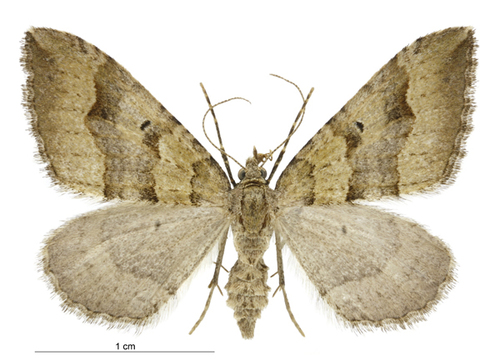
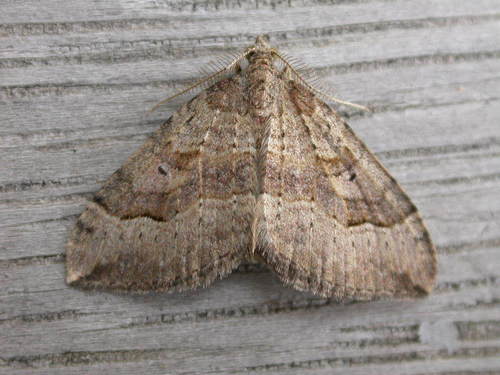
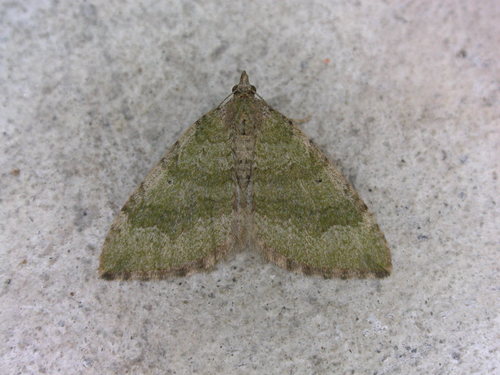
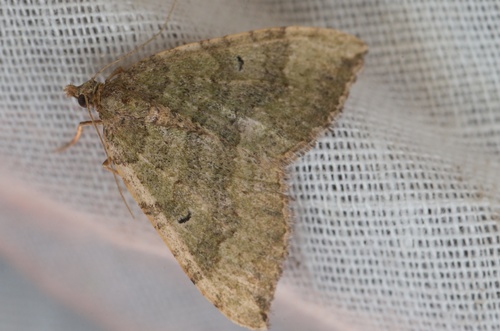
Adult New Zealand Looper moths vary in colour, often showing pinkish, brownish or olive-green tones. The caterpillars are light-green with faint whitish lines and a narrow dorsal stripe. They are common throughout New Zealand, live among forest-floor leaves, and the larvae feed on several exotic garden plants such as nasturtium, plantain and clover.
Source: Wikipedia
How to recognize it
Adults may appear pinkish, brownish, or olive-green.
Source: Wikipedia
Where it lives
They are found among leaves on the forest floor and are very common throughout New Zealand.
Source: Wikipedia
What it eats
Larvae have been recorded feeding on exotic plants such as watercress, plantain, white clover, red clover, and nasturtium.
Source: Wikipedia
Life cycle
The caterpillars form a glossy, very dark brown-black chrysalis.
Source: Wikipedia
When you see it
Adults are attracted to light and are often collected using mercury-vapour light traps.
Source: Wikipedia
Where it comes from
The species is endemic to New Zealand.
Source: Wikipedia
More photos
Questions people ask
What do the caterpillars of the New Zealand Looper look like?
They are light-green with faint whitish longitudinal lines, a narrow median dorsal stripe edged by whitish lines, and similar markings on the underside.
Source: Wikipedia
Where are New Zealand Looper moths commonly found?
They are very common throughout New Zealand and live among leaves on the forest floor.
Source: Wikipedia
What plants do the larvae of the New Zealand Looper eat?
The larvae feed on exotic garden plants such as watercress, plantain, white and red clover, nasturtium, and also on Caucasian clover.
Source: Wikipedia
Same family (Geometridae)
 Willow BeautyPeribatodes rhomboidaria
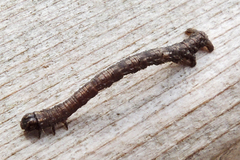 Pale BeautyCampaea perlataDamages trees, gardens or crops
 Large Lace-border MothScopula limboundataDamages trees, gardens or crops
 Riband WaveIdaea aversata
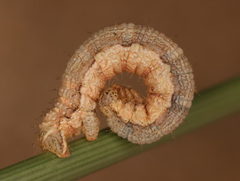 Yellow Shell MothCamptogramma bilineata
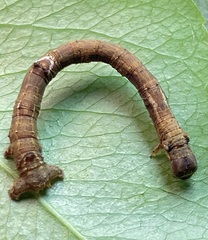 Large Maple Spanworm MothProchoerodes lineolaDamages trees, gardens or crops
Sources
- Wikipedia: https://en.wikipedia.org/wiki/Epyaxa_rosearia
Look it up elsewhere: GBIF · iNaturalist · BugGuide · Wikipedia
Text written 2026-10-22 from the sources above and checked sentence by sentence against them. Data fetched 2026-10-22.