 Bug FAQ
Nevromus austroindicus
Nevromus austroindicus · Order: Megaloptera · Family: Corydalidae

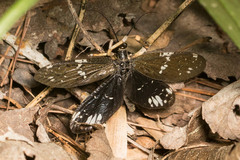
The adult has a yellow head and thorax and its forewings show relatively large black spots on the crossveins. It lives in the Western Ghats of India and is one of only two Corydalidae species recorded from southern India. Like other tropical dobsonflies, it may need about two years to develop from egg to adult.
Source: Wikipedia
How to recognize it
The head and thorax are yellow. The forewings have black spots on the crossveins that are larger than those of other species in the genus.
Source: Wikipedia
Life cycle
Metamorphosis to the adult stage may require roughly two years.
Source: Wikipedia
Where it comes from
It is found in the Western Ghats of India.
Source: Wikipedia
Lookalikes
The only other Corydalidae species in southern India is Neurhermes maculifera.
Source: Wikipedia
Questions people ask
What does Nevromus austroindicus look like?
It has a yellow head and thorax, and its forewings bear relatively large black spots on the crossveins.
Source: Wikipedia
How long does it take for Nevromus austroindicus to become an adult?
Like other tropical dobsonflies, it may need about two years to complete its metamorphosis.
Source: Wikipedia
What other dobsonfly species lives in southern India?
The only other Corydalidae species there is Neurhermes maculifera.
Source: Wikipedia
Same family (Corydalidae)




Sources
- Wikipedia: https://en.wikipedia.org/wiki/Nevromus_austroindicus
Look it up elsewhere: GBIF · iNaturalist · BugGuide · Wikipedia
Text written 2026-10-23 from the sources above and checked sentence by sentence against them. Data fetched 2026-10-23.