 Bug FAQ
Neotropical Deer Ked
Lipoptena mazamae · Order: Diptera · Family: Hippoboscidae
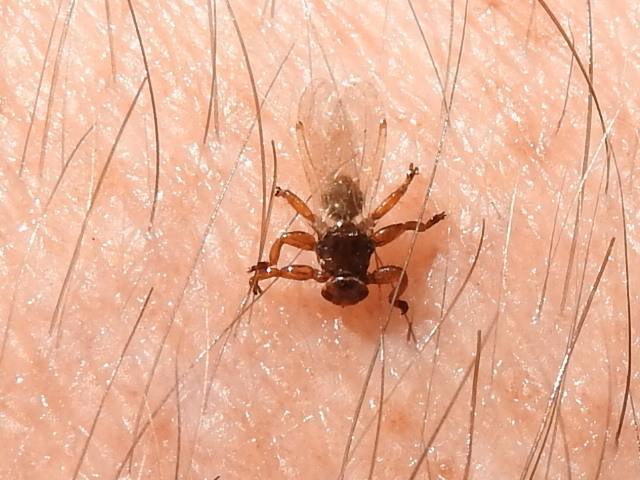
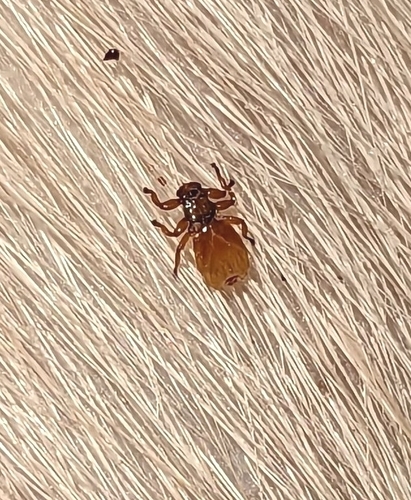
The neotropical deer ked is a tiny brown, flattened fly with a hard exoskeleton that lives on white-tailed deer in the southeastern United States, red brocket deer from Mexico to northern Argentina, and occasionally on cattle, cougars and people. Females are 3.5 to 4.5 mm long, males about 3 mm, and the female retains a single larva inside until it pupates, forming a hard dark puparium after three larval stages.
Source: Wikipedia
How to recognize it
They look like tiny brown, flattened flies with a tough protective exoskeleton.
Source: Wikipedia
Size
Females measure about 3.5 to 4.5 mm, while males are roughly 3 mm long.
Source: Wikipedia
Can it bite, sting or make you sick?
They have been found to carry several Bartonella bacteria, but it has not been proven that they transmit the infection to people.
Source: Wikipedia
What it eats
Both males and females feed on blood.
Source: Wikipedia
Life cycle
The female produces one larva at a time and keeps it inside her body until it is ready to pupate. After three larval instars the larva becomes a white pre-pupa that immediately forms a hard dark puparium.
Source: Wikipedia
Where it comes from
They are native to the southeastern United States and extend through Central America down to northern Argentina.
Source: Wikipedia
Lookalikes
They are often misidentified as ticks.
Source: Wikipedia
Where it is found in the US
Recorded in 18 of 51 states and DC. Most records: Texas, Georgia, North Carolina, Florida, Kansas, Alabama, Tennessee, Mississippi.
Darker = more records. Counts are museum and citizen-science records, not population size.
Source: GBIF
Months it is reported in the US
Source: GBIF
More photos
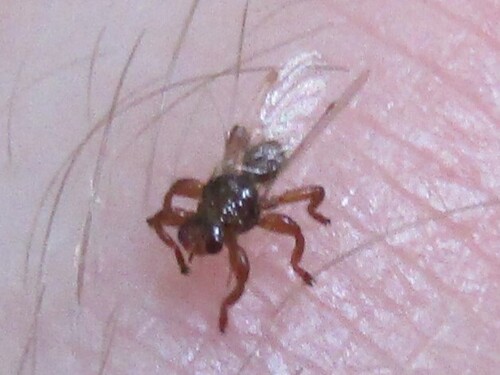
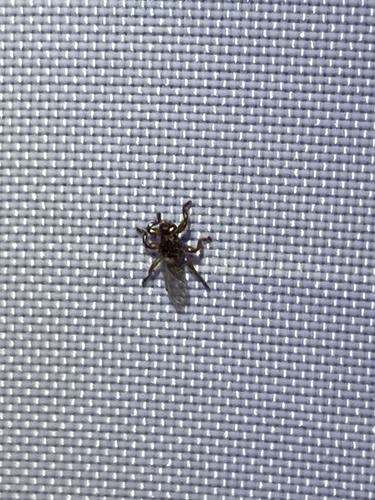
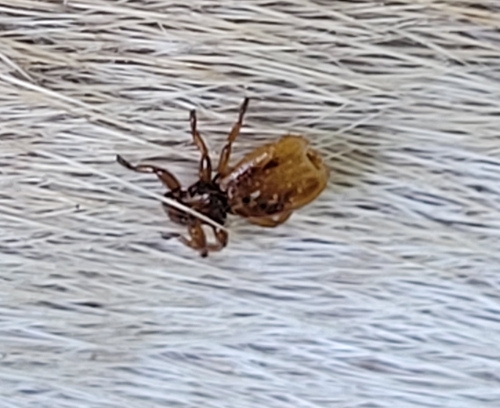
Questions people ask
What animals do neotropical deer keds parasitize?
They normally parasitize white-tailed deer, red brocket deer, and can also be found on domestic cattle, cougars and occasionally on people.
Source: Wikipedia
Do they bite people?
They feed on blood and have been found on people, but there is no proof that they bite or transmit disease to humans.
Source: Wikipedia
Same family (Hippoboscidae)


Sources
- Wikipedia: https://en.wikipedia.org/wiki/Lipoptena_mazamae
Look it up elsewhere: GBIF · iNaturalist · BugGuide · ITIS · Wikipedia
Text written 2026-10-26 from the sources above and checked sentence by sentence against them. Data fetched 2026-10-26.