 Bug FAQ
Nearctic Carpenter Ant
Camponotus nearcticus · Order: Hymenoptera · Family: Formicidae
Also called: Smaller Carpenter Ant
Source: Wikipedia
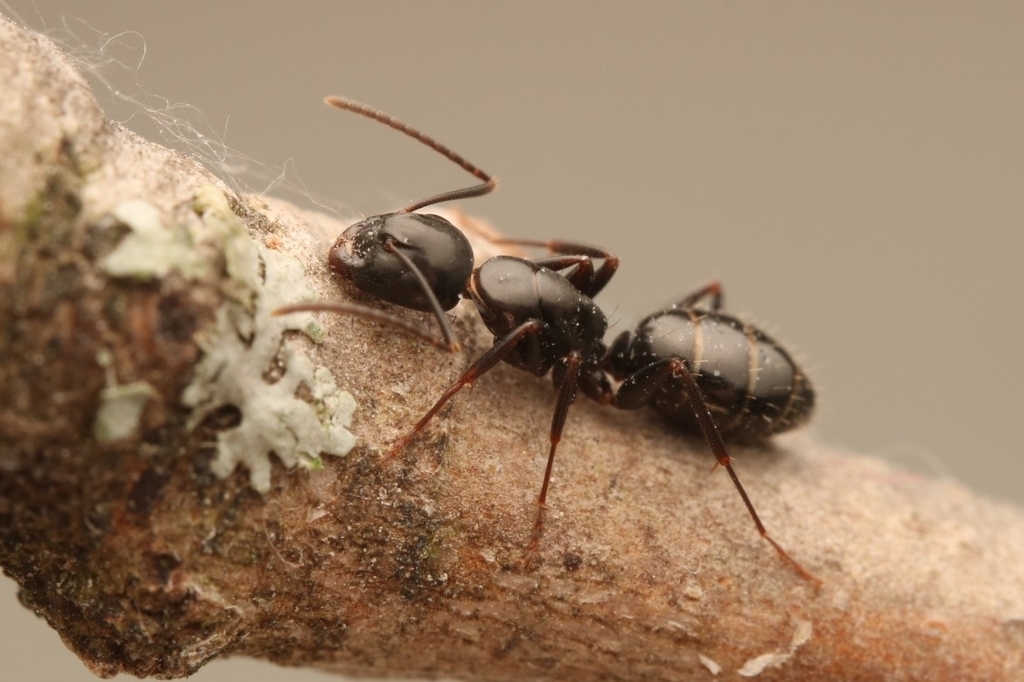
Workers are 3.5 to 7.5 mm long and queens 4 to 10 mm. They live in dead wood, logs, bark, pine cones and often in building roofs, preferring prairies and woodlands. They are found across the United States and Canada, from Ontario down to Florida and west to Colorado.
Source: Wikipedia
How to recognize it
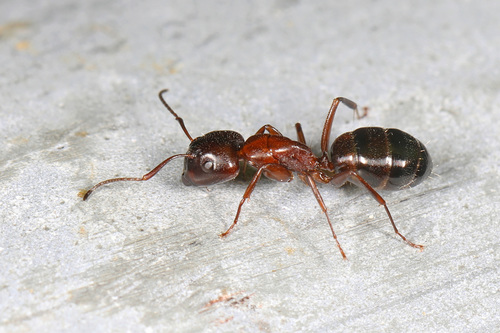
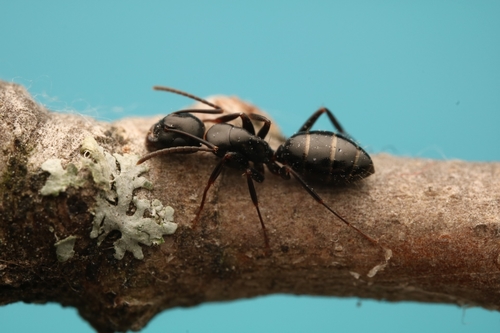
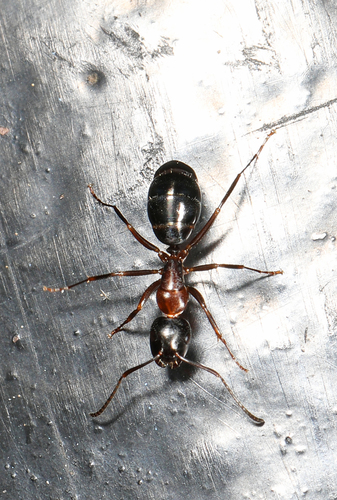
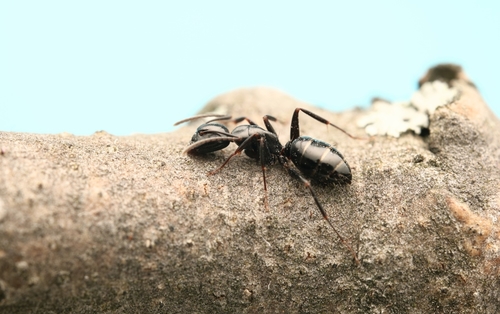
They have a uniform dark brown-black color with a few erect hairs on the gena and clypeal disc.
Source: Wikipedia
Size
Queens range from 4 to 10 mm in length.
Source: Wikipedia
Is it a pest in the house?
It is considered a household pest.
Source: Wikipedia
Where it lives
Preferred habitats are prairies and woodlands. Colonies nest in dead twigs, branches, logs, bark, pine cones and wooden parts of buildings, especially rooftops.
Source: Wikipedia
When you see it
Reproductive ants are usually seen from March to October.
Source: Wikipedia
Where it comes from
Found in the United States and Canada.
Source: Wikipedia
Lookalikes
It looks similar to the black garden ant, Formica subsericea.
Source: Wikipedia
Where it is found in the US
Recorded in 45 of 51 states and DC. Most records: Virginia, New York, North Carolina, Maryland, Massachusetts, Pennsylvania, Illinois, Mississippi.
Darker = more records. Counts are museum and citizen-science records, not population size.
Source: GBIF
Status: native in North America; native in Canada; native in United States. Source: iNaturalist
Months it is reported in the US
Source: GBIF
More photos
Questions people ask
How can I tell a Nearctic carpenter ant from other ants?
Look for a uniform dark brown-black color and a few short hairs on the sides of the head (gena) and the clypeal disc.
Source: Wikipedia
Where do these ants usually nest?
They nest in dead wood such as twigs, branches, logs, bark, pine cones, and often in wooden parts of buildings like rooftops.
Source: Wikipedia
What time of year are they active?
Reproductive ants are typically seen from March through October.
Source: Wikipedia
Same family (Formicidae)
 Eastern Black Carpenter AntCamponotus pennsylvanicusCan damage your home
 Red Imported Fire AntSolenopsis invictaCan sting
 American Winter AntPrenolepis imparis
 Argentine AntLinepithema humileNuisance, not dangerous
 Immigrant Pavement AntTetramorium immigransCan sting
 Odorous House AntTapinoma sessileCan damage your home
Sources
- Wikipedia: https://en.wikipedia.org/wiki/Camponotus_nearcticus
Look it up elsewhere: GBIF · iNaturalist · BugGuide · ITIS · Wikipedia
Text written 2026-10-22 from the sources above and checked sentence by sentence against them. Data fetched 2026-10-22.