 Bug FAQ
Mung Bean Moth
Maruca vitrata · Order: Lepidoptera · Family: Crambidae
Also called: Mung Moth, Bean-pod Borer, Legume Pod Borer, Maruca pod borer
Source: Wikipedia

Maruca vitrata, known as the mung bean moth, is a pantropical pest of many legume crops and can cause 20-80 % loss in harvests. The larvae feed on flower buds, flowers, young pods and sometimes stems, reducing yield and quality. Biological control using parasitoid wasps and flies, as well as Bt-engineered cowpeas, are used to manage it.
Source: Wikipedia
Size
Infestations can reduce cowpea harvests by 20 to 80 percent.
Source: Wikipedia
Is it a pest in the house?
It is a pest of leguminous field crops, not a household nuisance.
Source: Wikipedia
How to get rid of it
Parasitoid wasps (Braconidae, Ichneumonidae) and tachinid flies naturally attack the moth. Bt-engineered cowpeas and specific pesticides have been developed to suppress its reproduction.
Source: Wikipedia
Where it lives
It lives in tropical regions and attacks legume crops such as pigeon pea, cowpea, mung bean and soybean.
Source: Wikipedia
What it eats
Larvae feed on flower buds, flowers, young pods and sometimes on flower stalks and young stems.
Source: Wikipedia
Where it comes from
The moth occurs worldwide in tropical areas of Asia, Africa, the Americas, the Caribbean, Europe, Australia and Oceania.
Source: Wikipedia
Where it is found in the US
Recorded in 4 of 51 states and DC. Most records: Hawaii, Florida, Arizona, Texas.
Darker = more records. Counts are museum and citizen-science records, not population size.
Source: GBIF
Months it is reported in the US
Source: GBIF
More photos
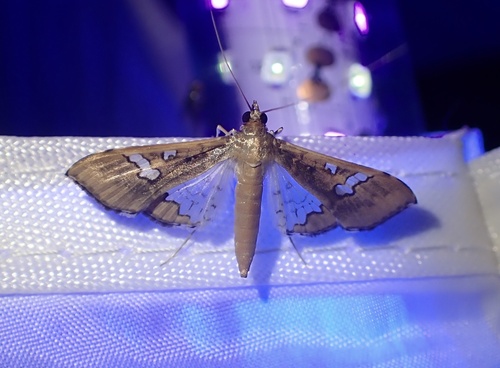

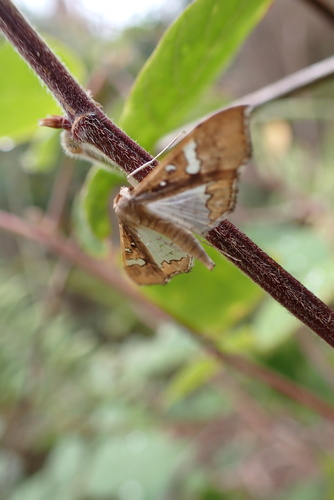
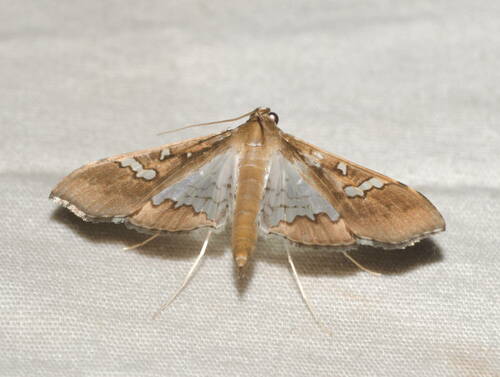
Questions people ask
How can I protect my garden from this moth?
Use biological controls such as parasitoid wasps or plant Bt-engineered legumes, and apply appropriate pesticides if needed.
Source: Wikipedia
What crops are most at risk?
Cowpeas, mung beans, pigeon peas and soybeans are the primary targets.
Source: Wikipedia
Same family (Crambidae)
 Box Tree MothCydalima perspectalisDamages trees, gardens or crops
 Celery Leaftier MothUdea rubigalisDamages trees, gardens or crops
 Elegant Grass-veneerMicrocrambus elegans
 Hawaiian Beet Webworm MothSpoladea recurvalisDamages trees, gardens or crops
 Garden Grass-veneerChrysoteuchia culmellaDamages trees, gardens or crops
 Bluegrass Webworm MothParapediasia teterrellusDamages trees, gardens or crops
Sources
- Wikipedia: https://en.wikipedia.org/wiki/Maruca_vitrata
Look it up elsewhere: GBIF · iNaturalist · BugGuide · Wikipedia
Text written 2026-10-22 from the sources above and checked sentence by sentence against them. Data fetched 2026-10-22.