 Bug FAQ
Mouse Spider
Scotophaeus blackwalli · Order: Araneae · Family: Gnaphosidae

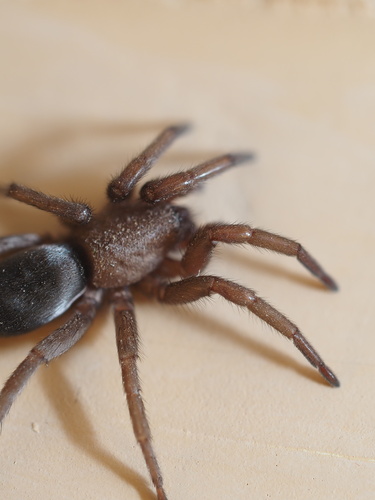
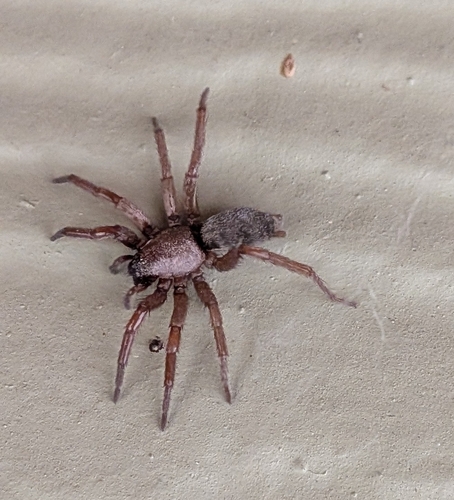
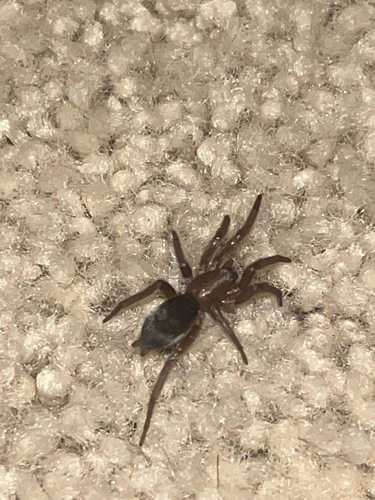
Adult males grow to about 9 mm and females to about 12 mm, maturing in early summer and persisting until autumn. They have a dark brown carapace, a brown-grey abdomen with mouse-like hairs, and brown legs covered in thick hair. These spiders live in houses, under bark and wall gaps, especially in Britain during autumn, and hunt insects and other spiders at night using sticky silk.
Source: Wikipedia
How to recognize it
The carapace is dark brown, the abdomen is brown-grey with mouse-like hairs, and the legs are brown with thick hair.
Source: Wikipedia
Size
Males reach about 9 mm and females about 12 mm in length.
Source: Wikipedia
Is it a pest in the house?
Often encountered around and inside homes in Britain, especially in autumn.
Source: Wikipedia
Where it lives
Found around and inside houses in Britain, especially in autumn, and also under bark and wall holes in warmer parts of Europe.
Source: Wikipedia
What it eats
Hunts insects and other spiders at night, using enlarged spinnerets to produce sticky silk, and also scavenges opportunistically.
Source: Wikipedia
Life cycle
Males mature in early summer and females can be found until autumn, reaching 9 mm and 12 mm respectively.
Source: Wikipedia
When you see it
Commonly seen in houses during the autumn months.
Source: Wikipedia
Where it is found in the US
Recorded in 5 of 51 states and DC. Most records: California, Washington, Oregon, Florida, Colorado.
Darker = more records. Counts are museum and citizen-science records, not population size.
Source: GBIF
Status: introduced in North America; introduced in Canada; introduced in United States. Source: iNaturalist
Months it is reported in the US
Source: GBIF
More photos

Same family (Gnaphosidae)

Sources
- Wikipedia: https://en.wikipedia.org/wiki/Scotophaeus_blackwalli
Look it up elsewhere: GBIF · iNaturalist · BugGuide · ITIS · Wikipedia
Text written 2026-10-24 from the sources above and checked sentence by sentence against them. Data fetched 2026-10-24.