 Bug FAQ
Eastern Parson Spider
Herpyllus ecclesiasticus · Order: Araneae · Family: Gnaphosidae
Also called: Parson Spider
Source: Wikipedia
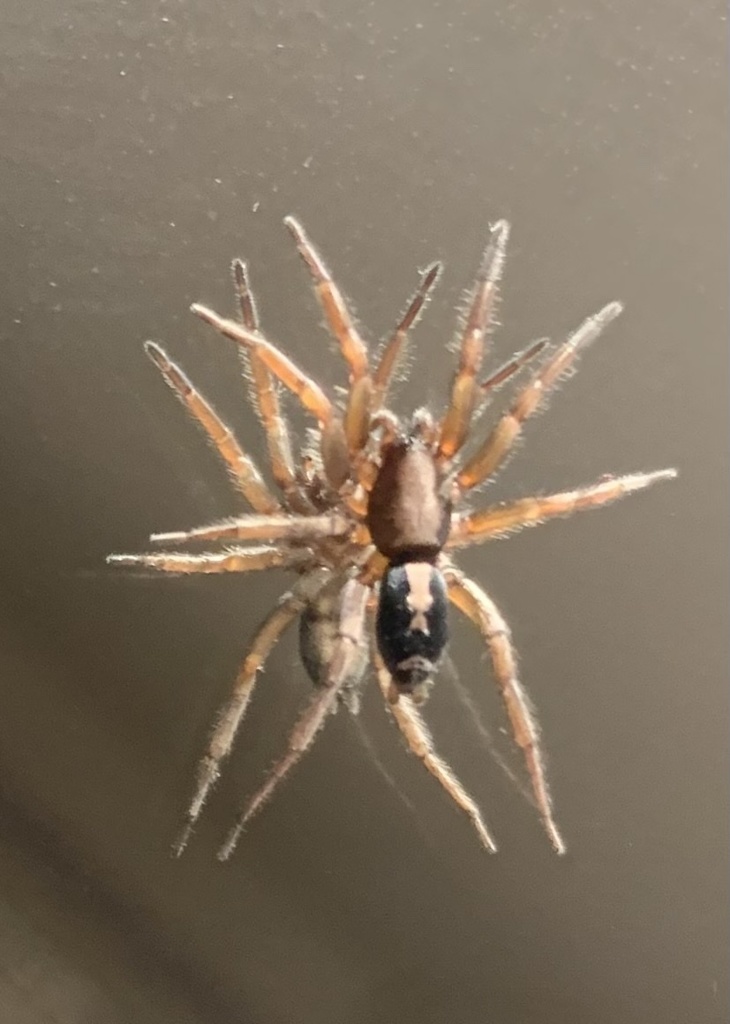
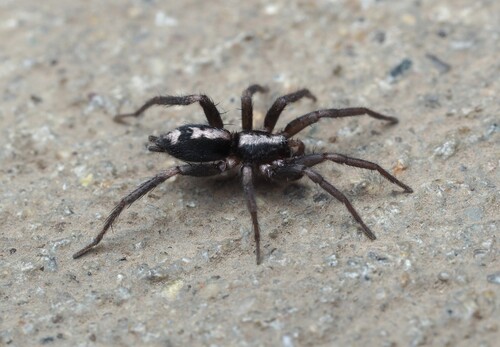
The Eastern Parson Spider has black hairs on its front body and gray hairs on its abdomen, with a distinctive white mark on its back and a small white spot near the spinnerets. It hunts at night by chasing prey, does not spin webs, and its bites are painful and can cause allergic reactions.
Source: Wikipedia
Size
The spider’s cephalothorax is covered in black hairs while the abdomen has gray hairs.
Source: Wikipedia
Is it a pest in the house?
It enters houses more often than other spiders and is usually seen on floors or low walls.
Source: Wikipedia
Does it bite or sting?
Bites are painful and some people may have an allergic reaction.
Source: Wikipedia
What it eats
It hunts at night, actively chasing prey rather than waiting in a web.
Source: Wikipedia
When you see it
Individuals are present year-round in both homes and natural habitats.
Source: Wikipedia
Where it comes from
It is native to eastern North America, from Alberta east to Nova Scotia, and south to Tamaulipas, Mexico, and Florida.
Source: Wikipedia
Where it is found in the US
Recorded in 44 of 51 states and DC. Most records: New York, Ohio, Virginia, Massachusetts, Pennsylvania, Michigan, North Carolina, Illinois.
Darker = more records. Counts are museum and citizen-science records, not population size.
Source: GBIF
Status: native in North America; native in United States; native in Canada. Source: iNaturalist
Months it is reported in the US
Source: GBIF
More photos
Questions people ask
Do Eastern Parson Spiders bite?
Yes, their bites are painful and can cause allergic reactions in some individuals.
Source: Wikipedia
What do Eastern Parson Spiders look like?
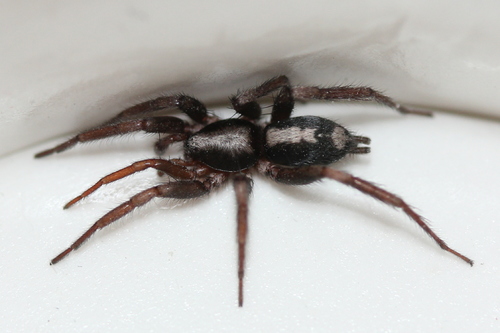
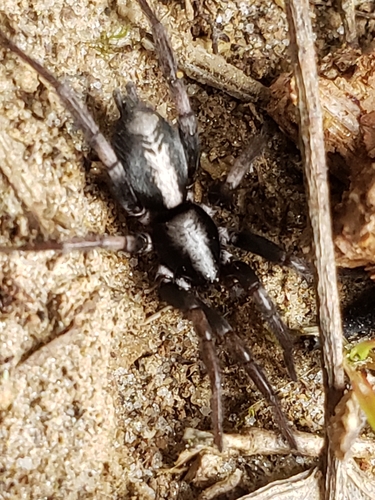
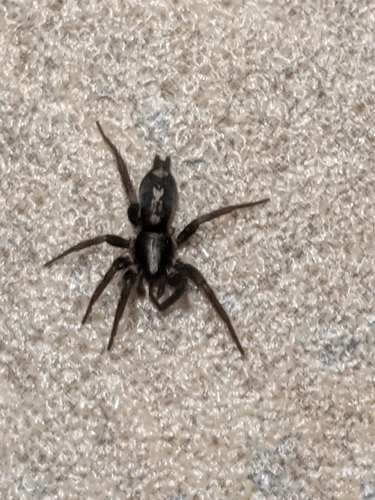
They have black hairs on the cephalothorax, gray hairs on the abdomen, and a distinctive white mark on the back with a small white spot above the spinnerets.
Source: Wikipedia
Sources
- Wikipedia: https://en.wikipedia.org/wiki/Herpyllus_ecclesiasticus
Look it up elsewhere: GBIF · iNaturalist · BugGuide · ITIS · Wikipedia
Text written 2026-10-22 from the sources above and checked sentence by sentence against them. Data fetched 2026-10-22.