 Bug FAQ
Mottled Umber
Erannis defoliaria · Order: Lepidoptera · Family: Geometridae
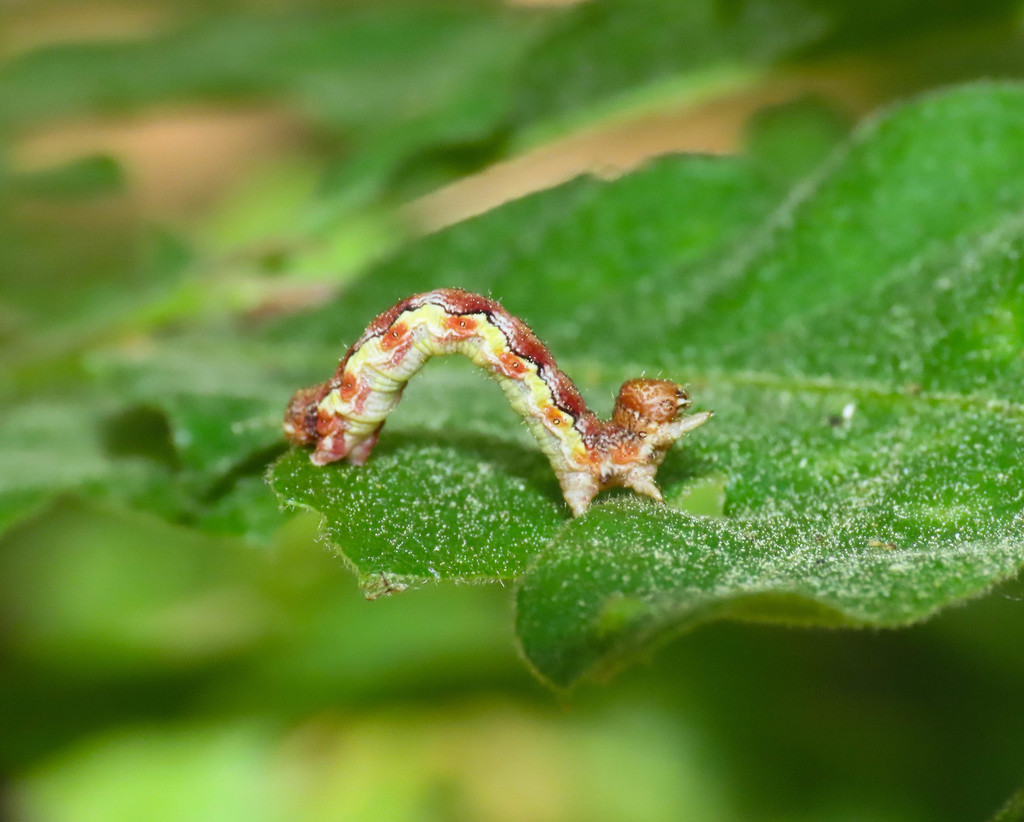
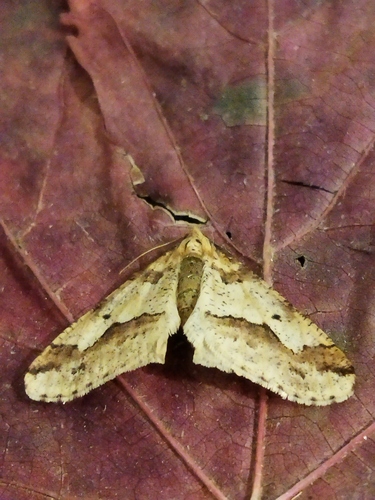
The mottled umber moth has a wingspan of about 30-40 mm and its forewings are pale yellowish with dark grey shading, dark brown bands, and a grey-black spot on each wing. It is common across much of the Palearctic, from northern Scandinavia down to the Mediterranean and east through the Caucasus to the Russian Far East. Adults appear from September to December, flying mainly in October to December in temperate areas, and the species overwinters as an egg.
Source: Wikipedia
How to recognize it
Forewings are pale yellow or light yellow-ochre with dark grey suffusion, dark brown basal and distal bands, and a grey-black discal spot on each wing.
Source: Wikipedia
Size
Wingspan ranges from 30 to 40 mm.
Source: Wikipedia
Life cycle
The species overwinters as an egg.
Source: Wikipedia
Lookalikes
Similar species include Agriopis aurantiaria and Agriopis marginaria.
Source: Wikipedia
Where it is found in the US
Recorded in 1 of 51 states and DC. Most records: New Mexico.
Darker = more records. Counts are museum and citizen-science records, not population size.
Source: GBIF
More photos
Questions people ask
When can I see adult mottled umber moths?
Adults are on the wing from September through December, with peak activity in October to December in temperate areas.
Source: Wikipedia
What does the mottled umber look like?
It has a 30-40 mm wingspan; forewings are pale yellowish with dark grey shading, dark brown bands, and a grey-black spot on each wing.
Source: Wikipedia
Where is the mottled umber found?
It is common across the Palearctic, from northern Scandinavia to the Mediterranean and east to the Russian Far East.
Source: Wikipedia
Same family (Geometridae)
 Willow BeautyPeribatodes rhomboidaria
 Pale BeautyCampaea perlataDamages trees, gardens or crops
 Large Lace-border MothScopula limboundataDamages trees, gardens or crops
 Riband WaveIdaea aversata
 Yellow Shell MothCamptogramma bilineata
 Large Maple Spanworm MothProchoerodes lineolaDamages trees, gardens or crops
Sources
- Wikipedia: https://en.wikipedia.org/wiki/Mottled_umber
Look it up elsewhere: GBIF · iNaturalist · BugGuide · Wikipedia
Text written 2026-10-22 from the sources above and checked sentence by sentence against them. Data fetched 2026-10-22.