 Bug FAQ
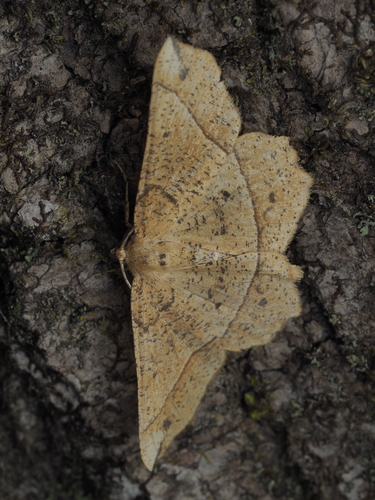
Mottled Euchlaena Moth
Euchlaena tigrinaria · Order: Lepidoptera · Family: Geometridae
Also called: Mottled Euchlaena
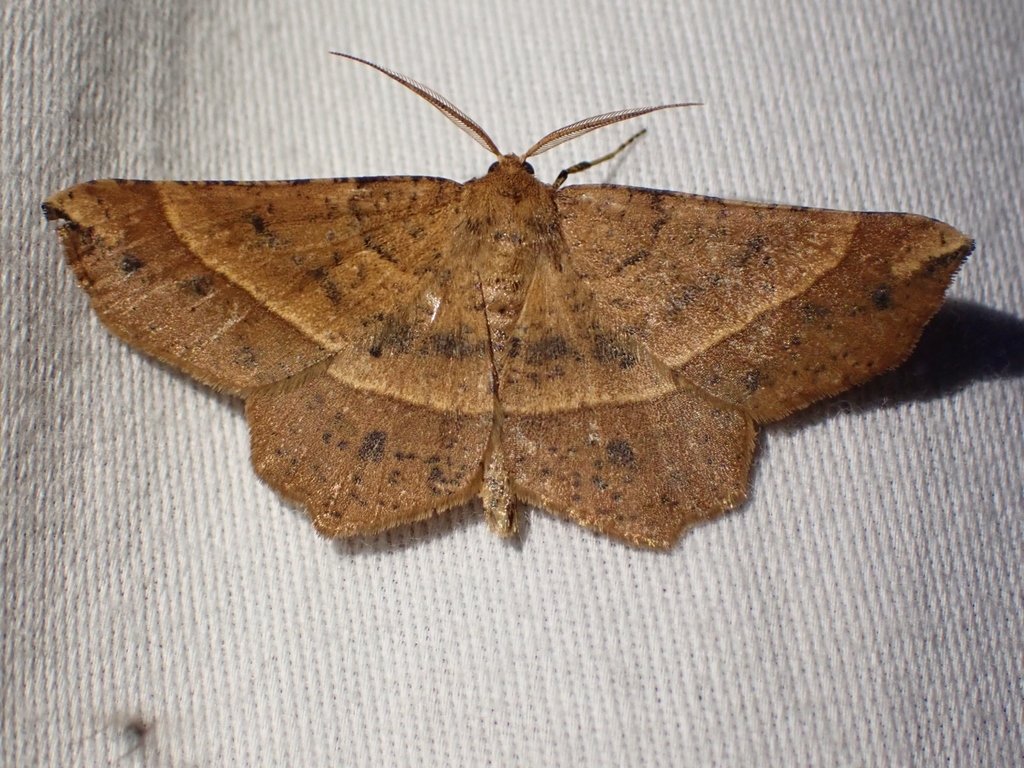
The mottled euchlaena moth has a wingspan of about 33 to 41 mm and belongs to the Geometridae family. It lives across much of North America, from New Brunswick to Virginia and west to Texas, Utah, Oregon and British Columbia, and adults fly from spring to midsummer depending on latitude.
Source: Wikipedia
How to recognize it
Euchlaena tigrinaria, called the mottled euchlaena, is a geometrid moth.
Source: Wikipedia
Size
The wingspan ranges from 33 to 41 mm.
Source: Wikipedia
What it eats
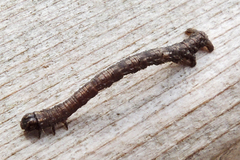
Caterpillars feed on a variety of trees and shrubs such as poplar, birch, shepherd’s tree, dogwood, hazel, oak, serviceberry, willow and others.
Source: Wikipedia
Life cycle
There is one generation each year.
Source: Wikipedia
Where it comes from
Its range includes eastern Canada, the eastern United States, and extends west to the western US and Canada.
Source: Wikipedia
Where it is found in the US
Recorded in 37 of 51 states and DC. Most records: Vermont, Pennsylvania, Montana, Oregon, Colorado, New York, Massachusetts, West Virginia.
Darker = more records. Counts are museum and citizen-science records, not population size.
Source: GBIF
Status: native in North America; native in Canada; native in United States. Source: iNaturalist
Months it is reported in the US
Source: GBIF
More photos
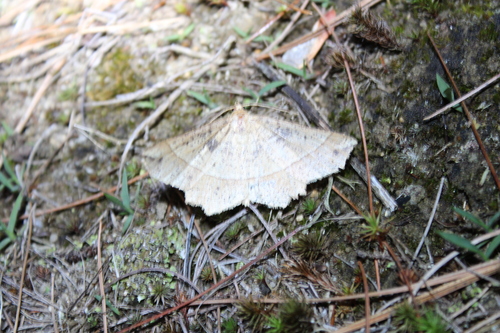
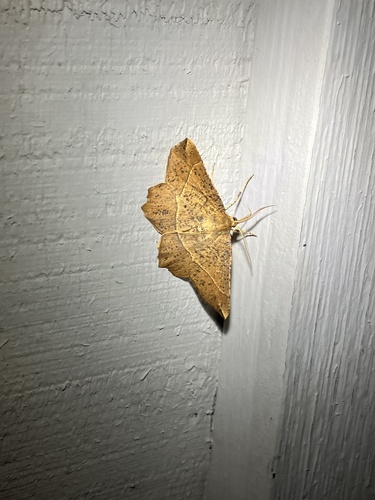
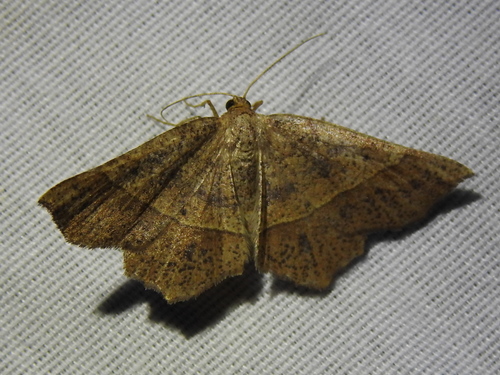
Same family (Geometridae)




Sources
- Wikipedia: https://en.wikipedia.org/wiki/Euchlaena_tigrinaria
Look it up elsewhere: GBIF · iNaturalist · BugGuide · ITIS · Wikipedia
Text written 2026-10-24 from the sources above and checked sentence by sentence against them. Data fetched 2026-10-24.