 Bug FAQ
Mottled Beauty
Alcis repandata · Order: Lepidoptera · Family: Geometridae
Source: Wikipedia
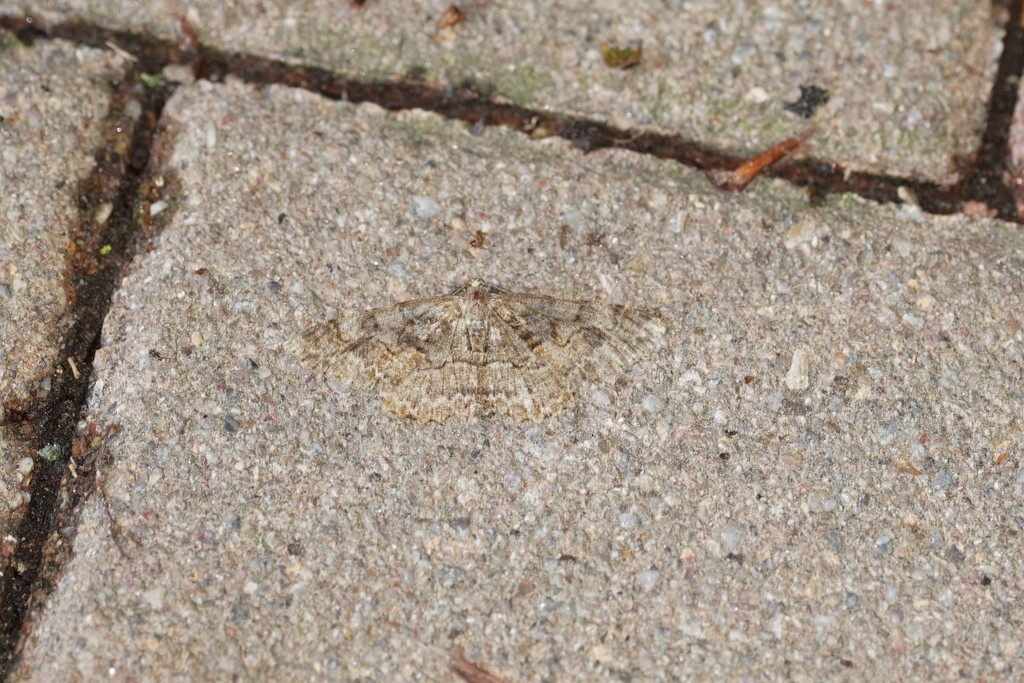
Mottled Beauty is a medium-sized moth with a wingspan of 30 to 45 mm. It lives in a wide range of habitats from forests and heaths to meadows and even settlements, up to 1800 m in the Alps. The species is common across Europe, the Near East and into Central Asia, reaching the Arctic Circle in the north.
Source: Wikipedia
How to recognize it
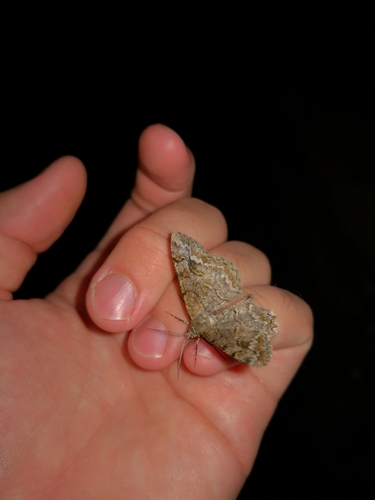
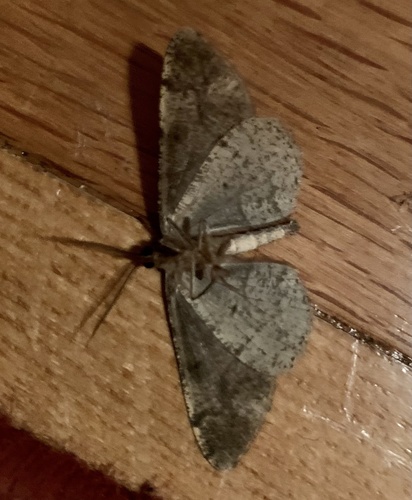
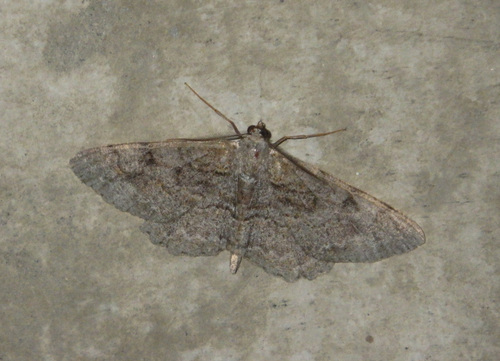
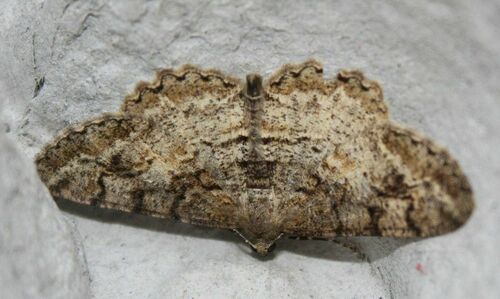
The moth is very variable, usually buff or grey with black bars on the wing edge and often a broad dark band across the forewings. Its head is grey mixed with whitish and dark tones; forewings are light ochre-brown, speckled with black and sometimes whitish.
Source: Wikipedia
Size
Wingspan ranges from 30 to 45 mm.
Source: Wikipedia
Where it lives
In the Alps it occurs up to about 1800 m altitude.
Source: Wikipedia
Life cycle
The species overwinters as a small larva.
Source: Wikipedia
When you see it
Adults fly at night during June and July in the British Isles.
Source: Wikipedia
Lookalikes
It resembles the Willow Beauty (Peribatodes rhomboidaria) and related species.
Source: Wikipedia
More photos
Questions people ask
What do the caterpillars eat?
They feed on the leaves and soft bark of many trees and other plants.
Source: Wikipedia
Where can I find Mottled Beauty moths?
In forests, heaths, meadows, marshes and even settled areas, up to 1800 m in the Alps.
Source: Wikipedia
Same family (Geometridae)
 Willow BeautyPeribatodes rhomboidaria
 Pale BeautyCampaea perlataDamages trees, gardens or crops
 Large Lace-border MothScopula limboundataDamages trees, gardens or crops
 Riband WaveIdaea aversata
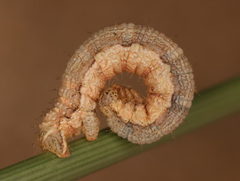 Yellow Shell MothCamptogramma bilineata
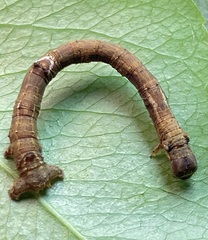 Large Maple Spanworm MothProchoerodes lineolaDamages trees, gardens or crops
Sources
- Wikipedia: https://en.wikipedia.org/wiki/Mottled_beauty
Look it up elsewhere: GBIF · iNaturalist · BugGuide · Wikipedia
Text written 2026-10-22 from the sources above and checked sentence by sentence against them. Data fetched 2026-10-22.