 Bug FAQ
Mother of Pearl
Patania ruralis · Order: Lepidoptera · Family: Crambidae
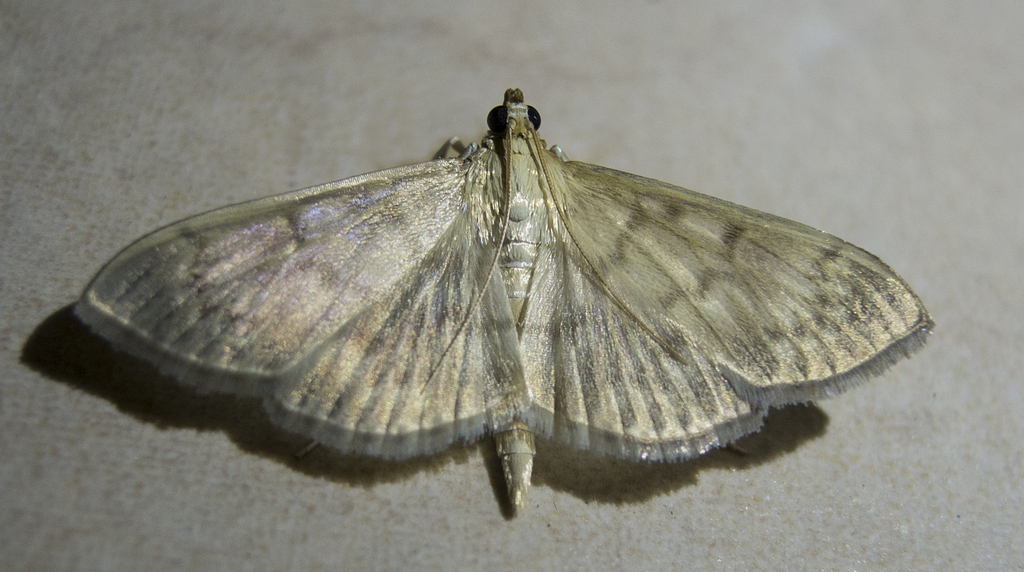
The Mother of Pearl moth has a wingspan of about 26 to 40 mm and its almost transparent wings show a pale blue pearlescent sheen in the light. It lives across most of Europe and nearby islands, except the Aegean, western Mediterranean islands and Cyprus, and the adults fly from June to September. Caterpillars feed mainly on stinging nettle (Urtica dioica) and small nettle (U. urens), occasionally on other eudicots.
Source: Wikipedia
How to recognize it
The forewings are pale whitish-ochreous with a yellowish tint, a grey subcostal shade, a connected orbicular dot, dark grey lines (first straight, second serrate and broken), a dark grey discal mark with a nearby grey blotch, and a grey terminal band.
Source: Wikipedia
Size
Wingspan ranges from 26 to 40 mm (1.0 to 1.6 in).
Source: Wikipedia
What it eats
Caterpillars mainly eat nettles, especially stinging nettle (Urtica dioica) and small nettle (U. urens), and sometimes other eudicots.
Source: Wikipedia
When you see it
Adults are on the wing from June through September, depending on location.
Source: Wikipedia
Where it comes from
Found throughout Europe and nearby islands, but not on Aegean or western Mediterranean islands or Cyprus.
Source: Wikipedia
More photos
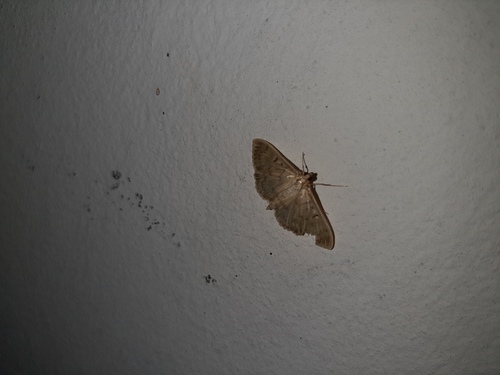
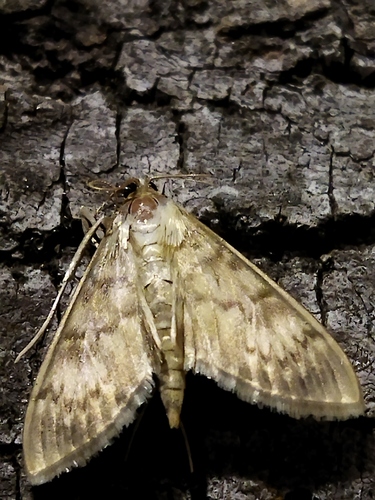
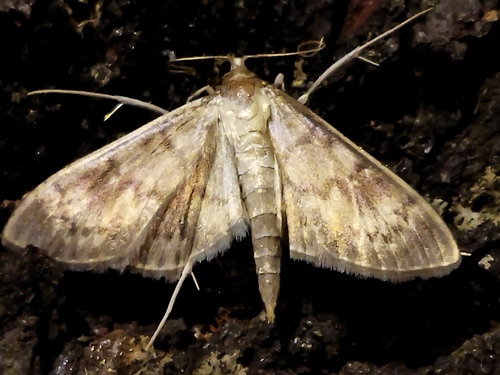
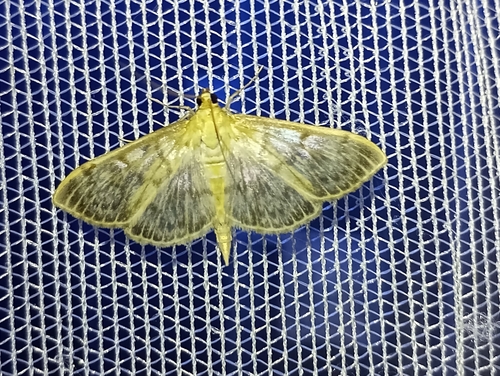
Questions people ask
When are Mother of Pearl moths active?
Adults fly from June to September, varying with the region.
Source: Wikipedia
What do the caterpillars eat?
They feed mainly on stinging nettle (Urtica dioica) and small nettle (U. urens), and occasionally on other eudicots.
Source: Wikipedia
Where is this moth found?
It occurs across most of Europe and nearby islands, except the Aegean, western Mediterranean islands and Cyprus.
Source: Wikipedia
Same family (Crambidae)
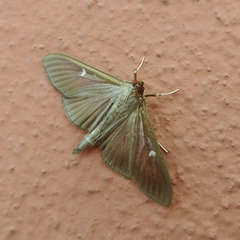 Box Tree MothCydalima perspectalisDamages trees, gardens or crops
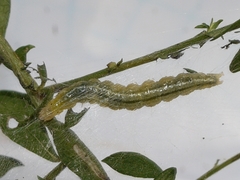 Celery Leaftier MothUdea rubigalisDamages trees, gardens or crops
 Elegant Grass-veneerMicrocrambus elegans
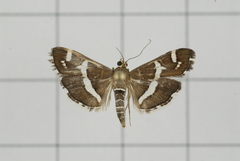 Hawaiian Beet Webworm MothSpoladea recurvalisDamages trees, gardens or crops
 Garden Grass-veneerChrysoteuchia culmellaDamages trees, gardens or crops
 Bluegrass Webworm MothParapediasia teterrellusDamages trees, gardens or crops
Sources
- Wikipedia: https://en.wikipedia.org/wiki/Patania_ruralis
Look it up elsewhere: GBIF · iNaturalist · BugGuide · Wikipedia
Text written 2026-10-22 from the sources above and checked sentence by sentence against them. Data fetched 2026-10-22.