 Bug FAQ
Meterana levis
Meterana levis · Order: Lepidoptera · Family: Noctuidae

Meterana levis is a moth about 35 mm long with greenish-brown body parts and faint dark markings on its forewings; the hindwings are gray with dark edges. It is native to New Zealand, its larvae feed on Plagianthus plants, especially P. divaricatus, and adults emerge in early spring and are attracted to light.
Source: Wikipedia
Size
Both males and females measure about 35 mm in length.
Source: Wikipedia
What it eats
The larvae feed on species of the plant genus Plagianthus, especially Plagianthus divaricatus.
Source: Wikipedia
Life cycle
Adults emerge from their cocoons in early spring.
Source: Wikipedia
When you see it
Adults are attracted to light and are commonly caught using mercury-vapour light traps.
Source: Wikipedia
Where it comes from
Meterana levis is endemic to New Zealand.
Source: Wikipedia
Lookalikes
Meterana levis belongs to the Noctuidae family of moths.
Source: Wikipedia
More photos
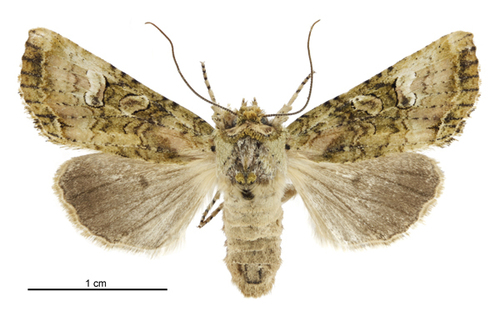
Questions people ask
What do the larvae of Meterana levis eat?
The larvae feed on plants in the Plagianthus genus, especially Plagianthus divaricatus.
Source: Wikipedia
When are adult Meterana levis active?
Adults emerge in early spring and are attracted to light, often being caught in mercury-vapour light traps.
Source: Wikipedia
Same family (Noctuidae)
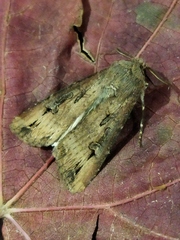 Ipsilon Dart MothAgrotis ipsilonDamages trees, gardens or crops
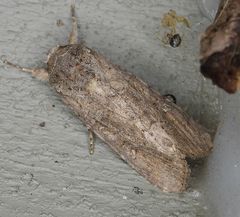 Fall Armyworm MothSpodoptera frugiperdaDamages trees, gardens or crops
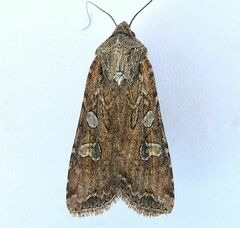 Army Cutworm MothEuxoa auxiliarisDamages trees, gardens or crops
 Large Yellow UnderwingNoctua pronubaDamages trees, gardens or crops
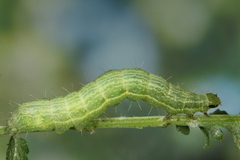 Silver ΥAutographa gamma
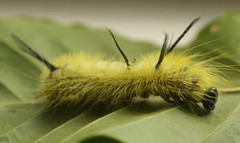 American DaggerAcronicta americanaCan irritate skin
Sources
- Wikipedia: https://en.wikipedia.org/wiki/Meterana_levis
Look it up elsewhere: GBIF · iNaturalist · BugGuide · Wikipedia
Text written 2026-10-23 from the sources above and checked sentence by sentence against them. Data fetched 2026-10-23.