 Bug FAQ
Mediterranean Seed Bug
Xanthochilus saturnius · Order: Hemiptera · Family: Rhyparochromidae
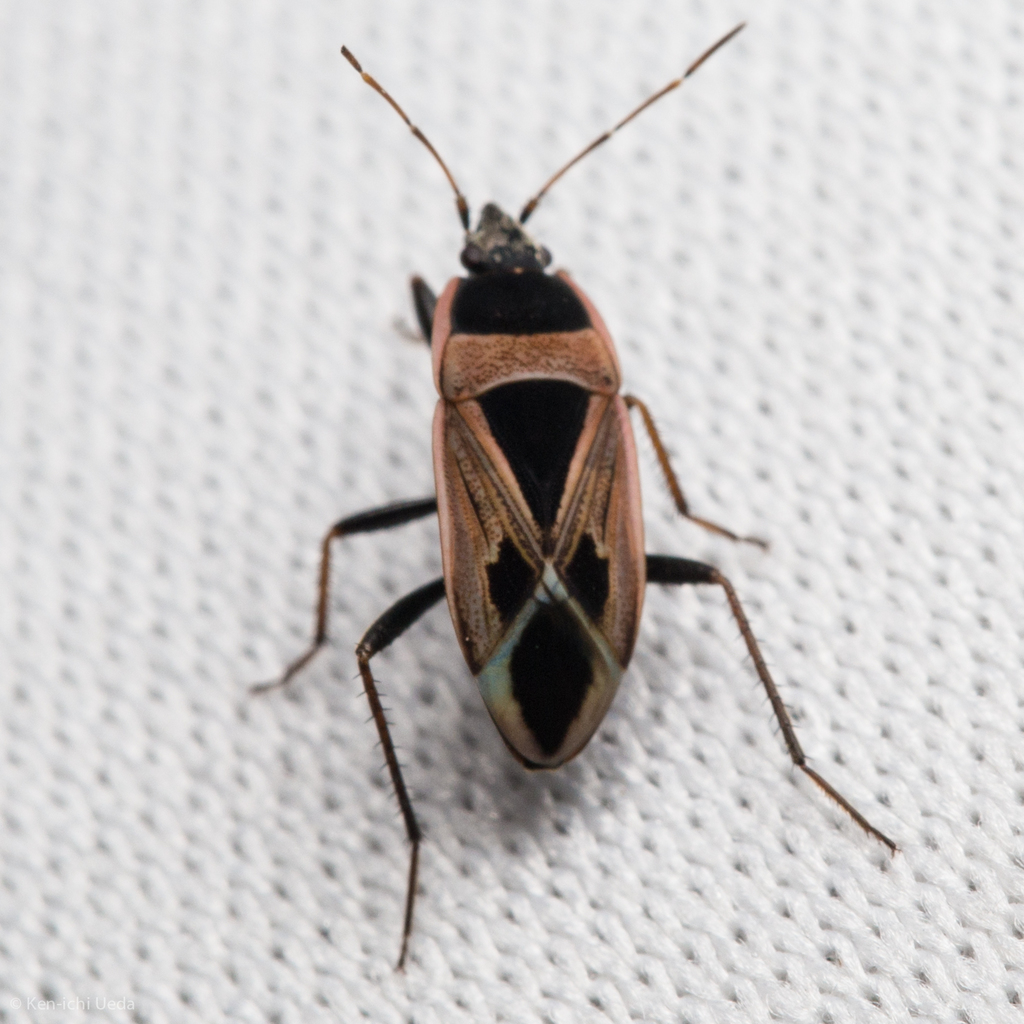
The Mediterranean seed bug is a small true bug about 6 to 8 mm long with distinctive black-on-tan markings, including a black head, scutellum, and pronotum band, plus brown elytra with two black spots. Adults overwinter in groups, emerge in spring, and new adults appear by July.
Source: Wikipedia
How to recognize it
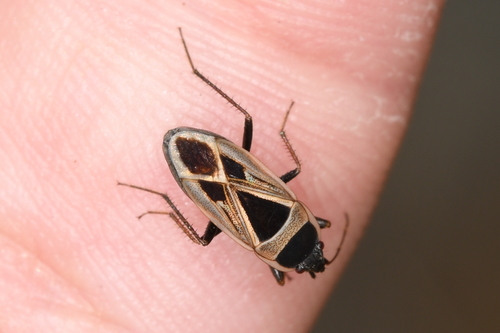
The head and scutellum are black, the pronotum has a large black band and a stippled brown band, the elytra are brown with two black spots, and the membrane shows a large black mark.
Source: Wikipedia
Size
Adults reach 6 to 8 mm (0.24 to 0.31 in) in length.
Source: Wikipedia
Where it lives
Adults form gregarious clusters to overwinter.
Source: Wikipedia
What it eats
Both adults and larvae feed on the same plants and on fallen seeds, especially on Stachys species and other Lamiaceae, as well as on Verbascum lychnitis.
Source: Wikipedia
Life cycle
Adults overwinter in groups and new adults can be seen by July.
Source: Wikipedia
When you see it
They emerge in spring, typically April or May, and new adults appear by July.
Source: Wikipedia
Where it comes from
It occurs in southern Europe and also in North America, including the United States, Canada, Greenland and northern Mexico.
Source: Wikipedia
Lookalikes
It may be listed under the subgenus Rhyparochromus, appearing as Rhyparochromus saturnius or Rhyparochromus (Xanthochilus) saturnius.
Source: Wikipedia
Where it is found in the US
Recorded in 9 of 51 states and DC. Most records: California, Oregon, Washington, Texas, Nevada, Idaho, Arizona, Utah.
Darker = more records. Counts are museum and citizen-science records, not population size.
Source: GBIF
Status: introduced in United States. Source: iNaturalist
Months it is reported in the US
Source: GBIF
More photos
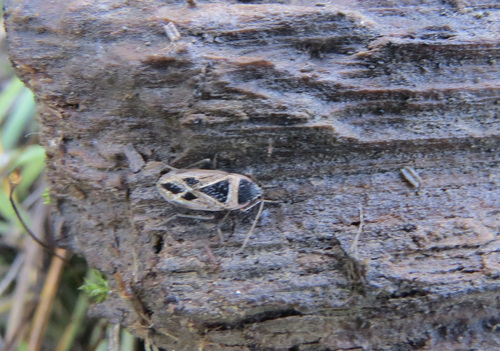
Same family (Rhyparochromidae)
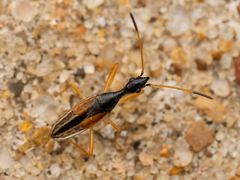
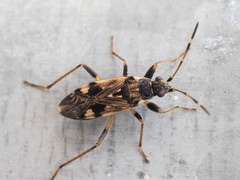
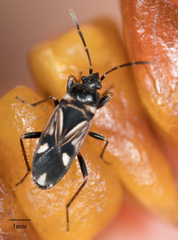

Sources
- Wikipedia: https://en.wikipedia.org/wiki/Xanthochilus_saturnius
Look it up elsewhere: GBIF · iNaturalist · BugGuide · ITIS · Wikipedia
Text written 2026-10-24 from the sources above and checked sentence by sentence against them. Data fetched 2026-10-24.