 Bug FAQ
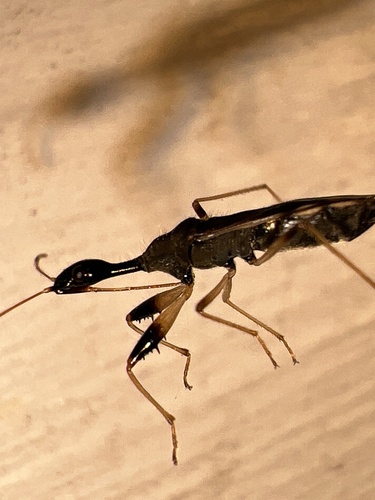
Long-necked Seed Bug
Myodocha serripes · Order: Hemiptera · Family: Rhyparochromidae
Source: Wikipedia
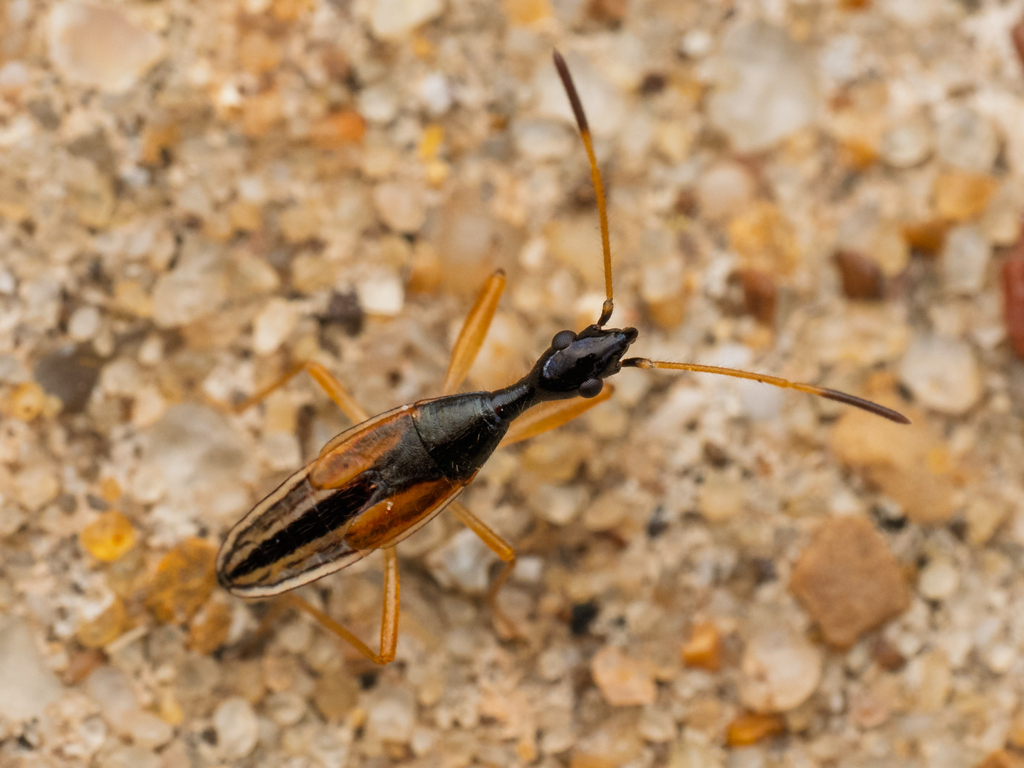
The long-necked seed bug lives in North America and is most active in autumn, except in Florida where it does not hibernate. It feeds on seeds and is considered a pest on strawberries.
Source: Wikipedia
Is it a pest in the house?
It is treated as a pest on strawberries.
Source: Wikipedia
Where it lives
You’ll find this bug across North America.
Source: Wikipedia
What it eats
It eats seeds, as its name suggests.
Source: Wikipedia
Life cycle
Adults hibernate alone or in small groups and move to fields in spring.
Source: Wikipedia
When you see it
The species is most active in autumn, but Florida populations do not hibernate.
Source: Wikipedia
Where it comes from
Its native range is North America.
Source: Wikipedia
Where it is found in the US
Recorded in 37 of 51 states and DC. Most records: Texas, Maryland, Pennsylvania, Virginia, Massachusetts, New York, Illinois, Ohio.
Darker = more records. Counts are museum and citizen-science records, not population size.
Source: GBIF
Status: native in North America; native in Canada; native in United States. Source: iNaturalist
Months it is reported in the US
Source: GBIF
More photos


Questions people ask
Does the long-necked seed bug damage crops?
Yes, it is known to be a pest on strawberries.
Source: Wikipedia
When are these bugs most active?
They are most active in autumn, though Florida bugs do not hibernate.
Source: Wikipedia
Same family (Rhyparochromidae)
Sources
- Wikipedia: https://en.wikipedia.org/wiki/Myodocha_serripes
Look it up elsewhere: GBIF · iNaturalist · BugGuide · ITIS · Wikipedia
Text written 2026-10-22 from the sources above and checked sentence by sentence against them. Data fetched 2026-10-22.