 Bug FAQ
Mediterranean Brocade
Spodoptera littoralis · Order: Lepidoptera · Family: Noctuidae
Also called: African Cotton Leafworm, Egyptian Cotton Leafworm, Tomato Moth
Source: Wikipedia
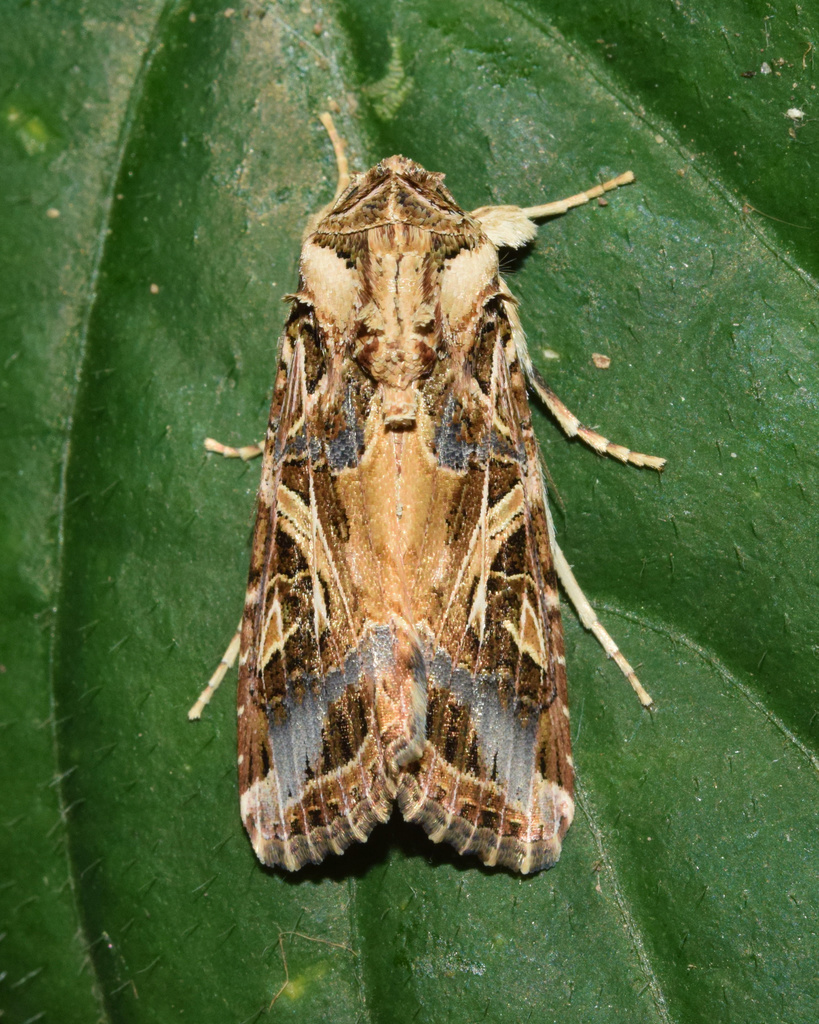
Adults are 15 to 20 mm long with a wingspan of 30 to 38 mm and have grey-brown forewings marked with a white-lined eye-spot, while the hindwings are paler with grey margins. It originates from semi-arid subtropical areas of pre-Saharan Africa but is also found in southern and Mediterranean Europe and the Middle East. The larvae are polyphagous, feeding on young leaves, shoots, buds, bolls and fruits of over 40 plant families, causing large holes in leaves or damage to buds.
Source: Wikipedia
How to recognize it
Forewings are grey-brown with a white-lined ocellus; hindwings are paler with grey margins.
Source: Wikipedia
Is it a pest in the house?
Because it feeds on many crops, it can cause serious damage to economically important plants like cotton, tomato, maize and other vegetables. Larvae create large holes in leaves or bore into buds, leading to extensive plant damage.
Source: Wikipedia
How to get rid of it
Both biological and chemical control methods have been developed to manage its populations. Various predators, pathogens and parasites naturally help keep its numbers in check.
Source: Wikipedia
Where it lives
Native habitat is semi-arid subtropical (EUNIS code F5) in pre-Saharan Africa. It also occurs in Spain, France, Italy and Greece.
Source: Wikipedia
What it eats
Larvae feed on a wide range of host plants, covering over 40 families and at least 87 species. They prefer young leaves, shoots, stalks, bolls, buds and fruits.
Source: Wikipedia
Life cycle
Temperatures above 40 °C or below 13 °C increase mortality. Optimal reproductive temperature is about 25 °C.
Source: Wikipedia
When you see it
Cold weather limits its natural range in northern Europe such as the United Kingdom.
Source: Wikipedia
Lookalikes
Prodenia ornithogalli from America is a close relative and looks very similar.
Source: Wikipedia
Where it is found in the US
Recorded in 1 of 51 states and DC. Most records: Pennsylvania.
Darker = more records. Counts are museum and citizen-science records, not population size.
Source: GBIF
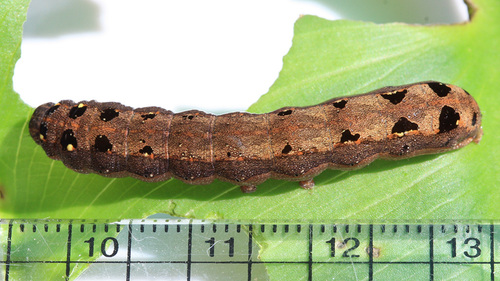
More photos
Questions people ask
How can I identify the African cotton leafworm?
Look for a small moth 15 to 20 mm long with grey-brown forewings bearing a white-lined eye-spot and paler hindwings with grey edges.
Source: Wikipedia
What crops does this pest damage?
Its larvae feed on cotton, tomato, maize and many other vegetables, often chewing large holes in leaves or boring into buds.
Source: Wikipedia
Where is this moth found?
It originates from semi-arid subtropical regions of pre-Saharan Africa and is also present in southern Europe and the Middle East.
Source: Wikipedia
How can I control an infestation?
Use approved chemical insecticides or introduce natural predators, pathogens or parasites that target the larvae.
Source: Wikipedia
Same family (Noctuidae)
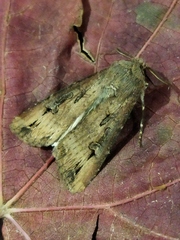 Ipsilon Dart MothAgrotis ipsilonDamages trees, gardens or crops
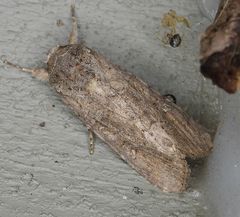 Fall Armyworm MothSpodoptera frugiperdaDamages trees, gardens or crops
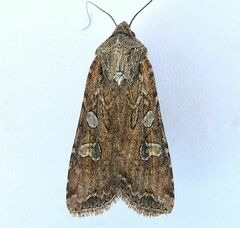 Army Cutworm MothEuxoa auxiliarisDamages trees, gardens or crops
 Large Yellow UnderwingNoctua pronubaDamages trees, gardens or crops
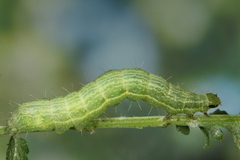 Silver ΥAutographa gamma
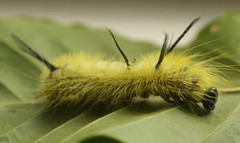 American DaggerAcronicta americanaCan irritate skin
Sources
- Wikipedia: https://en.wikipedia.org/wiki/Spodoptera_littoralis
Look it up elsewhere: GBIF · iNaturalist · BugGuide · Wikipedia
Text written 2026-10-23 from the sources above and checked sentence by sentence against them. Data fetched 2026-10-22.