 Bug FAQ
Mediterranean Acrobat Ant
Crematogaster scutellaris · Order: Hymenoptera · Family: Formicidae
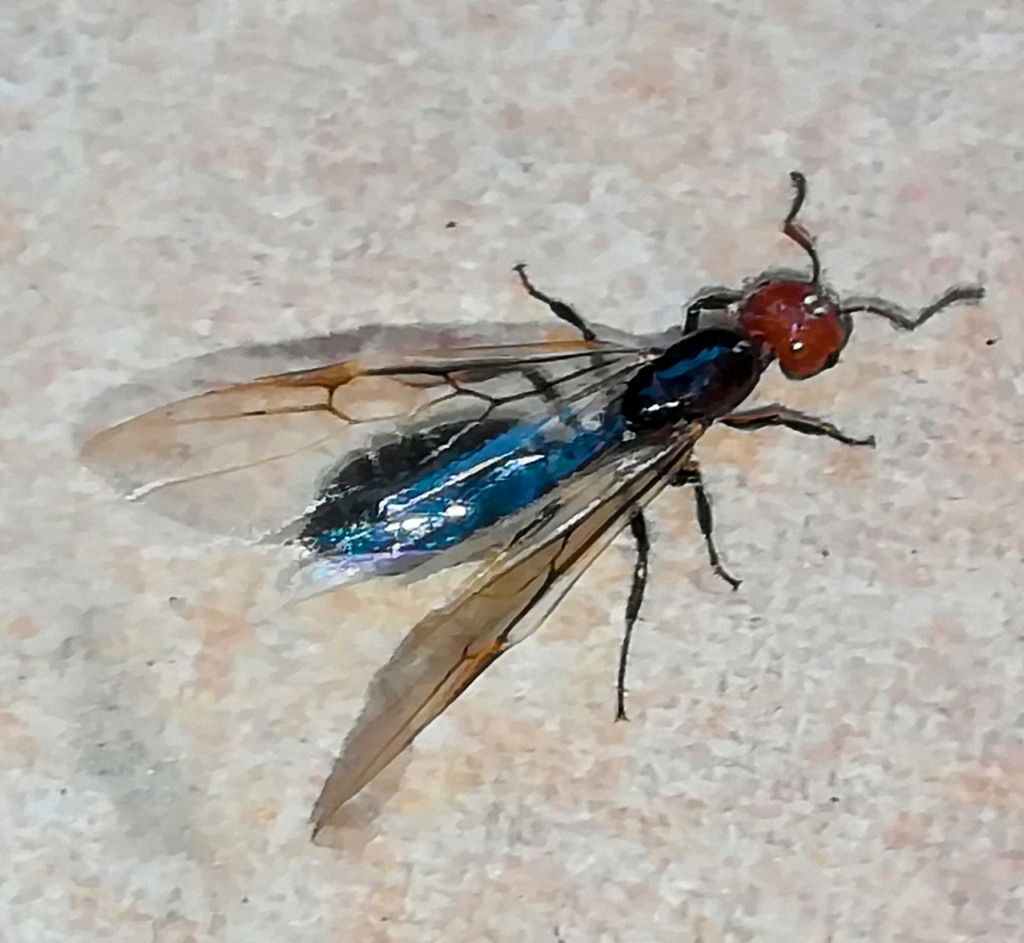
Queens can grow up to about 8 mm, while workers stay under 5 mm. They have a reddish head with a black thorax and abdomen, and a tapering abdomen. Colonies are built in dead wood such as stumps, fallen logs, or dead branches.
Source: Wikipedia
How to recognize it
The head is reddish, the thorax and abdomen are black. The abdomen narrows gradually toward the tip.
Source: Wikipedia
Size
Queens may reach about 8 mm, while workers rarely exceed 5 mm.
Source: Wikipedia
Where it lives
They usually nest in stumps, fallen logs, or dead branches.
Source: Wikipedia
What it eats
From March to October workers collect sugary liquids and solid food like arthropod remains. They also carry live aphids into oak-gall nests.
Source: Wikipedia
Life cycle
Spawning generally occurs in summer.
Source: Wikipedia
When you see it
Winged males and queens appear at the end of summer and may be seen until late October if it is not very cold. Workers show up by mid to late summer, while winged males and queens appear in late August.
Source: Wikipedia
Same family (Formicidae)
 Eastern Black Carpenter AntCamponotus pennsylvanicusCan damage your home
 Red Imported Fire AntSolenopsis invictaCan sting
 American Winter AntPrenolepis imparis
 Argentine AntLinepithema humileNuisance, not dangerous
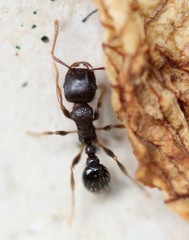 Immigrant Pavement AntTetramorium immigransCan sting
 Odorous House AntTapinoma sessileCan damage your home
Sources
- Wikipedia: https://en.wikipedia.org/wiki/Crematogaster_scutellaris
Look it up elsewhere: GBIF · iNaturalist · BugGuide · ITIS · Wikipedia
Text written 2026-10-22 from the sources above and checked sentence by sentence against them. Data fetched 2026-10-22.