 Bug FAQ
Matabele Ant
Megaponera analis · Order: Hymenoptera · Family: Formicidae
Also called: Hissing Ant
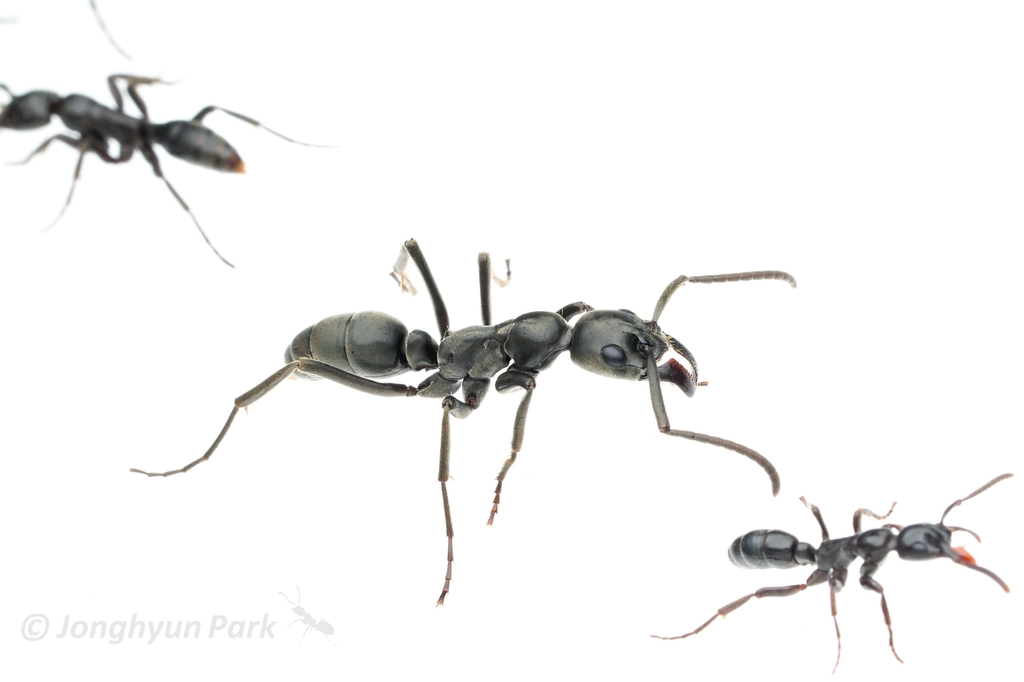
Workers range from about 5 mm to 18 mm, and some individuals can grow up to 25 mm, making them among the largest ants. They live in sub-Saharan Africa, nesting underground near trees, rocks or old termite mounds. The species feeds exclusively on termites of the Macrotermitinae subfamily.
Source: Wikipedia
How to recognize it
Their mandibular gland releases chemicals that smell like human feces.
Source: Wikipedia
Size
Workers vary from 5 mm to 18 mm, while the largest individuals can reach 25 mm.
Source: Wikipedia
Where it lives
Nests are usually underground up to 0.7 m deep, often beside trees, rocks or abandoned termite hills.
Source: Wikipedia
What it eats
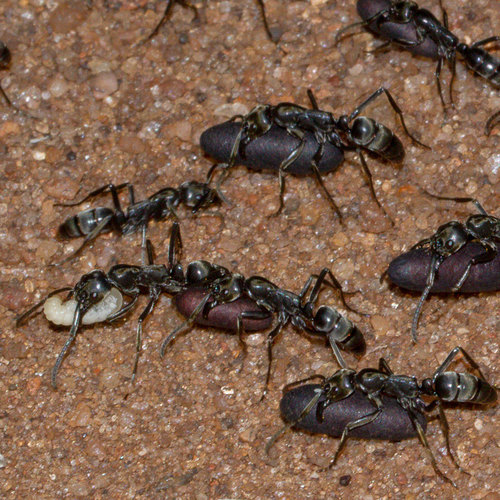
They are strictly termite-eating ants. Raids target termites belonging to the Macrotermitinae subfamily.
Source: Wikipedia
Life cycle
Colonies contain between 440 and 2300 adult ants, depending on age and location.
Source: Wikipedia
When you see it
A less-studied night raid window has been observed from 22:00 to 2:00.
Source: Wikipedia
Where it comes from
They occur throughout sub-Saharan Africa from about 25° S to 12° N.
Source: Wikipedia
More photos

Questions people ask
What do Matabele ants eat?
They feed only on termites, especially those in the Macrotermitinae subfamily.
Source: Wikipedia
Where are Matabele ants found?
They live across sub-Saharan Africa from about 25° S to 12° N.
Source: Wikipedia
How big are Matabele ants?
Workers are 5 to 18 mm long, and the largest individuals can reach up to 25 mm.
Source: Wikipedia
Same family (Formicidae)
 Eastern Black Carpenter AntCamponotus pennsylvanicusCan damage your home
 Red Imported Fire AntSolenopsis invictaCan sting
 American Winter AntPrenolepis imparis
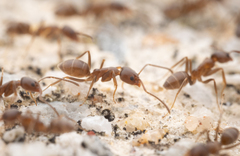 Argentine AntLinepithema humileNuisance, not dangerous
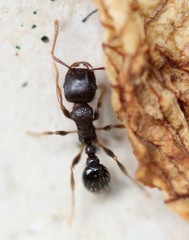 Immigrant Pavement AntTetramorium immigransCan sting
 Odorous House AntTapinoma sessileCan damage your home
Sources
- Wikipedia: https://en.wikipedia.org/wiki/Megaponera
Look it up elsewhere: GBIF · iNaturalist · BugGuide · ITIS · Wikipedia
Text written 2026-10-23 from the sources above and checked sentence by sentence against them. Data fetched 2026-10-23.