 Bug FAQ
Marbled Minor
Oligia strigilis · Order: Lepidoptera · Family: Noctuidae
Also called: Marbled Minor Moth
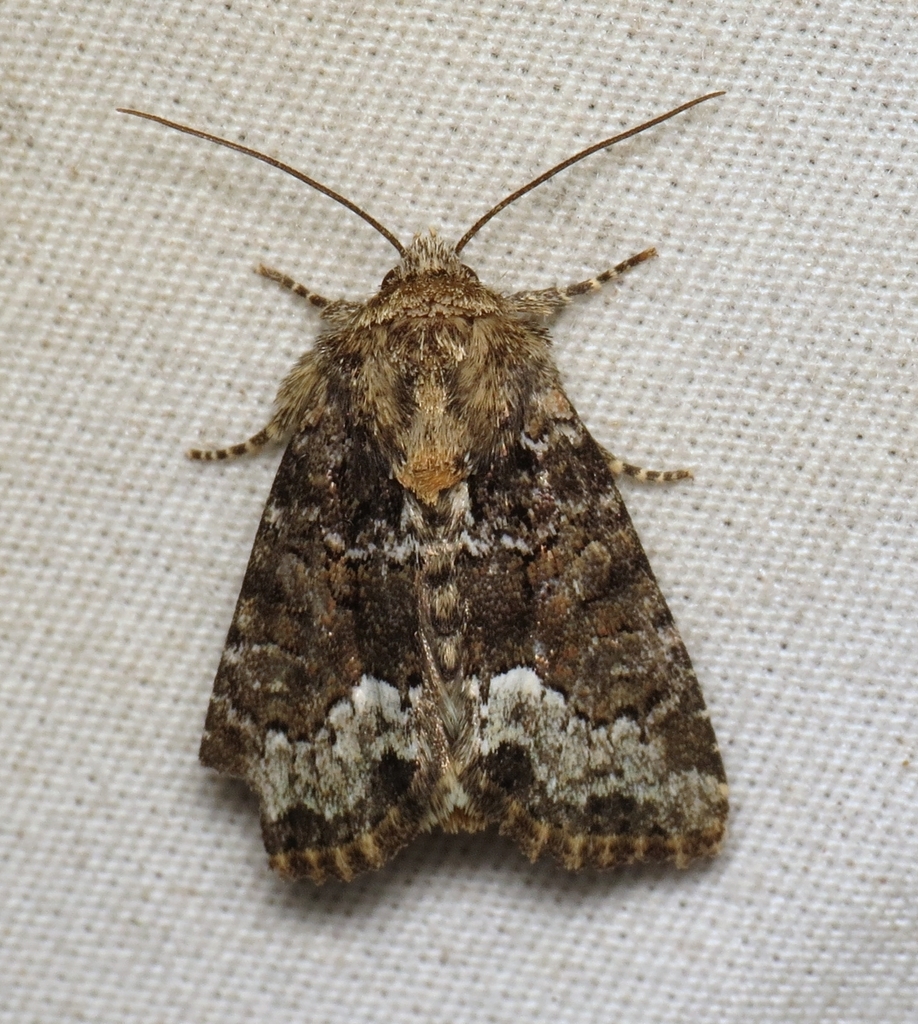
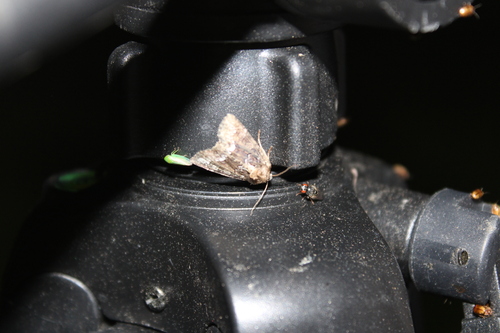
The small moth has a wingspan of about 24 to 29 mm. It lives in many open habitats such as forests, meadows, moors and even settlements across Europe to central Asia. Adults fly at night from May to July, at least in the British Isles.
Source: Wikipedia
How to recognize it
The caterpillar is purplish-brown with yellow stripes.
Source: Wikipedia
Size
Its wingspan ranges from 24 to 29 mm, making it a relatively small species.
Source: Wikipedia
What it eats
The larvae feed inside the stems of various grasses such as Agropyron, Dactylis, Elymus (Elytrigia) and Poa.
Source: Wikipedia
Life cycle
The species overwinters in the larval stage.
Source: Wikipedia
When you see it
Adults are nocturnal flyers from May through July in the British Isles, though timing may vary elsewhere.
Source: Wikipedia
Where it comes from
It was first described by Carl Linnaeus in 1758.
Source: Wikipedia
Lookalikes
It looks almost identical to Oligia versicolor (rufous minor) and Oligia latruncula (tawny marbled minor); reliable identification usually requires genital dissection. It is on average slightly larger than those two relatives, but their size ranges overlap.
Source: Wikipedia
Where it is found in the US
Recorded in 7 of 51 states and DC. Most records: Massachusetts, Vermont, Connecticut, New Hampshire, Maine, Rhode Island, New York.
Darker = more records. Counts are museum and citizen-science records, not population size.
Source: GBIF
Months it is reported in the US
Source: GBIF
More photos
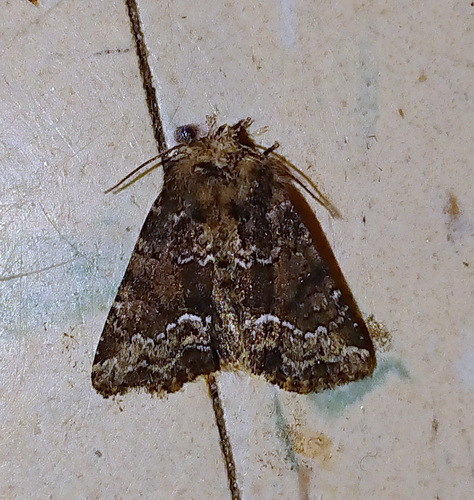
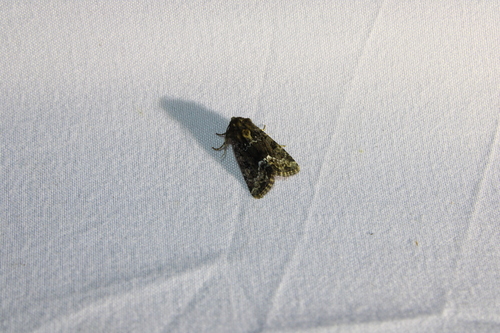
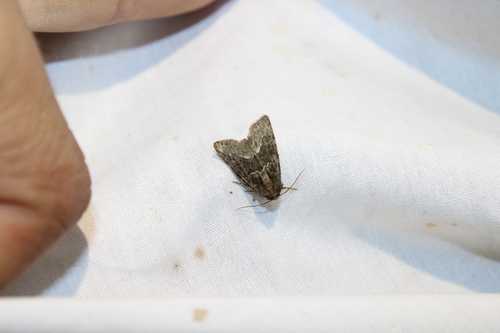
Questions people ask
When are these moths active?
Adults fly at night from May to July, at least in the British Isles; the exact period can differ in other parts of their range.
Source: Wikipedia
How can I tell this moth apart from similar species?
It is usually only distinguishable from the rufous minor and tawny marbled minor by dissecting the genitalia, though it tends to be slightly larger.
Source: Wikipedia
Same family (Noctuidae)
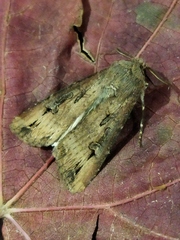 Ipsilon Dart MothAgrotis ipsilonDamages trees, gardens or crops
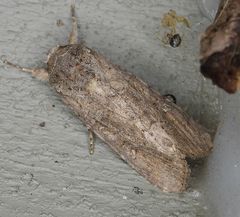 Fall Armyworm MothSpodoptera frugiperdaDamages trees, gardens or crops
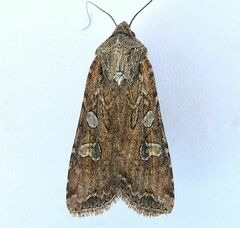 Army Cutworm MothEuxoa auxiliarisDamages trees, gardens or crops
 Large Yellow UnderwingNoctua pronubaDamages trees, gardens or crops
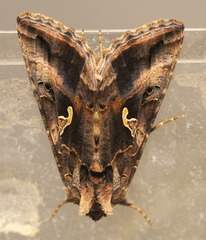 Silver ΥAutographa gamma
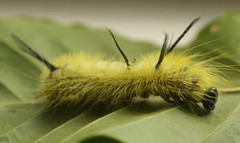 American DaggerAcronicta americanaCan irritate skin
Sources
- Wikipedia: https://en.wikipedia.org/wiki/Marbled_minor
Look it up elsewhere: GBIF · iNaturalist · BugGuide · ITIS · Wikipedia
Text written 2026-10-28 from the sources above and checked sentence by sentence against them. Data fetched 2026-10-28.