 Bug FAQ
Marbled Carpet Moth
Dysstroma truncata · Order: Lepidoptera · Family: Geometridae
Also called: Common Marbled Carpet, Marbled Carpet
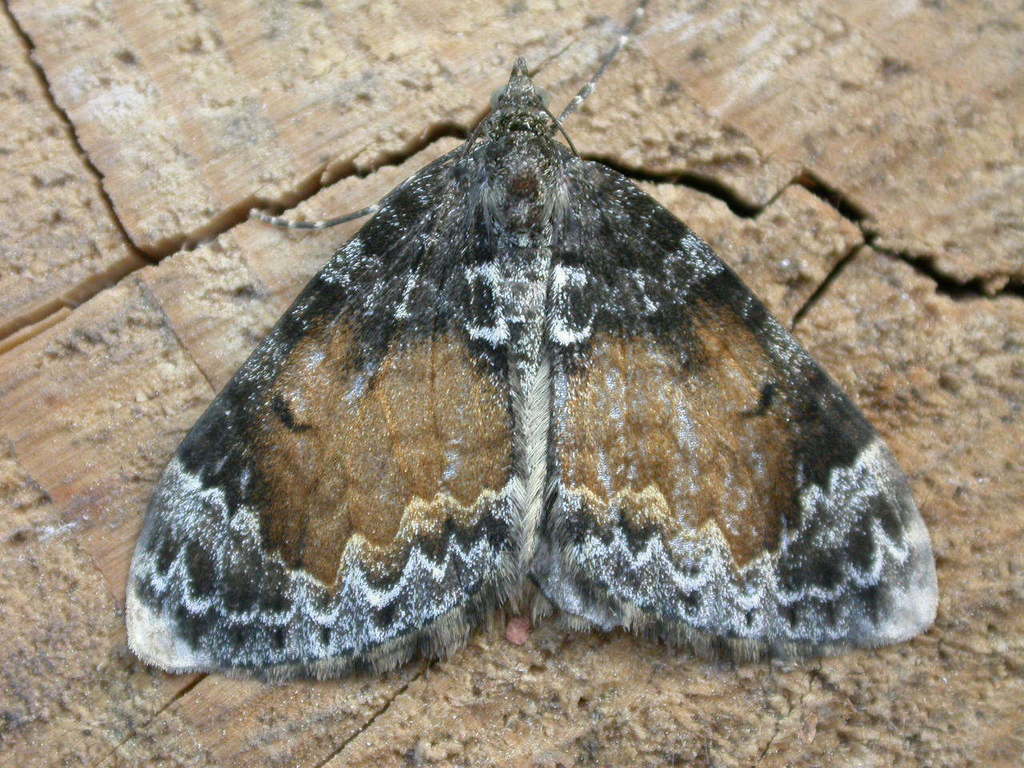
The Marbled Carpet Moth is a common geometrid found across the Palearctic and Near East, with highly variable wing colour and a wingspan of 32 to 39 mm. Adults fly from May to November, producing one or two generations per year, and the species overwinters as a larva.
Source: Wikipedia
How to recognize it
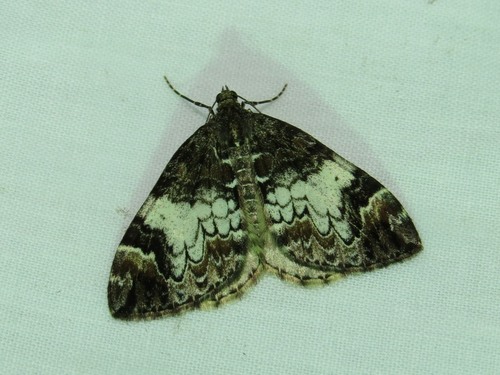
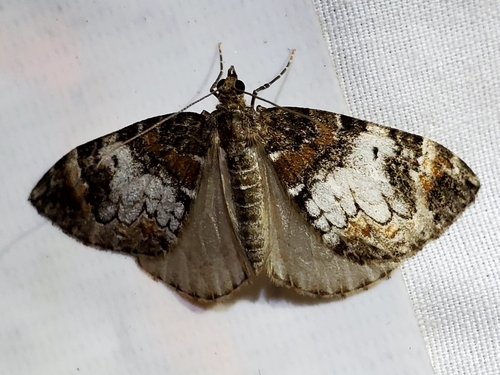
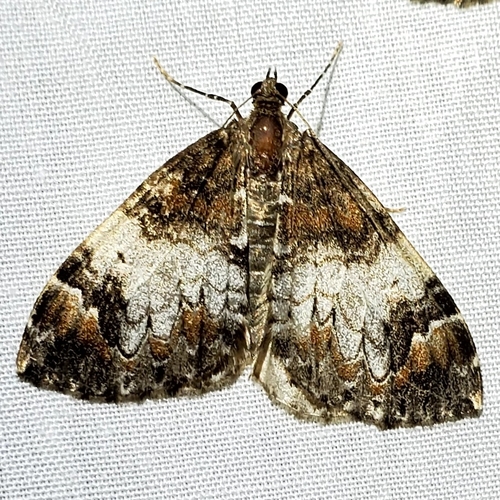
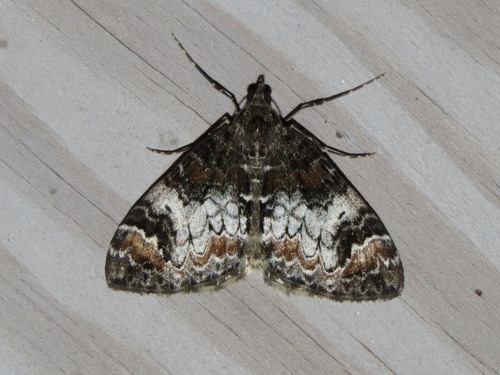
The forewings have a basal and terminal band separated by a large plain middle area, with colours ranging from white to black and many shades of grey, brown and red. The hindwings are always pale grey with faint banding.
Source: Wikipedia
Size
Wingspan varies between 32 and 39 mm.
Source: Wikipedia
What it eats
The caterpillars are slender, green and usually have reddish stripes. Larvae feed on a wide variety of plants.
Source: Wikipedia
Life cycle
The species overwinters as a larva.
Source: Wikipedia
When you see it
Adults can be seen from May through November, with the flight season described for the British Isles and possibly differing elsewhere.
Source: Wikipedia
Where it comes from
Its range covers the Palearctic and Near East.
Source: Wikipedia
Lookalikes
Some forms look very similar to Dysstroma citrata.
Source: Wikipedia
Where it is found in the US
Recorded in 17 of 51 states and DC. Most records: North Carolina, West Virginia, Oregon, Washington, Idaho, Tennessee, Michigan, Vermont.
Darker = more records. Counts are museum and citizen-science records, not population size.
Source: GBIF
Status: native in North America; native in Canada. Source: iNaturalist
Months it is reported in the US
Source: GBIF
More photos
Same family (Geometridae)
 Willow BeautyPeribatodes rhomboidaria
 Pale BeautyCampaea perlataDamages trees, gardens or crops
 Large Lace-border MothScopula limboundataDamages trees, gardens or crops
 Riband WaveIdaea aversata
 Yellow Shell MothCamptogramma bilineata
 Large Maple Spanworm MothProchoerodes lineolaDamages trees, gardens or crops
Sources
- Wikipedia: https://en.wikipedia.org/wiki/Common_marbled_carpet
Look it up elsewhere: GBIF · iNaturalist · BugGuide · ITIS · Wikipedia
Text written 2026-10-22 from the sources above and checked sentence by sentence against them. Data fetched 2026-10-22.