 Bug FAQ
Many-tufted Sedgesitter
Platycheirus scutatus · Order: Diptera · Family: Syrphidae
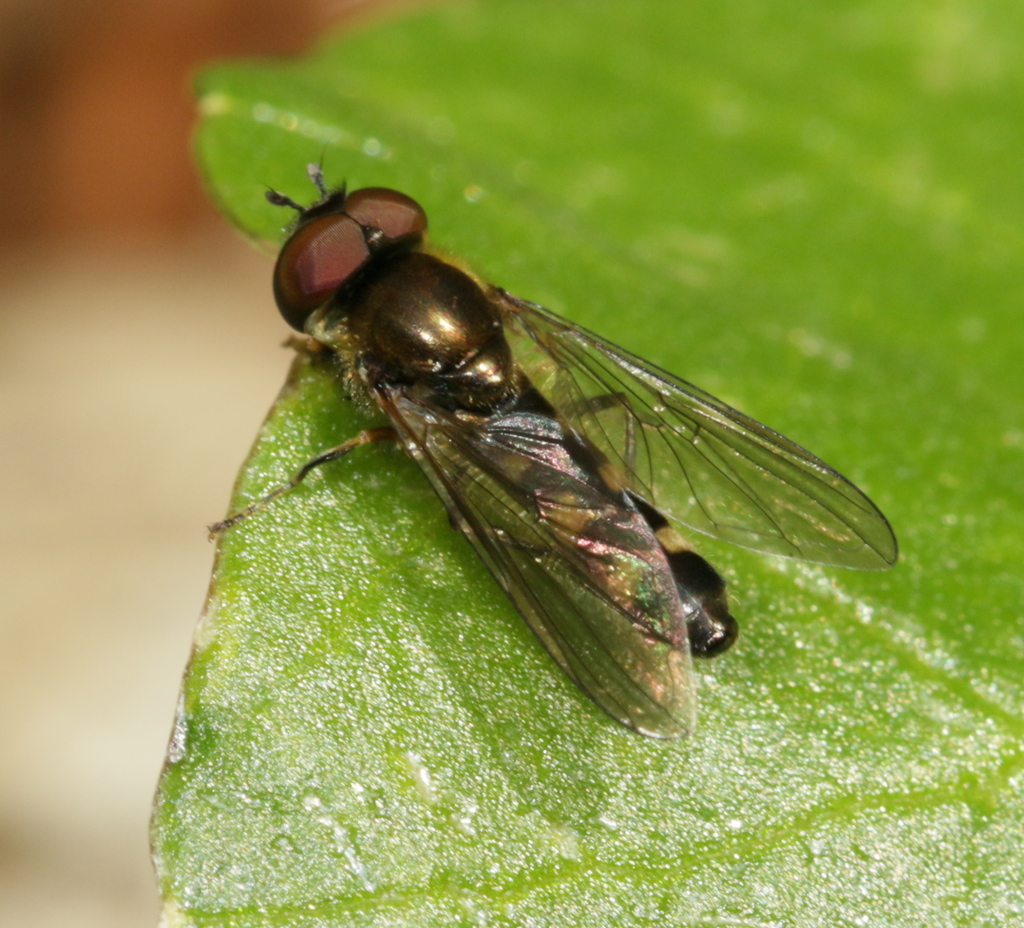
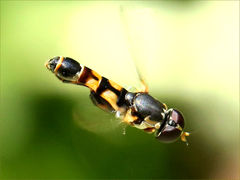
The many-tufted sedgesitter is a hoverfly with two large silver-grey dust spots on the face and an elongated fourth tergite. It is a Holarctic species, occurring from Alaska south to Colorado in North America and across Europe and Siberia to the Pacific coast and Japan. Adults can remain active even in cold weather and have a long flight period with several generations in the warm months.
Source: Wikipedia
How to recognize it
The face shows two large silver-grey dust spots. Tergite 4 is noticeably elongated.
Source: Wikipedia
Where it lives
They may stay active during cold weather.
Source: Wikipedia
What it eats
Larvae feed on aphids that live on low-growing plants and trees. Adults visit a wide range of flowers for nectar.
Source: Wikipedia
When you see it
Multiple generations occur throughout the warm season, giving them a long period of activity. They may also stay active when the weather is cold.
Source: Wikipedia
Where it comes from
In North America it ranges from Alaska down to Colorado.
Source: Wikipedia
Lookalikes
See references for determination.
Source: Wikipedia
Where it is found in the US
Recorded in 1 of 51 states and DC. Most records: California.
Darker = more records. Counts are museum and citizen-science records, not population size.
Source: GBIF
Status: native in North America; native in Canada. Source: iNaturalist
Questions people ask
When are they active?
They have several generations in the warm months with a long flight period and can remain active even in cold weather.
Source: Wikipedia
Where are they found?
In North America from Alaska to Colorado, and across Europe and Asia from northern Scandinavia to the Mediterranean and east through Siberia to Japan.
Source: Wikipedia
Same family (Syrphidae)


Sources
- Wikipedia: https://en.wikipedia.org/wiki/Platycheirus_scutatus
Look it up elsewhere: GBIF · iNaturalist · BugGuide · ITIS · Wikipedia
Text written 2026-10-23 from the sources above and checked sentence by sentence against them. Data fetched 2026-10-23.