 Bug FAQ
Magnolia Leaf-footed Bug
Leptoglossus fulvicornis · Order: Hemiptera · Family: Coreidae
Source: Wikipedia
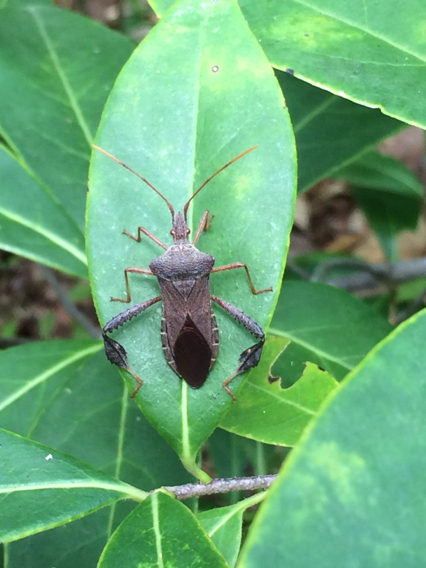
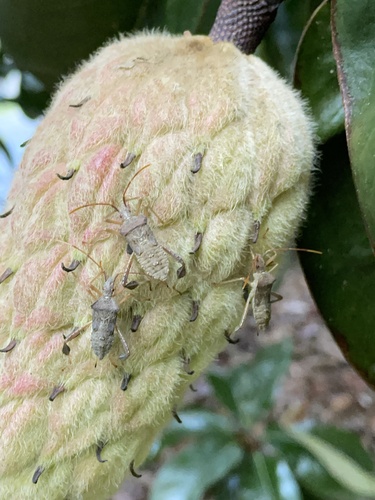
The magnolia leaf-footed bug lives in North America. It feeds mainly on magnolia fruit and seeds, and the females lay eggs on the underside of leaves.
Source: Wikipedia
Where it lives
It is found in North America.
Source: Wikipedia
What it eats
It specializes in eating magnolia fruit and seeds.
Source: Wikipedia
Where it comes from
It is native to North America.
Source: Wikipedia
Where it is found in the US
Recorded in 30 of 51 states and DC. Most records: North Carolina, Virginia, Georgia, Florida, Tennessee, Texas, Alabama, Ohio.
Darker = more records. Counts are museum and citizen-science records, not population size.
Source: GBIF
Status: native in North America; native in Canada; native in United States. Source: iNaturalist
Months it is reported in the US
Source: GBIF
More photos
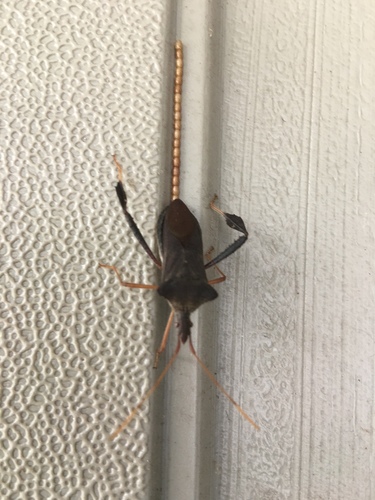
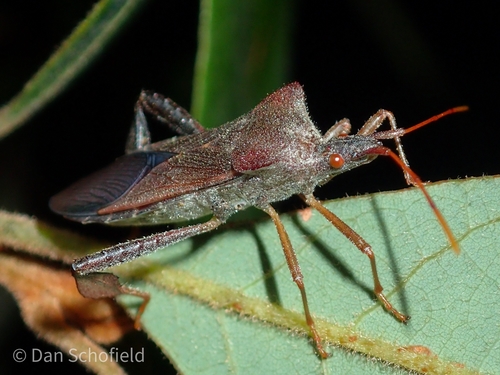
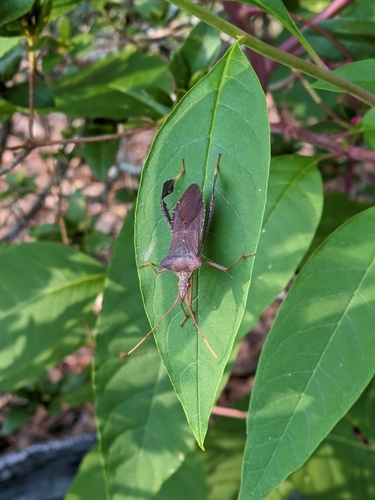
Questions people ask
Same family (Coreidae)
 Western Conifer Seed BugLeptoglossus occidentalisDamages trees, gardens or crops
 Squash BugAnasa tristisDamages trees, gardens or crops
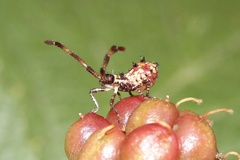 Dock BugCoreus marginatus
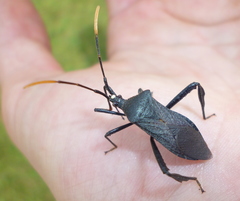 Acanthocephala terminalisAcanthocephala terminalisHarmless
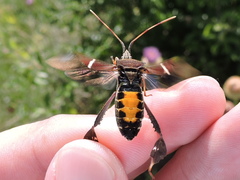 Eastern Leaf-footed BugLeptoglossus phyllopusDamages trees, gardens or crops
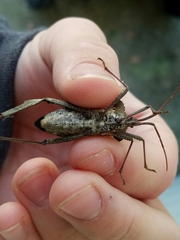 Giant leaf-footed bugAcanthocephala declivis
Sources
- Wikipedia: https://en.wikipedia.org/wiki/Leptoglossus_fulvicornis
Look it up elsewhere: GBIF · iNaturalist · BugGuide · ITIS · Wikipedia
Text written 2026-10-23 from the sources above and checked sentence by sentence against them. Data fetched 2026-10-23.