 Bug FAQ
Western Conifer Seed Bug
Leptoglossus occidentalis · Order: Hemiptera · Family: Coreidae
Also called: Pine Seed Bug
Source: Wikipedia

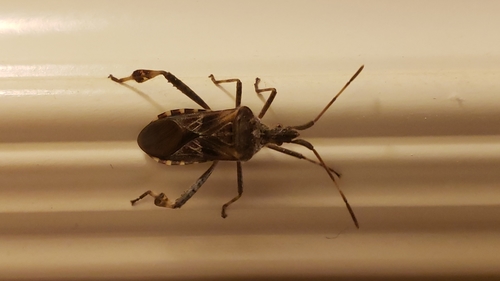
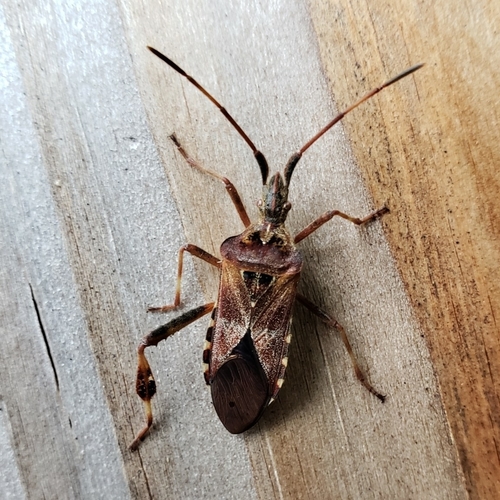
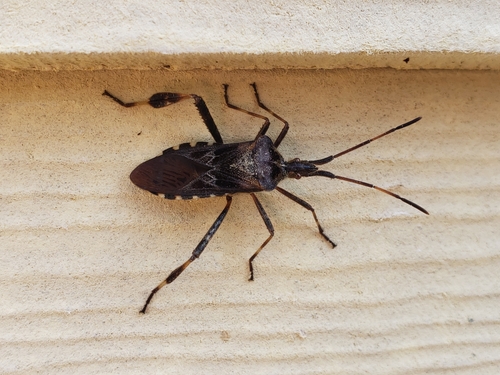
Adults are 16 to 20 mm long, with females larger than males. They are recognized by expanded hind-leg tibiae and alternating light-dark bands on the wing edges. They live in conifer woods, may enter homes in large numbers, and can pierce PEX tubing.
Source: Wikipedia
How to recognize it
They look similar to wheel bugs and other assassin bugs. Key ID marks are the widened hind-leg tibiae and striped wing edges on the abdomen’s flared sides.
Source: Wikipedia
Size
Adults measure about 16 to 20 mm, with males smaller than females.
Source: Wikipedia
Is it a pest in the house?
They may become a nuisance in conifer-rich neighborhoods and can damage PEX plumbing by piercing it.
Source: Wikipedia
How to get rid of it
Considered a minor tree pest, they can become more harmful in conifer plantations.
Source: Wikipedia
Where it lives
They are common where conifer forests are extensive and can enter houses in noticeable numbers.
Source: Wikipedia
What it eats
In their native range they feed on sap from developing conifer cones, causing seeds to wither. They can also feed on non-conifer plants, preferring resin-rich, terpene-laden species.
Source: Wikipedia
Life cycle
Eggs are laid in small groups on needles or leaf stems and hatch in spring. Nymphs pass through five instar stages before becoming adults.
Source: Wikipedia
When you see it
In northern areas they move widely by September to find crevices for overwintering.
Source: Wikipedia
Lookalikes
They belong to the Coreidae family, which also includes similar leaf-footed bugs like Leptoglossus phyllopus and Acanthocephala femorata.
Source: Wikipedia
Where it is found in the US
Recorded in 47 of 51 states and DC. Most records: New York, Massachusetts, Washington, Oregon, Pennsylvania, Michigan, Colorado, California.
Darker = more records. Counts are museum and citizen-science records, not population size.
Source: GBIF
Months it is reported in the US
Source: GBIF
More photos

Questions people ask
Can they damage my home?
Yes, they can pierce PEX tubing, which may cause water leaks.
Source: Wikipedia
What trees do they affect?
They feed on the sap of developing conifer cones, damaging the seeds and overall tree health.
Source: Wikipedia
Same family (Coreidae)
 Squash BugAnasa tristisDamages trees, gardens or crops
 Dock BugCoreus marginatus
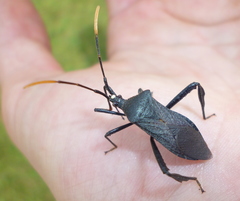 Acanthocephala terminalisAcanthocephala terminalisHarmless
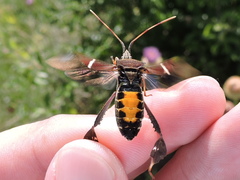 Eastern Leaf-footed BugLeptoglossus phyllopusDamages trees, gardens or crops
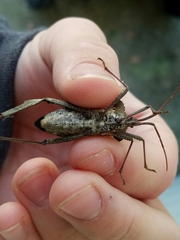 Giant leaf-footed bugAcanthocephala declivis
 Northern Leaf-Footed BugLeptoglossus oppositus
Sources
- Wikipedia: https://en.wikipedia.org/wiki/Western_conifer_seed_bug
Look it up elsewhere: GBIF · iNaturalist · BugGuide · ITIS · Wikipedia
Text written 2026-10-22 from the sources above and checked sentence by sentence against them. Data fetched 2026-10-22.