 Bug FAQ
Long-Headed Flour Beetle
Latheticus oryzae · Order: Coleoptera · Family: Tenebrionidae
Also called: Longheaded flour beetle
Source: Wikipedia
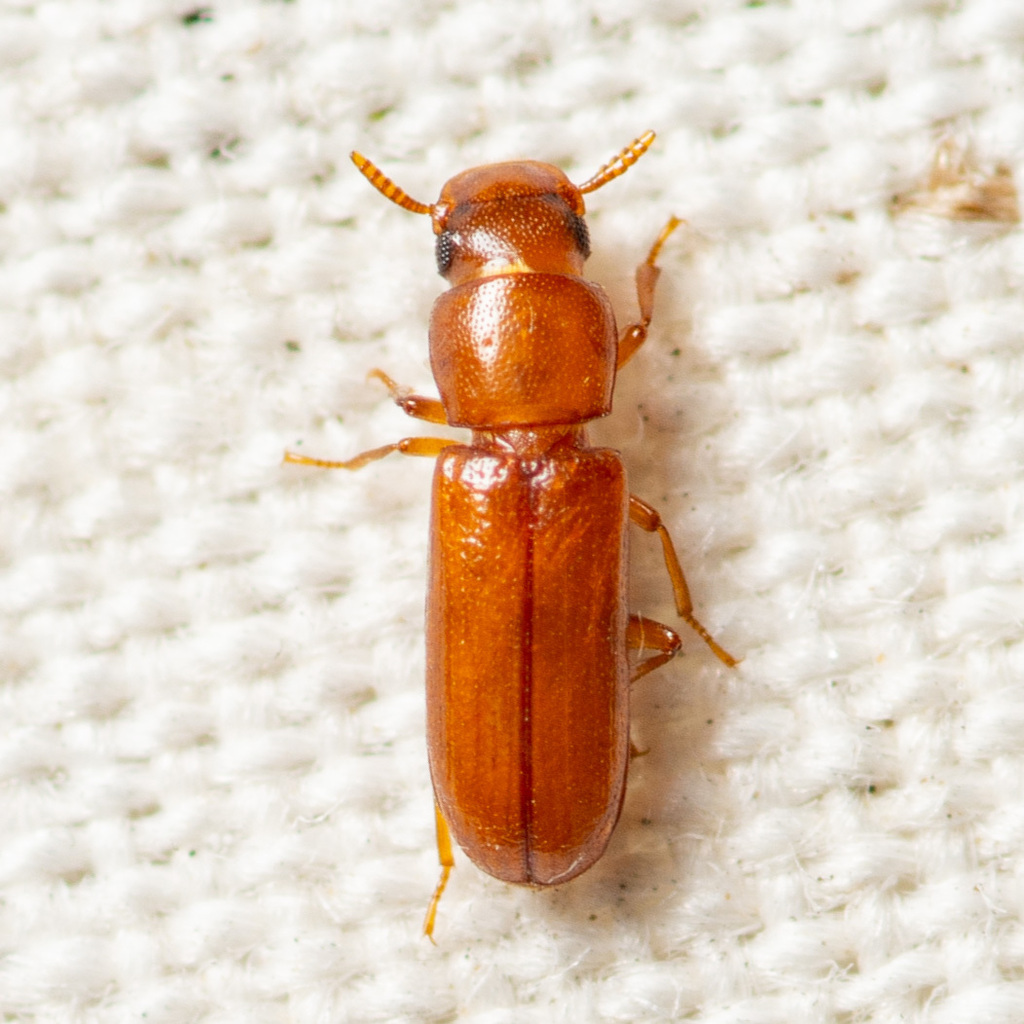
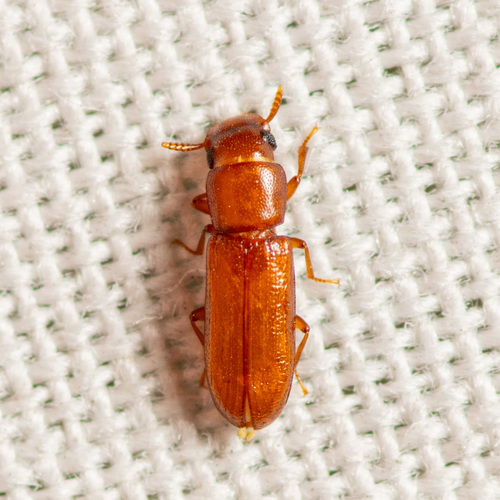
The long-headed flour beetle is a tiny light-brown beetle about 2 to 3 mm long with an elongated body. Both adults and larvae feed on milled products and can infest cereals, flour, rice and other packaged foods. A female can lay up to 400 white eggs directly on grains.
Source: Wikipedia
How to recognize it
It is light brown with an elongated shape.
Source: Wikipedia
Size
Its body length ranges from 2 to 3 mm.
Source: Wikipedia
What it eats
Adults and grubs eat milled products and can become a secondary infestation in stored grains.
Source: Wikipedia
Life cycle
A female lays about 400 white eggs on grains.
Source: Wikipedia
Where it is found in the US
Recorded in 12 of 51 states and DC. Most records: Kansas, Texas, New Mexico, Arizona, California, Oklahoma, Pennsylvania, Ohio.
Darker = more records. Counts are museum and citizen-science records, not population size.
Source: GBIF
Status: introduced in Canada. Source: iNaturalist
Months it is reported in the US
Source: GBIF
More photos
Questions people ask
How does this beetle damage my pantry?
Both adults and larvae feed on milled products, attacking cereals, flour, rice and other packaged foods.
Source: Wikipedia
How many eggs does a female lay?
A female can lay up to 400 white eggs directly on grains.
Source: Wikipedia
Same family (Tenebrionidae)


Sources
- Wikipedia: https://en.wikipedia.org/wiki/Latheticus_oryzae
Look it up elsewhere: GBIF · iNaturalist · BugGuide · ITIS · Wikipedia
Text written 2026-10-28 from the sources above and checked sentence by sentence against them. Data fetched 2026-10-28.