 Bug FAQ
Long-flange Millipede
Orthomorpha coarctata · Order: Polydesmida · Family: Paradoxosomatidae
Also called: Flatback Millipede, hothouse millipede
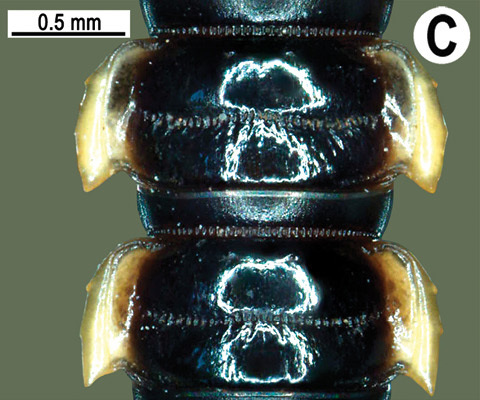
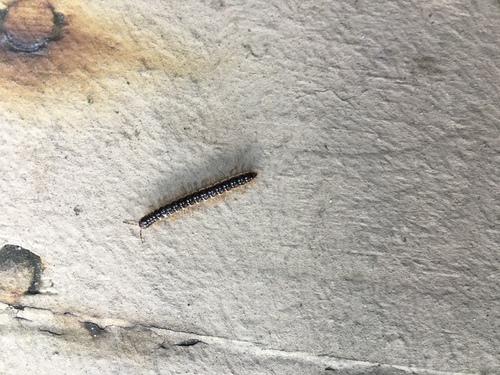
The long-flange millipede (Orthomorpha coarctata) is a small, elongated millipede found in many tropical and subtropical regions worldwide. Males are about 14 to 20 mm long and females 17 to 28 mm, with a width of roughly 1.5 to 3 mm.
Source: Wikipedia
How to recognize it
It can be told apart from the similar Oxidus gracilis by longer, pointier side keels on the middle segments and by having single-tipped male reproductive organs.
Source: Wikipedia
Where it comes from
Its presumed native range is Southeast Asia.
Source: Wikipedia
Lookalikes
It resembles the Asian millipede Oxidus gracilis, but can be distinguished by its longer, pointier paranota and single-tipped gonopods.
Source: Wikipedia
Where it is found in the US
Recorded in 15 of 51 states and DC. Most records: Florida, Hawaii, Texas, Louisiana, Alabama, Georgia, South Carolina, Ohio.
Darker = more records. Counts are museum and citizen-science records, not population size.
Source: GBIF
Status: introduced in United States. Source: iNaturalist
Months it is reported in the US
Source: GBIF
More photos
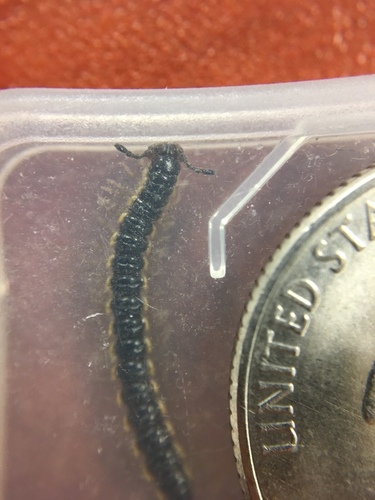
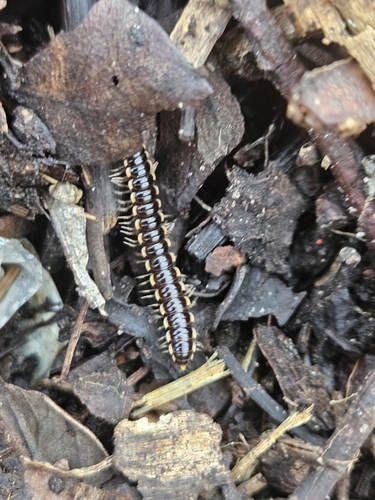
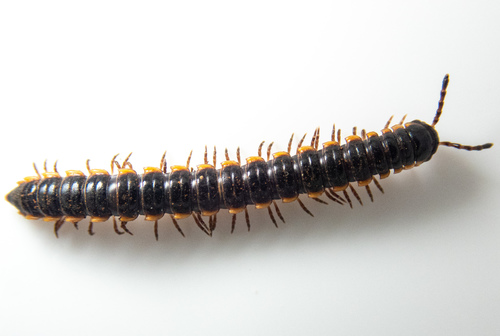
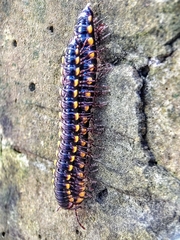
Same family (Paradoxosomatidae)


Sources
- Wikipedia: https://en.wikipedia.org/wiki/Orthomorpha_coarctata
Look it up elsewhere: GBIF · iNaturalist · BugGuide · Wikipedia
Text written 2026-10-22 from the sources above and checked sentence by sentence against them. Data fetched 2026-10-22.