 Bug FAQ
Greenhouse Millipede
Oxidus gracilis · Order: Polydesmida · Family: Paradoxosomatidae
Also called: Garden Millipede, Hothouse Millipede, Millipede, Short-flange Millipede
Source: Wikipedia, extension.msstate.edu, lsuagcenter.com

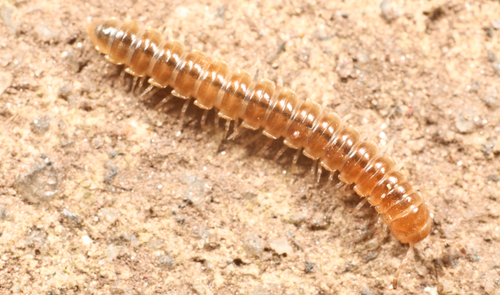
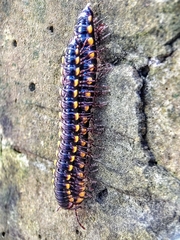
Adult greenhouse millipedes are about 18 to 24 mm long, brown with pale cream legs and side keels. When many gather they can be a smelly nuisance, but they do not bite, sting, or damage structures or plants.
Source: Wikipedia, pubs.ext.vt.edu, lsuagcenter.com, extension.msstate.edu
How to recognize it
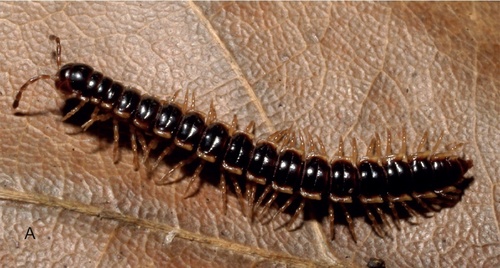
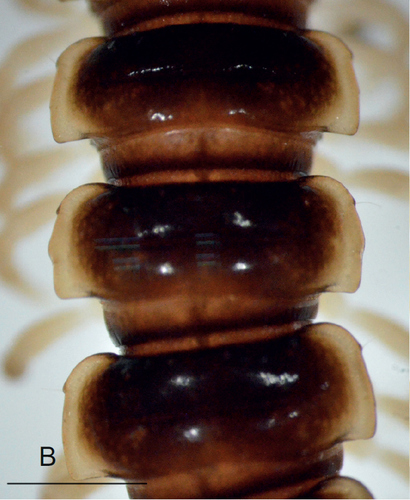
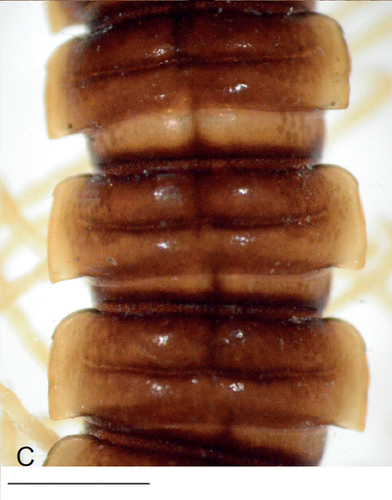
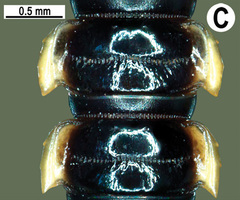
They are brown with pale cream-colored legs and lateral keels on each segment. They lack eyes and rely on their antennae for sensing their environment. Each body segment carries two pairs of legs, giving them a slow-crawling gait.
Source: Wikipedia, pubs.ext.vt.edu, lsuagcenter.com
Size
Adults measure 18 to 23 mm (0.71 to 0.91 in) in length and 2 to 2.5 mm (0.079 to 0.098 in) in width. Some sources note they can reach up to about 24 mm (≈1 in).
Source: Wikipedia, lsuagcenter.com
Is it a pest in the house?
When crushed they emit a strong, unpleasant odor from their chemical defenses. Large numbers can swarm over mulched beds, enter basements and other ground-level rooms, becoming a serious nuisance. They do not damage structural wood, furniture, or plants. Inside homes they usually die quickly from drying out. They can enter through gaps under doors and commonly infest greenhouses.
Source: Wikipedia, pubs.ext.vt.edu, extension.msstate.edu, lsuagcenter.com
Does it bite or sting?
They do not bite or sting people and are harmless to humans. Their cyanide-based chemicals are toxic if eaten by predators but not to people.
Source: pubs.ext.vt.edu, extension.msstate.edu, lsuagcenter.com
How to get rid of it
Vacuum or sweep up any millipedes you see inside the home. Insecticides are generally ineffective; exclusion and sanitation are the best defenses.
Source: pubs.ext.vt.edu, lsuagcenter.com, extension.msstate.edu
Where it lives
Warm, wet weather can cause large numbers to move into nearby buildings and greenhouses.
Source: extension.msstate.edu, Wikipedia
What it eats
They feed on decaying organic matter like leaf litter, mulch and grass thatch. Their defensive chemicals include cyanide produced in segmental glands.
Source: extension.msstate.edu, Wikipedia
Life cycle
Females become sexually mature at 6 to 7 months and can then mate. After fertilization, females seal their vulvae with a sticky substance to keep eggs inside.
Source: Wikipedia
When you see it
In North America they may mass-migrate, forming piles on roads or in drainage swales.
Source: Wikipedia
Where it is found in the US
Recorded in 50 of 51 states and DC. Most records: California, Texas, North Carolina, Pennsylvania, New York, Virginia, Ohio, Georgia.
Darker = more records. Counts are museum and citizen-science records, not population size.
Source: GBIF
Status: introduced in North America; introduced in Canada; introduced in United States. Source: iNaturalist
Months it is reported in the US
Source: GBIF
More photos
Questions people ask
How do I get rid of greenhouse millipedes?
Remove excess mulch and grass clippings around the house, vacuum any that enter indoors, and seal entry gaps; chemicals are not very effective.
Source: pubs.ext.vt.edu, extension.msstate.edu
Do greenhouse millipedes bite?
No, they do not bite or sting people and are harmless to humans.
Source: pubs.ext.vt.edu, extension.msstate.edu
Why do they smell when crushed?
Crushing releases a pungent odor from their cyanide-based defensive chemicals.
Source: Wikipedia, lsuagcenter.com
Can they damage my house or garden?
They do not damage wood, furniture, or plants, but large numbers can be a smelly nuisance inside homes.
Source: pubs.ext.vt.edu, extension.msstate.edu
Same family (Paradoxosomatidae)

Sources
- Wikipedia: https://en.wikipedia.org/wiki/Greenhouse_millipede
- extension.msstate.edu: https://extension.msstate.edu/newsletters/bugs-eye-view/2017/greenhouse-millipede-vol-3-no-14
- lsuagcenter.com: https://www.lsuagcenter.com/profiles/bneely/articles/page1590008694916
- pubs.ext.vt.edu: https://pubs.ext.vt.edu/ENTO/ENTO-43.html
Look it up elsewhere: GBIF · iNaturalist · BugGuide · ITIS · Wikipedia
Text written 2026-10-23 from the sources above and checked sentence by sentence against them. Data fetched 2026-10-23.