 Bug FAQ
Little Yellow Ant
Plagiolepis alluaudi · Order: Hymenoptera · Family: Formicidae
Also called: Alluaud's Little Yellow Ant
Source: Wikipedia
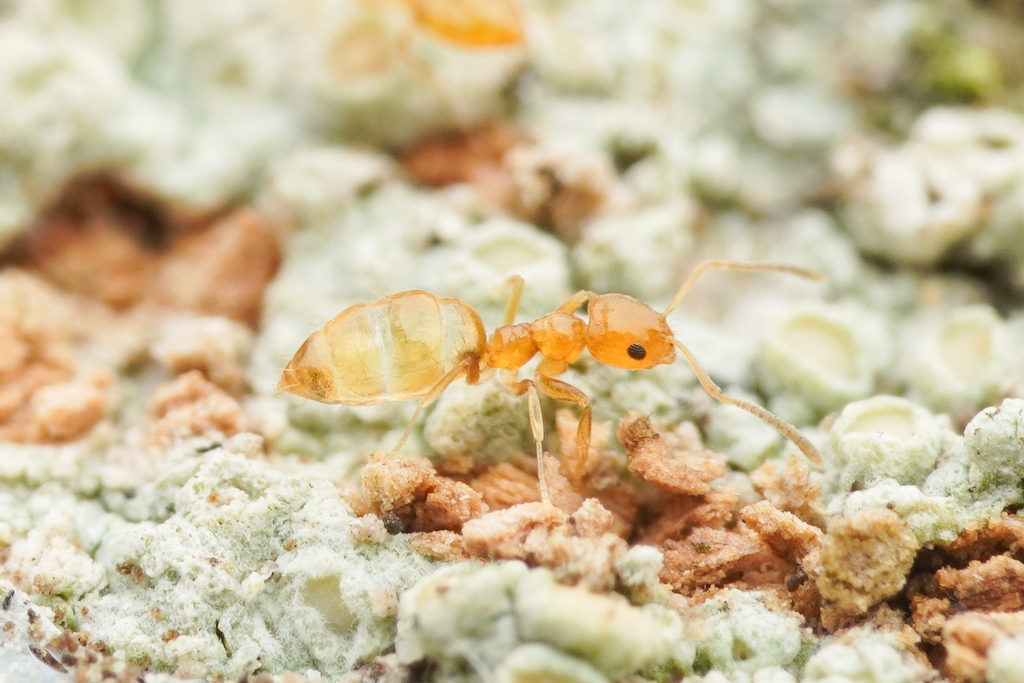
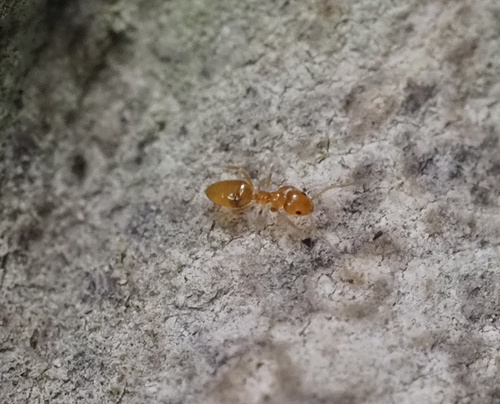
The little yellow ant is about 1.6 mm long, yellow, with a rounded head and eleven antennal segments. It originates from Madagascar but has spread to many regions including Europe, the Pacific, Hawaii and the Caribbean, and it may enter houses to feed on sweet foods. Colonies contain many egg-laying queens, protect honeydew-producing insects, and are difficult to eradicate without baiting.
Source: Wikipedia
How to recognize it
Workers are yellow, have a rounded head and eleven antennal segments.
Source: Wikipedia
Is it a pest in the house?
Established colonies are hard to eradicate, but placing ant baits outside can reduce them.
Source: Wikipedia
Can it bite, sting or make you sick?
They are not known to bite or sting people.
Source: Wikipedia
How to get rid of it
Bait stations placed outside the structure can help eliminate parts of a large colony at once.
Source: Wikipedia
Where it lives
They can be found inside human homes where they seek sweet foods.
Source: Wikipedia
What it eats
They feed on honeydew produced by sap-feeding insects such as aphids and scale insects. They protect and even rear these honeydew-producing insects inside their nests.
Source: Wikipedia
Life cycle
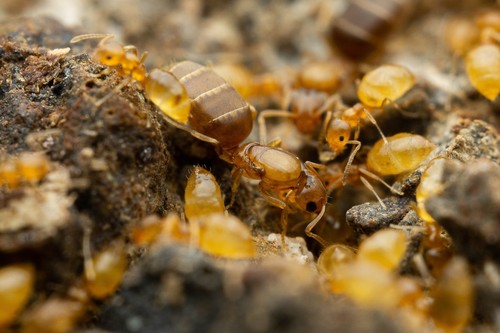
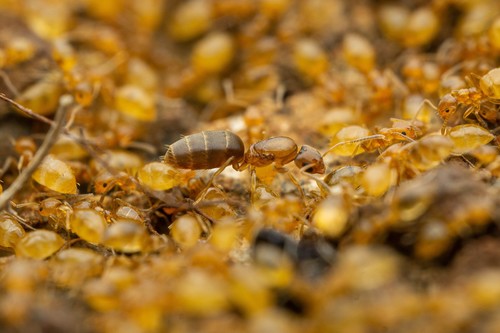
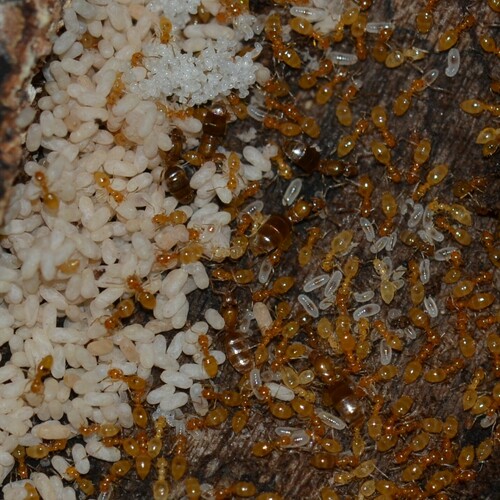
Colonies are supercolonies with thousands of egg-laying queens.
Source: Wikipedia
Where it comes from
The species is native to Madagascar, off the east coast of Africa.
Source: Wikipedia
Lookalikes
The only other yellow Plagiolepis species, P. exigua, has an oblong head, unlike the rounded head of this ant. Workers of Brachymyrmex look similar but have only nine antennal segments.
Source: Wikipedia
Where it is found in the US
Recorded in 5 of 51 states and DC. Most records: Hawaii, Massachusetts, Georgia, Ohio, District of Columbia.
Darker = more records. Counts are museum and citizen-science records, not population size.
Source: GBIF
Status: introduced in North America; introduced in United States. Source: iNaturalist
Months it is reported in the US
Source: GBIF
More photos
Questions people ask
How can I get rid of them?
Place ant bait stations outside the building to target the colony.
Source: Wikipedia
What do they look like?
They are small, yellow ants about 1.6 mm long with a rounded head and eleven antennal segments.
Source: Wikipedia
Where do they come from?
The species is native to Madagascar but has been recorded in many other regions worldwide.
Source: Wikipedia
Same family (Formicidae)
 Eastern Black Carpenter AntCamponotus pennsylvanicusCan bite
 Red Imported Fire AntSolenopsis invictaCan sting
 American Winter AntPrenolepis imparis
 Argentine AntLinepithema humileNuisance, not dangerous
 Immigrant Pavement AntTetramorium immigransCan sting
 Odorous House AntTapinoma sessileCan damage your home
Sources
- Wikipedia: https://en.wikipedia.org/wiki/Plagiolepis_alluaudi
Look it up elsewhere: GBIF · iNaturalist · BugGuide · ITIS · Wikipedia
Text written 2026-10-29 from the sources above and checked sentence by sentence against them. Data fetched 2026-10-29.