 Bug FAQ
Little Black Ants
Monomorium minimum · Order: Hymenoptera · Family: Formicidae
Also called: little black ant
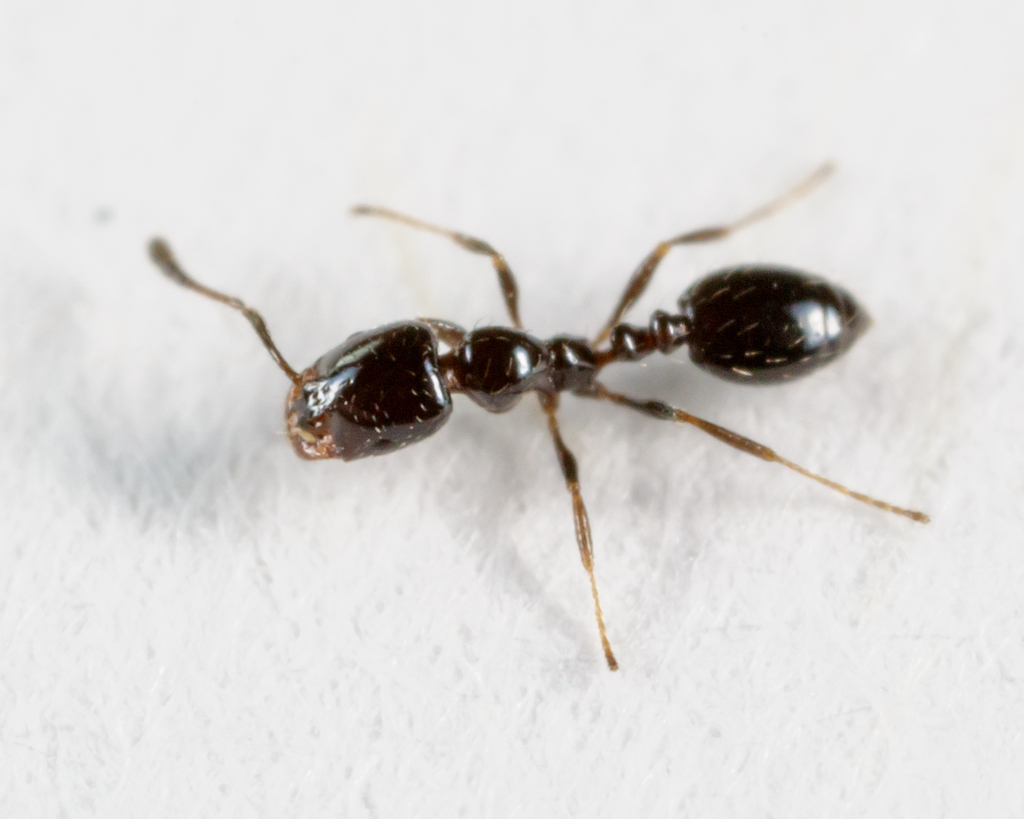
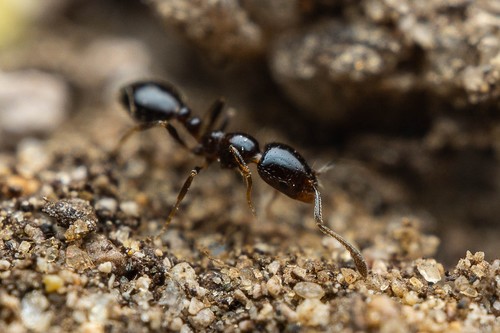
Little Black Ants are tiny, shiny black insects that live in soil mounds but may wander into homes looking for food. They are scavengers that also harvest aphid honeydew and can be beneficial by eating other garden pests.
How to recognize it
They are a glossy black color. Their bodies have a narrow waist, unlike the broad waist of termites. Their antennae are elbow-shaped, while termite antennae are not.
Size
Workers measure about 1 to 2 mm, and queens are 4 to 5 mm long.
Source: Wikipedia
Is it a pest in the house?
Workers may enter homes while foraging for food. Ants are among the most common indoor pests.
How to get rid of it
Seal cracks, keep food areas clean and use bait stations to manage colonies. Outdoor baiting is effective; spray pesticides give only short-term control and may be unsafe indoors.
Source: UC IPM
Where it lives
Workers may forage inside houses but the colony nests in soil mounds.
Source: Wikipedia
What it eats
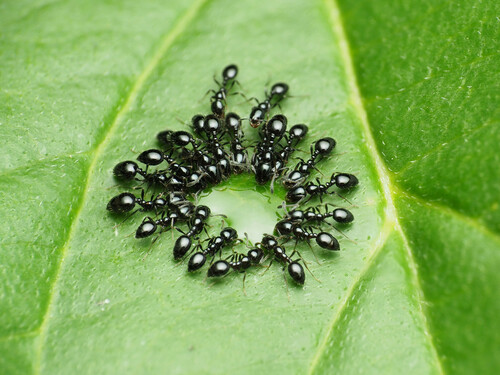
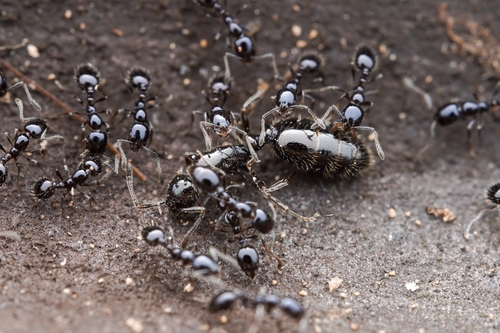
They scavenge on bird droppings, dead insects and other organic matter. They also collect honeydew from aphids such as the soybean aphid.
Source: Wikipedia
Life cycle
Eggs develop into adults in roughly one month. Queens and males take wing for a nuptial flight in mid-summer to mate.
Source: Wikipedia
When you see it
The nuptial flight of queens and males occurs in mid-summer.
Source: Wikipedia
Where it comes from
They are native to North America and Europe.
Source: Wikipedia
Lookalikes
Monomorium minimum and Monomorium trageri were merged into M. carbonarium in 2025. Winged ants leaving the nest in warm weather are often mistaken for winged termites. Ants and termites can be told apart by three main features, including waist shape and antenna type.
Where it is found in the US
Recorded in 38 of 51 states and DC. Most records: Mississippi, Texas, Arkansas, Tennessee, Alabama, Colorado, Illinois, California.
Darker = more records. Counts are museum and citizen-science records, not population size.
Source: GBIF
Months it is reported in the US
Source: GBIF
More photos
Questions people ask
How can I tell if the insects in my house are ants or termites?
Ants have a narrow waist and elbowed antennae, while termites have a broad waist and straight antennae.
Source: UC IPM
What should I do to get rid of them?
Close entry points, clean up food sources and place outdoor bait stations; sprays are only a temporary fix.
Source: UC IPM
Are they harmful to my garden plants?
They are not reported to damage plants; they actually help by eating other garden pests.
Source: UC IPM
Same family (Formicidae)
 Eastern Black Carpenter AntCamponotus pennsylvanicusCan damage your home
 Red Imported Fire AntSolenopsis invictaCan sting
 American Winter AntPrenolepis imparis
 Argentine AntLinepithema humileNuisance, not dangerous
 Immigrant Pavement AntTetramorium immigransCan sting
 Odorous House AntTapinoma sessileCan damage your home
Sources
- Wikipedia: https://en.wikipedia.org/wiki/Monomorium_carbonarium
- UC IPM: https://ipm.ucanr.edu/PMG/PESTNOTES/pn7411.html
Look it up elsewhere: GBIF · iNaturalist · BugGuide · ITIS · Wikipedia
Text written 2026-10-22 from the sources above and checked sentence by sentence against them. Data fetched 2026-10-22.