 Bug FAQ
Lime-speck Pug
Eupithecia centaureata · Order: Lepidoptera · Family: Geometridae
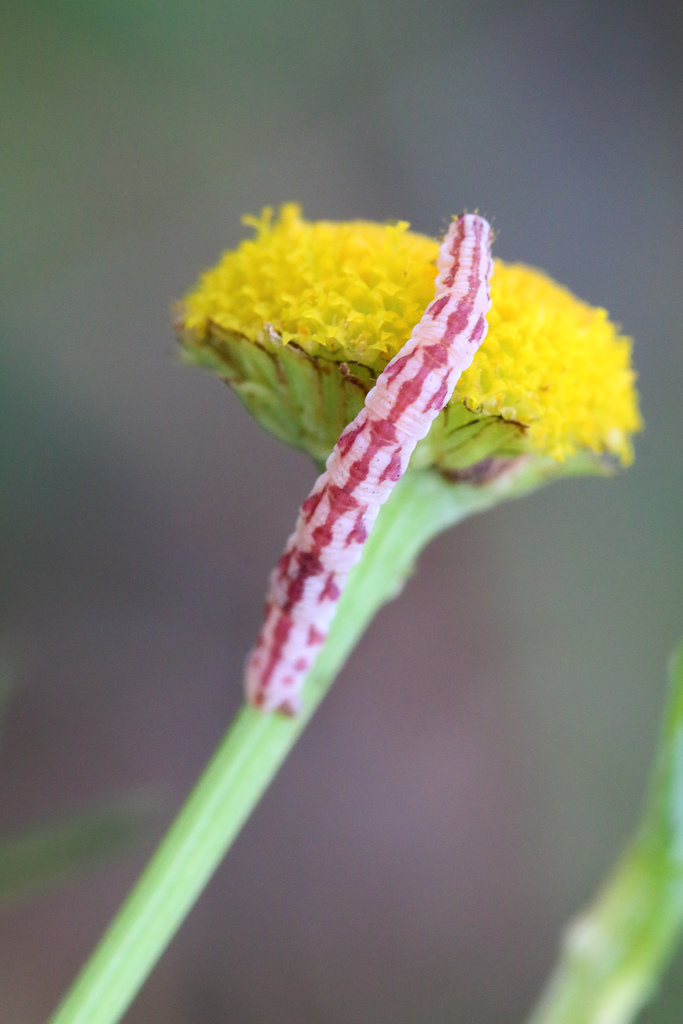
The lime-speck pug is a small moth with a wingspan of about two centimetres (20 to 24 mm). Its wings are mostly white with a single black spot on the front edge of each forewing, though some forms have a smoky tint or weaker markings. It lives across the Palearctic region, including Europe, parts of Asia, the Near East and North Africa.
Source: Wikipedia
How to recognize it
The moth is easy to spot because its wings are largely white with a distinct black blotch on the leading edge of the forewing. A darker form called ab. obscura has a smoky overall colour on both wings. Another variant, ab. centralisata, shows much fainter markings, sometimes almost none except for a central spot.
Source: Wikipedia
Size
Its wingspan ranges from 20 to 24 mm (about 2 cm).
Source: Wikipedia
What it eats
Caterpillars are usually green or yellow and may have red markings. The larvae feed on the flowers of many different plants.
Source: Wikipedia
Life cycle
Adults appear in summer and autumn, often with two generations per year. The species spends the winter as a pupa.
Source: Wikipedia
When you see it
Moths fly at night, are attracted to light and to nectar-rich flowers.
Source: Wikipedia
Lookalikes
The smoky-coloured ab. obscura form can be confused with similar pale moths. The ab. centralisata form has very faint markings, making identification harder.
Source: Wikipedia
Same family (Geometridae)
 Willow BeautyPeribatodes rhomboidaria
 Pale BeautyCampaea perlataDamages trees, gardens or crops
 Large Lace-border MothScopula limboundataDamages trees, gardens or crops
 Riband WaveIdaea aversata
 Yellow Shell MothCamptogramma bilineata
 Large Maple Spanworm MothProchoerodes lineolaDamages trees, gardens or crops
Sources
- Wikipedia: https://en.wikipedia.org/wiki/Lime-speck_pug
Look it up elsewhere: GBIF · iNaturalist · BugGuide · Wikipedia
Text written 2026-10-22 from the sources above and checked sentence by sentence against them. Data fetched 2026-10-22.