 Bug FAQ
Lily Borer
Brithys crini · Order: Lepidoptera · Family: Noctuidae
Also called: Amaryllis Borer, Crinum Borer, Lily Leaf Borer
Source: Wikipedia
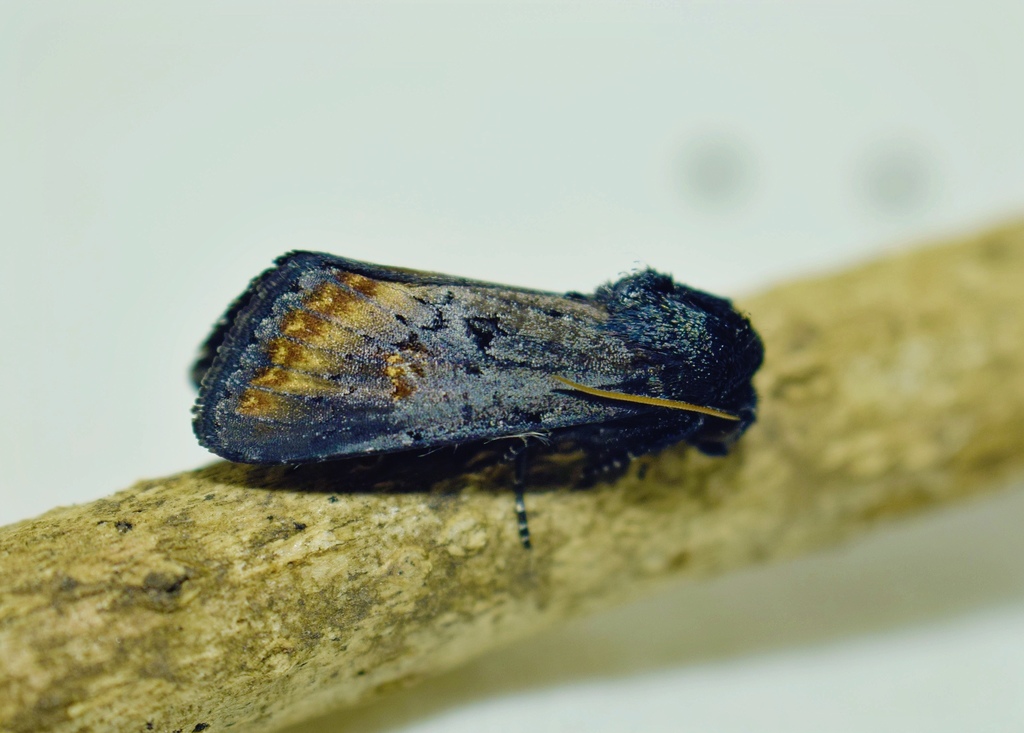
The lily borer moth has a 40 mm wingspan and dark brown forewings with pale tips, white hindwings and striped tarsi. Its larvae feed on many Amaryllidaceae species, mining leaves and boring into bulbs, and can kill heavily infested plants. Control is best by hand-picking larvae or using carbaryl dust, though chemicals cannot reach those inside bulbs.
Source: Wikipedia
How to recognize it
Forewings show indistinct black wavy lines in sub-basal, median and post-medial areas. A curved ochreous submarginal line with ferrous-coloured lunules runs on each side. A series of black lunules lines the wing margin. Hindwings are almost pure white. Tarsi have alternating black and white stripes.
Source: Wikipedia
Size
The adult moth’s wingspan is about 40 mm.
Source: Wikipedia
Is it a pest in the house?
The caterpillars damage stems and leaves of lilies, especially those in the Amaryllidaceae family. Heavy infestations can kill the host plants.
Source: Wikipedia
How to get rid of it
Carbaryl dusts work on exposed caterpillars but cannot reach those inside bulbs. For small gardens, manually remove discoloured leaf patches and crush young larvae.
Source: Wikipedia
Where it lives
It occurs along coasts of southern Europe, North Africa down to South Africa, and also in Japan, Australia’s Queensland and Northern Territory, India and Sri Lanka.
Source: Wikipedia
What it eats
The caterpillars are brightly coloured with pale yellow on black and brown backgrounds.
Source: Wikipedia
Life cycle
Adults lay clusters of a few dozen eggs on host-plant leaves. Newly hatched larvae stay in groups and mine into leaves. There are several generations per year; development slows in cool seasons and larvae may overwinter inside bulbs. Full-grown larvae reach about 40 mm before pupating.
Source: Wikipedia
When you see it
In Europe, adults are on the wing in July.
Source: Wikipedia
Where it comes from
Its native range matches the coastal areas of southern Europe, North Africa to South Africa, plus Japan, Australia, India and Sri Lanka.
Source: Wikipedia
More photos

Questions people ask
How can I get rid of lily borer caterpillars?
Use carbaryl dust for exposed larvae, and hand-pick or crush young caterpillars on the leaves; chemicals won’t reach those that have bored into bulbs.
Source: Wikipedia
Same family (Noctuidae)
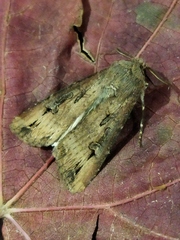 Ipsilon Dart MothAgrotis ipsilonDamages trees, gardens or crops
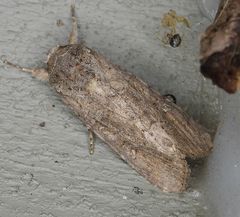 Fall Armyworm MothSpodoptera frugiperdaDamages trees, gardens or crops
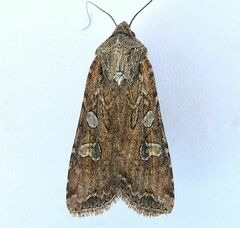 Army Cutworm MothEuxoa auxiliarisDamages trees, gardens or crops
 Large Yellow UnderwingNoctua pronubaDamages trees, gardens or crops
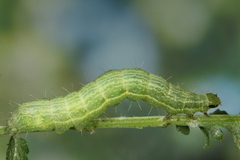 Silver ΥAutographa gamma
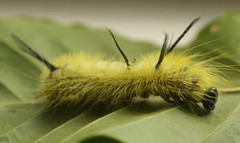 American DaggerAcronicta americanaCan irritate skin
Sources
- Wikipedia: https://en.wikipedia.org/wiki/Brithys_crini
Look it up elsewhere: GBIF · iNaturalist · BugGuide · Wikipedia
Text written 2026-10-23 from the sources above and checked sentence by sentence against them. Data fetched 2026-10-22.