 Bug FAQ
Lesser Mealworm
Alphitobius diaperinus · Order: Coleoptera · Family: Tenebrionidae
Also called: Lesser Mealworm Beetle, Leser Mealworm Beetle
Source: Wikipedia
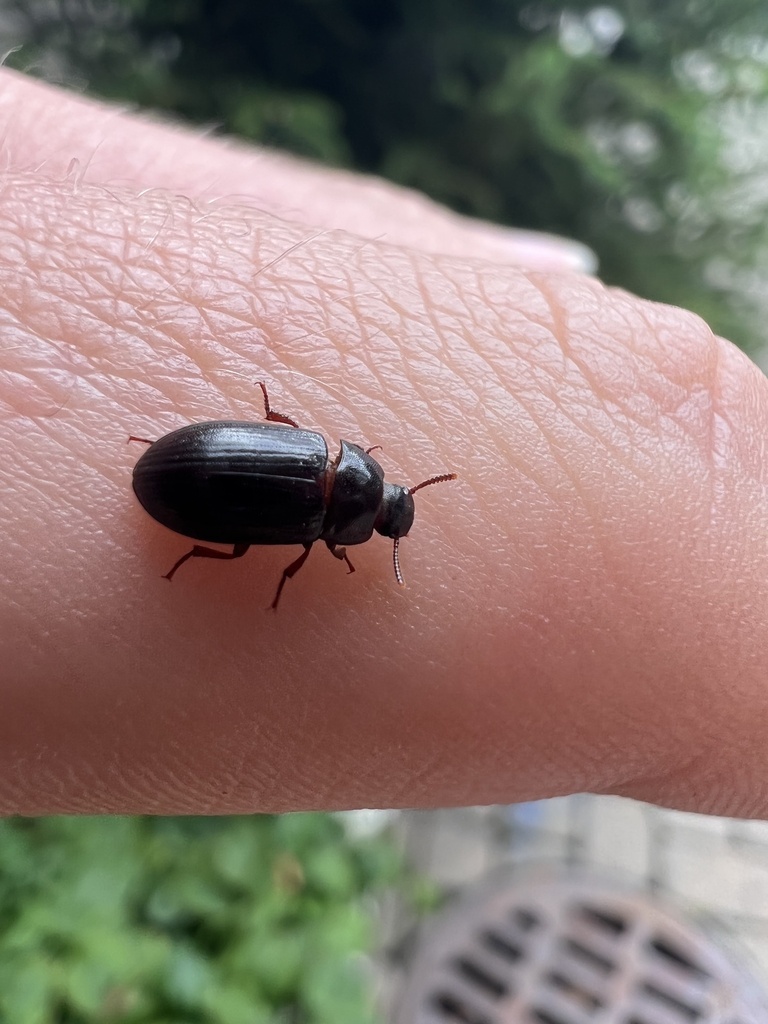
Adult lesser mealworms are about 6 mm long, oval-shaped and darken from whitish to yellow-brown as they age. They live in caves, bird and rodent nests, and easily infest grain stores and poultry houses. They can carry viruses such as rotavirus and bacteria like Salmonella, posing a disease risk.
Source: Wikipedia
How to recognize it
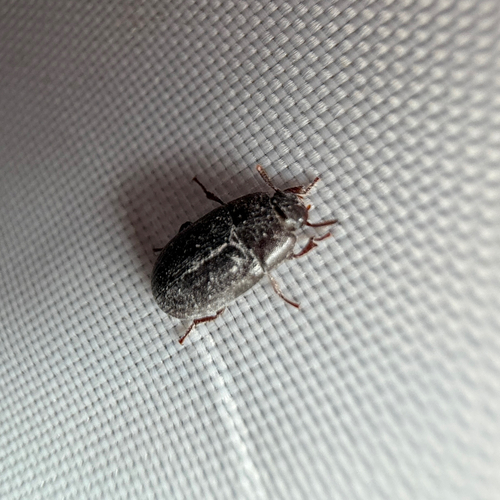
The body is dotted with tiny pits, the antennae end in paler, yellowish hairs, and the elytra have shallow lengthwise grooves.
Source: Wikipedia
Size
An adult is roughly 6 mm long and has a broadly oval body. The beetle tapers, is segmented, has three pairs of front legs and changes from whitish to yellow-brown as it matures.
Source: Wikipedia
Is it a pest in the house?
They are drawn to indoor lights and can enter houses.
Source: Wikipedia
Does it bite or sting?
They can transmit animal viruses such as rotavirus, turkey coronavirus and avian influenza, and bacteria like Salmonella and Campylobacter.
Source: Wikipedia
How to get rid of it
Carbaryl applied as powder, liquid or bait is commonly used for control. Pyrethroid insecticides and boric acid are also employed against them.
Source: Wikipedia
Where it lives
It also colonises grain-processing facilities and poultry housing where food and warmth are abundant.
Source: Wikipedia
What it eats
It eats a wide range of organic material including litter, bird droppings, bat guano, mold, feathers, eggs and carrion.
Source: Wikipedia
Life cycle
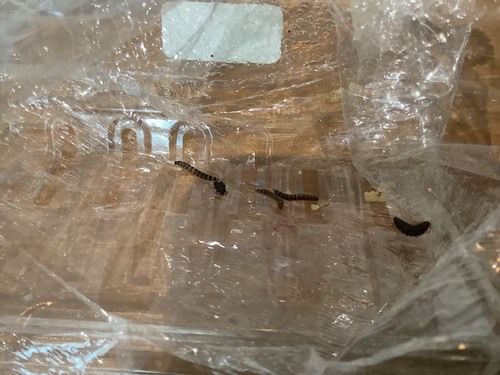
A female lays about 200-400 eggs, but can produce up to 2 000. Larvae hatch within a week and need 40-100 days to reach adulthood, depending on conditions and food.
Source: Wikipedia
When you see it
Both larvae and adults are mainly nocturnal and become most active at dusk. They are attracted to artificial lights and may enter homes at night.
Source: Wikipedia
Where it comes from
The species may have originated in Sub-Saharan Africa. It spread into Europe long ago and was probably introduced to North America from there.
Source: Wikipedia
Where it is found in the US
Recorded in 29 of 51 states and DC. Most records: Ohio, Hawaii, Colorado, Texas, Arizona, Florida, California, Delaware.
Darker = more records. Counts are museum and citizen-science records, not population size.
Source: GBIF
Status: native in North America; native in Canada. Source: iNaturalist
Months it is reported in the US
Source: GBIF
More photos
Questions people ask
How can I get rid of lesser mealworms?
Apply carbaryl in powder, liquid or bait form, or use pyrethroids or boric acid to treat infested areas.
Source: Wikipedia
Do they spread disease?
Yes, they can carry viruses like rotavirus and bacteria such as Salmonella, posing a disease risk.
Source: Wikipedia
What do they look like?
Adults are about 6 mm long, shiny black or brown with reddish wing covers, dotted with tiny pits, and have pale, hairy antenna tips.
Source: Wikipedia
Where are they commonly found?
They live in caves, bird and rodent nests, and often infest grain storage and poultry facilities.
Source: Wikipedia
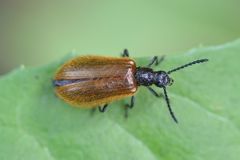
Same family (Tenebrionidae)


Sources
- Wikipedia: https://en.wikipedia.org/wiki/Alphitobius_diaperinus
Look it up elsewhere: GBIF · iNaturalist · BugGuide · ITIS · Wikipedia
Text written 2026-10-24 from the sources above and checked sentence by sentence against them. Data fetched 2026-10-24.