 Bug FAQ
Leptoctenus byrrhus
Leptoctenus byrrhus · Order: Araneae · Family: Ctenidae
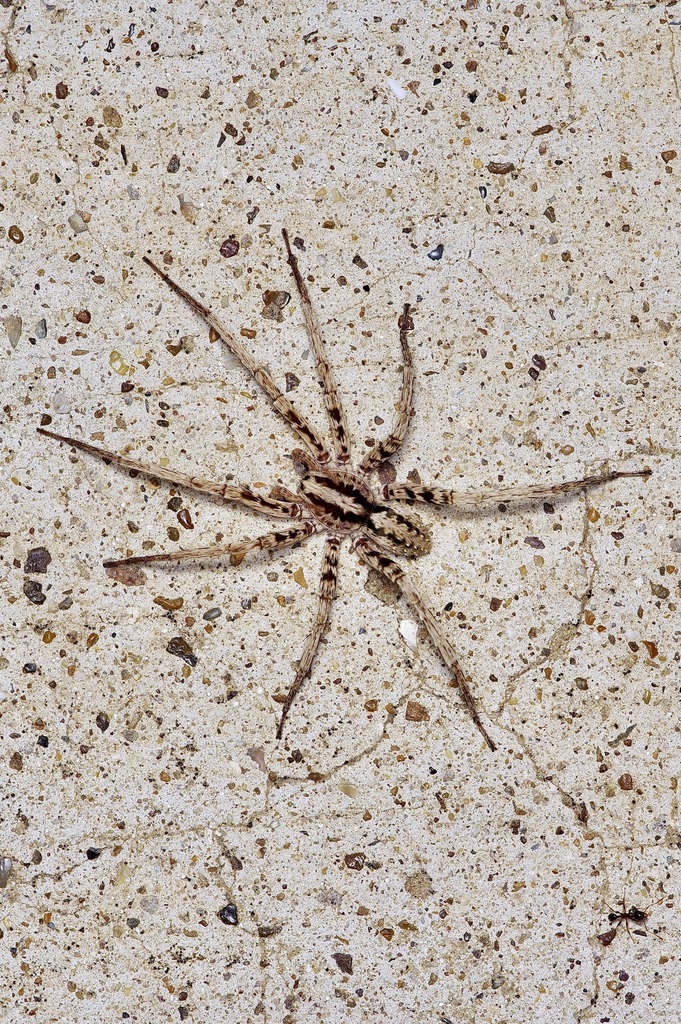
Males grow to about 10.5 mm and females to about 13.5 mm, roughly a half-inch long. It lives among detritus, under rocks, at cave entrances, in wood-rat nests, and has even been found inside homes in Ciudad Victoria, Mexico.
Source: Wikipedia
How to recognize it
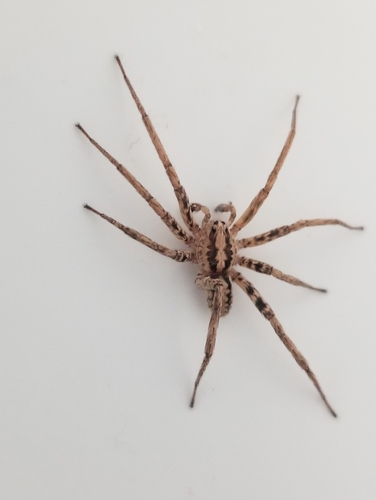
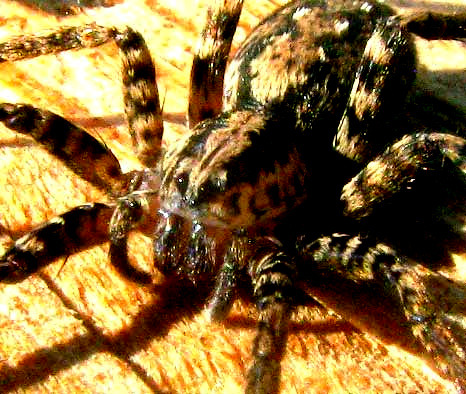
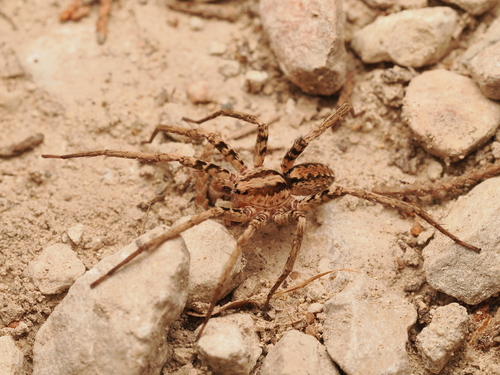
The spider’s gray body and legs are heavily splotched with dark marks that line up into two irregular longitudinal stripes on the cephalothorax and abdomen. Viewed from above, the leg splotches appear as two or three dark rings on each femur.
Source: Wikipedia
Size
Males reach up to about 10.5 mm (≈ 7⁄16 in) in length. Females grow to roughly 13.5 mm (≈ ½ in).
Source: Wikipedia
Is it a pest in the house?
Individuals have been encountered inside people’s houses in Ciudad Victoria, Tamaulipas, Mexico.
Source: Wikipedia
Where it lives
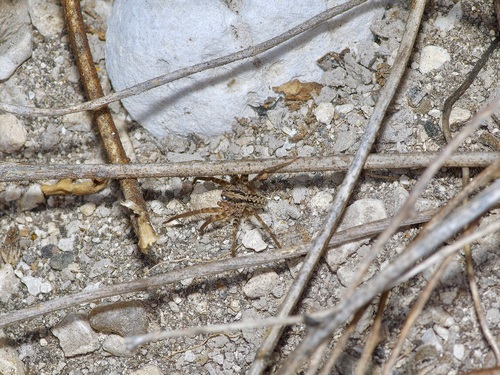
It is found amid detritus, under rocks, at cave entrances, and in wood-rat nests.
Source: Wikipedia
Where it is found in the US
Recorded in 1 of 51 states and DC. Most records: Texas.
Darker = more records. Counts are museum and citizen-science records, not population size.
Source: GBIF
Months it is reported in the US
Source: GBIF
More photos
Questions people ask
Where might I find Leptoctenus byrrhus?
You may find it among leaf litter, under rocks, at cave entrances, in wood-rat nests, or even inside homes in northeastern Mexico.
Source: Wikipedia
How big does this spider get?
Males grow to about 10.5 mm and females to about 13.5 mm in length.
Source: Wikipedia
Same family (Ctenidae)


Sources
- Wikipedia: https://en.wikipedia.org/wiki/Leptoctenus_byrrhus
Look it up elsewhere: GBIF · iNaturalist · BugGuide · ITIS · Wikipedia
Text written 2026-10-27 from the sources above and checked sentence by sentence against them. Data fetched 2026-10-27.