 Bug FAQ
Florida Wandering Spider
Ctenus captiosus · Order: Araneae · Family: Ctenidae
Also called: Florida false wolf spider
Source: Wikipedia
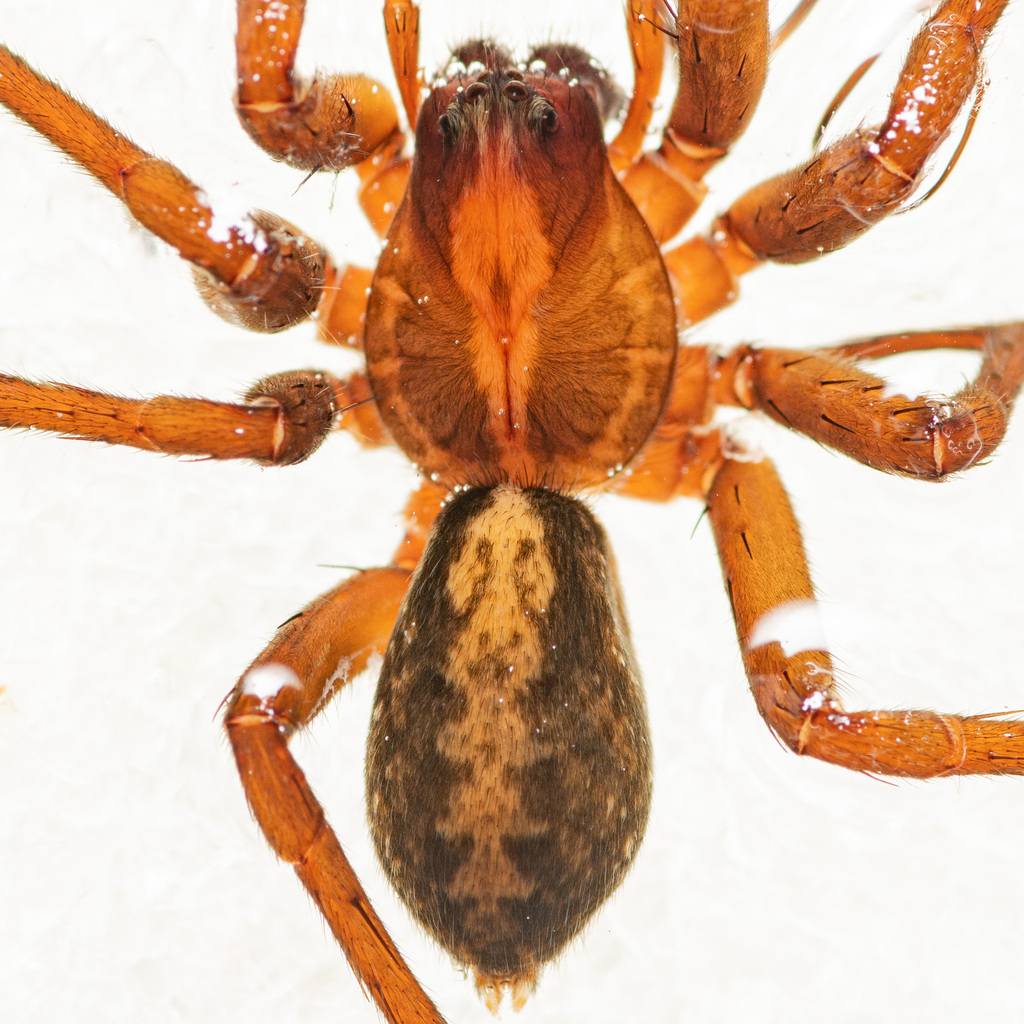
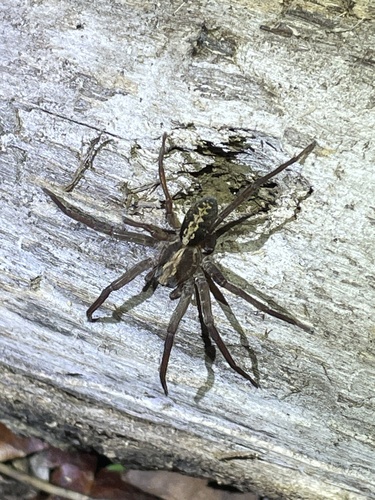
The Florida wandering spider has a yellow-gray abdomen with a pale band of connected triangles edged in brown, and its legs are dark on top but pale underneath. A bite may feel like a tiny puncture and can produce swelling, nausea, dizziness and flu-like illness for several days.
Source: Wikipedia
How to recognize it
The abdomen is yellow-gray with a pale central band made of linked triangles edged in brown. The tops of the legs match the dark carapace, while the undersides and sternum are a much lighter, almost yellow color.
Source: Wikipedia
Size
Males have a body length of about 10 to 14 mm and females about 10 to 15 mm. The leg span can reach up to roughly 75 mm.
Source: Wikipedia
Can it bite, sting or make you sick?
A bite is described as a needle-like puncture followed by swelling, nausea, dizziness and flu-like symptoms that can last several days. Although some reports label bites as harmful, there is no solid research confirming serious effects.
Source: Wikipedia
Where it lives
They prefer moist environments and are most often observed in spring while searching for mates as temperatures rise.
Source: Wikipedia
Where it is found in the US
Recorded in 4 of 51 states and DC. Most records: Florida, Georgia, South Carolina, Texas.
Darker = more records. Counts are museum and citizen-science records, not population size.
Source: GBIF
Months it is reported in the US
Source: GBIF
More photos
Questions people ask
What does a bite from the Florida wandering spider feel like?
The bite feels like a tiny needle puncture and is followed by swelling, nausea, dizziness and flu-like symptoms that may last for days.
Source: Wikipedia
Can this spider bite humans?
Yes, bites have been reported and can cause mild to moderate symptoms such as swelling and flu-like illness.
Source: Wikipedia
Where am I likely to find a Florida wandering spider?
Look for them in oak and pine trees, leaf litter, caves and other moist habitats across the United States, especially in Florida.
Source: Wikipedia
When are these spiders most active?
They are most commonly seen in spring, but also appear in large numbers during summer in pine scrub and in fall in flatwoods.
Source: Wikipedia
Same family (Ctenidae)


Sources
- Wikipedia: https://en.wikipedia.org/wiki/Ctenus_captiosus
Look it up elsewhere: GBIF · iNaturalist · BugGuide · ITIS · Wikipedia
Text written 2026-10-27 from the sources above and checked sentence by sentence against them. Data fetched 2026-10-27.