 Bug FAQ
Leptocoris vicinus
Leptocoris vicinus · Order: Hemiptera · Family: Rhopalidae
Source: Wikipedia
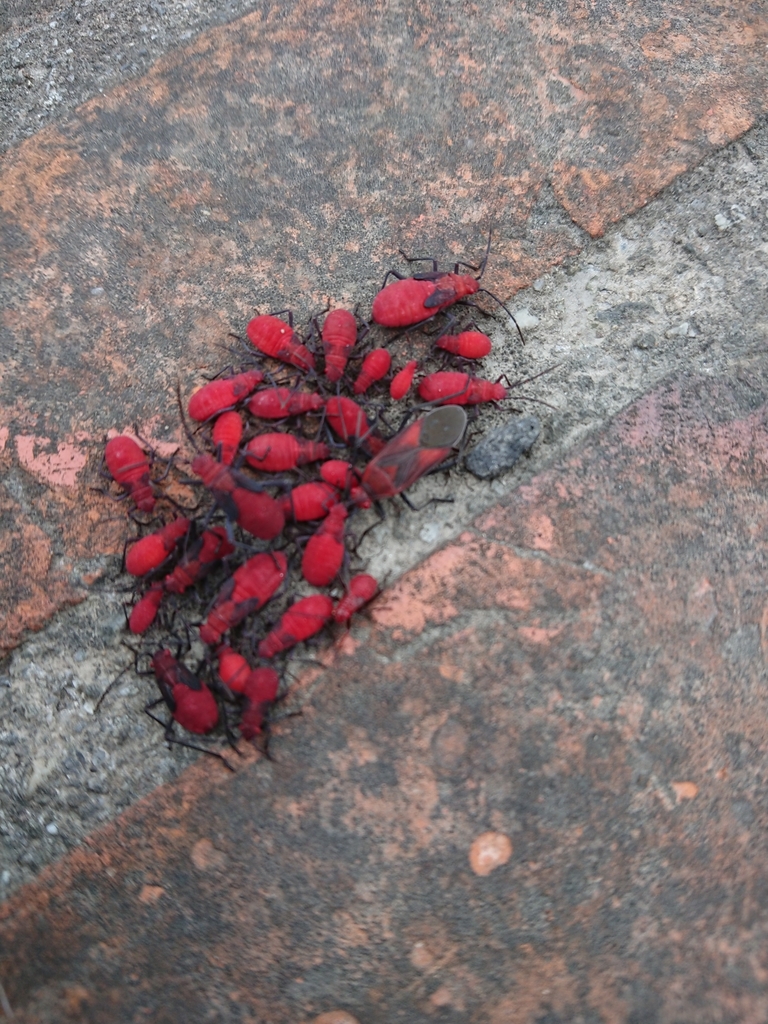
The bug has a red back with black markings and a black underside with red edges. It lives in the Philippines, Taiwan, Japan, Southeast Asia, Oceania and Australia. Both larvae and adults eat seeds of trees such as Cardiospermum, Koelreuteria, Pometia and Schleichera.
Source: Wikipedia
How to recognize it
The back is red with a black membrane and a black-shaped ‘v’ around the scutellum. The pronotum can have black spots. The belly is black with red margins on the abdomen. Its legs, antennae and coxae are black.
Source: Wikipedia
Where it lives
Found in the Philippines, Taiwan, Japan, throughout Southeast Asia, Oceania and Australia.
Source: Wikipedia
What it eats
In Taiwan they are often seen on Taiwanese rain trees, a common street-planted ornamental.
Source: Wikipedia
Where it comes from
Its native range includes the Philippines, Taiwan, Japan, Southeast Asia, Oceania and Australia.
Source: Wikipedia
Questions people ask
What plants does Leptocoris vicinus damage?
It feeds on the seeds of Cardiospermum, Koelreuteria, Pometia and Schleichera trees.
Source: Wikipedia
Where can I find Leptocoris vicinus?
It occurs in the Philippines, Taiwan, Japan, Southeast Asia, Oceania and Australia.
Source: Wikipedia
How can I recognize Leptocoris vicinus?
Look for a red back with black markings, a black underside with red abdominal edges, and black legs, antennae and coxae.
Source: Wikipedia
Same family (Rhopalidae)
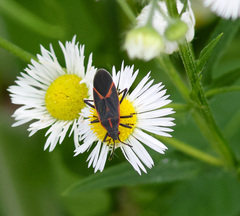
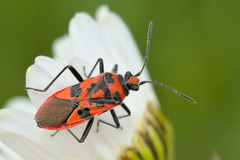
Sources
- Wikipedia: https://en.wikipedia.org/wiki/Leptocoris_vicinus
Look it up elsewhere: GBIF · iNaturalist · BugGuide · Wikipedia
Text written 2026-10-22 from the sources above and checked sentence by sentence against them. Data fetched 2026-10-22.