 Bug FAQ
Lemon Migrant
Catopsilia pomona · Order: Lepidoptera · Family: Pieridae
Also called: Common Emigrant, Lemon Emigrant, Lemon Migrant Butterfly
Source: Wikipedia
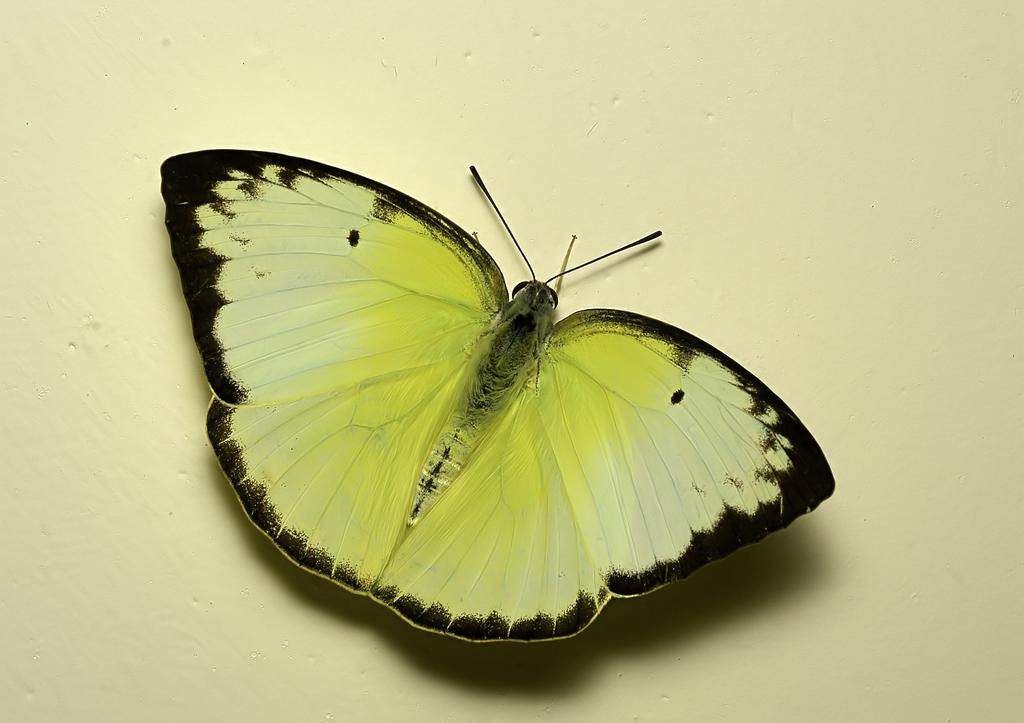
Males have chalky-white upper wings often with a basal yellow patch and a distinct black spot on each forewing. Eggs are laid on various legumes and related trees; larvae feed on those plants and pupate close to the ground.
Source: Wikipedia
How to recognize it
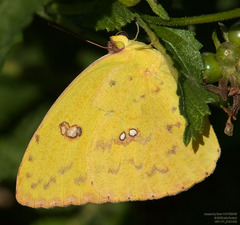
Male upperside is chalky-white, sometimes with a broad yellow area at the base of both fore and hind wings; the yellow may spread over the wing but fades toward the edges. Each forewing has a round (sometimes square) black spot near the discocellular cell; the wing edge may be black only near the tip or broadly black, sometimes touching the spot.
Source: Wikipedia
What it eats
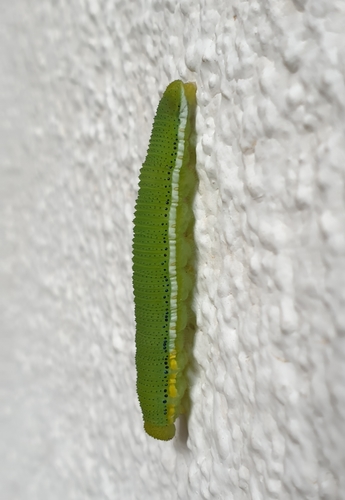
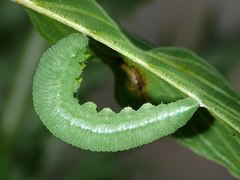
Eggs are laid on several legume species, including various Cassia plants. Caterpillars also feed on Butea monosperma, Cassia fistula, Bauhinia, Pterocarpus indicus, Senna alata and Sesbania.
Source: Wikipedia
Life cycle
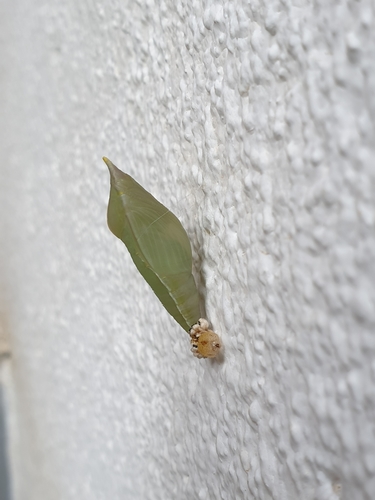
Eggs hatch in three to four days. Pupation occurs low to the ground.
Source: Wikipedia
Where it comes from
It occurs across Asia and into parts of Australia.
Source: Wikipedia
More photos
Questions people ask
Are they a problem for gardens?
Their caterpillars feed on several garden and shade trees such as Cassia and Bauhinia, so they can cause damage to those plants.
Source: Wikipedia
Same family (Pieridae)



Sources
- Wikipedia: https://en.wikipedia.org/wiki/Catopsilia_pomona
Look it up elsewhere: GBIF · iNaturalist · BugGuide · Wikipedia
Text written 2026-10-22 from the sources above and checked sentence by sentence against them. Data fetched 2026-10-22.