 Bug FAQ
Large Pugnacious Ant
Anoplolepis custodiens · Order: Hymenoptera · Family: Formicidae
Also called: Pugnacious Ant
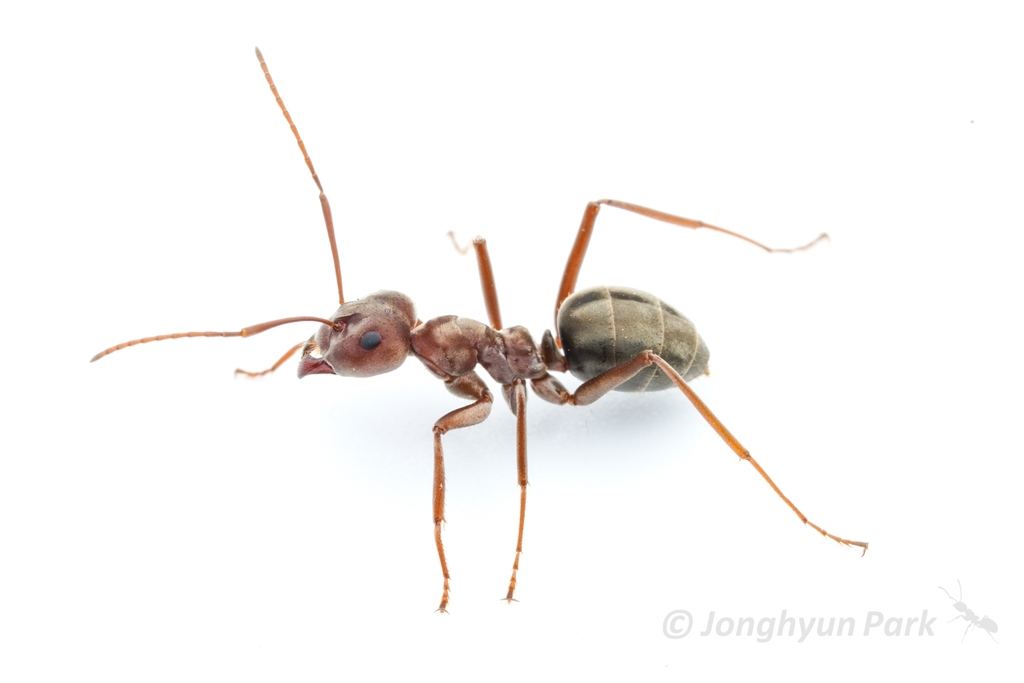
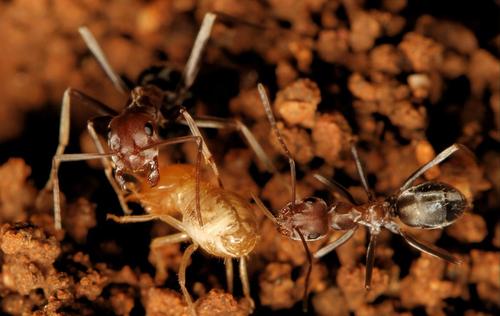
Workers can grow up to about 10 mm long (0.4 in). They live on the ground in dry open areas such as the Karoo and are also found in farms and vineyards. They eat dead and living animals, nectar and honeydew.
Source: Wikipedia
Size
Workers can be as long as 10 mm (0.4 in).
Source: Wikipedia
Where it lives
They are ground-dwelling and prefer dry, open habitats like the Karoo, as well as cultivated fields and vineyards.
Source: Wikipedia
Lookalikes
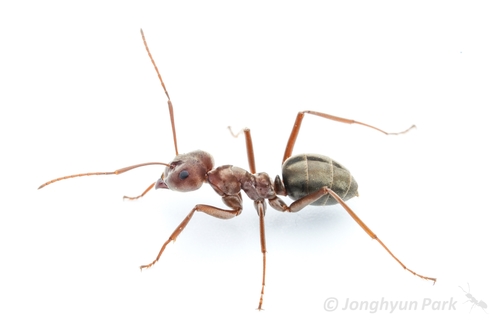
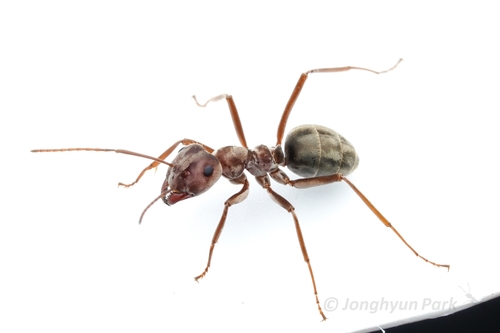
The chequer-board pattern on darker individuals distinguishes them from the black pugnacious ant.
Source: Wikipedia
More photos

Questions people ask
How can I tell this ant apart from similar ants?
Look for a chequer-board dark pattern on the gaster of darker ants; the black pugnacious ant lacks this pattern.
Source: Wikipedia
Where are these ants usually found?
They live on the ground in dry open habitats like the Karoo and are also common in cultivated areas and vineyards.
Source: Wikipedia
What do they eat?
They feed on dead and living animal material, as well as nectar and honeydew.
Source: Wikipedia
Same family (Formicidae)
 Eastern Black Carpenter AntCamponotus pennsylvanicusCan damage your home
 Red Imported Fire AntSolenopsis invictaCan sting
 American Winter AntPrenolepis imparis
 Argentine AntLinepithema humileNuisance, not dangerous
 Immigrant Pavement AntTetramorium immigransCan sting
 Odorous House AntTapinoma sessileCan damage your home
Sources
- Wikipedia: https://en.wikipedia.org/wiki/Anoplolepis_custodiens
Look it up elsewhere: GBIF · iNaturalist · BugGuide · ITIS · Wikipedia
Text written 2026-10-23 from the sources above and checked sentence by sentence against them. Data fetched 2026-10-23.